
Sales teams do not lose deals because of weak products. They lose deals because opportunities slip through the cracks. This happens when sales pipeline stages are unclear or poorly defined.
When teams lack structured sales stages, they chase the wrong leads, delay follow-ups, and struggle to predict revenue. Managers see activity but cannot tell which deals matter. Over time, this slows growth and frustrates both sales reps and leadership.
Sales pipeline stages break the sales journey into clear, trackable steps that guide every action, from first contact to deal closure. With well-defined stages, teams know what action comes next, which deals need attention, and how to move prospects forward with confidence.
Highlights
- Sales pipeline stages break the sales journey into clear, trackable steps from first contact to deal close.
- Clear sales pipeline stages improve visibility, forecasting, team efficiency, and customer experience by guiding deals through a structured process.
- The 7 common stages in a sales pipeline are qualification, requirement gathering, proposal, follow-up, negotiation, and closing.
- Focus on clear rules, fewer stages, CRM automation, performance tracking, and regular reviews to keep pipelines healthy and predictable.
Why Sales Pipeline Stages are Essential for Your Business?
Sales pipeline stages provide actionable visibility into each deal, allowing teams to spot risks early and prioritize the right opportunities. It leads to stronger forecasting, better decision-making, and improved customer experience.
- Improve Forecasting & Goal Setting: When you know how many deals are in each stage, it’s easier to estimate which ones are likely to close and set realistic targets. It helps teams plan their efforts more confidently.
- Actionable Visibility: A structured pipeline shows exactly where each deal is and what needs to happen next. It allows managers and reps to spot problems early and take quick action.
- Increase Team Efficiency: When everyone follows the same process, it reduces confusion, and deals move through the pipeline more smoothly. Sales reps spend less time guessing next steps and more time closing deals.
- Better Prioritization and Focus: Pipeline stages help reps identify which opportunities are most likely to convert. This keeps their time and energy focused on deals that matter most.
- Data-Based Decision Making: Pipeline stages break the sales process into measurable data, such as conversion rates, deal size, and time spent in each stage. You can use this information to find patterns, improve strategies, and make better decisions.
- Enhance Customer Experience: A clear sales process ensures customers receive timely and relevant communication at each stage. It makes interactions feel more professional, helpful, and trustworthy.
7 Common Stages in a Sales Pipeline
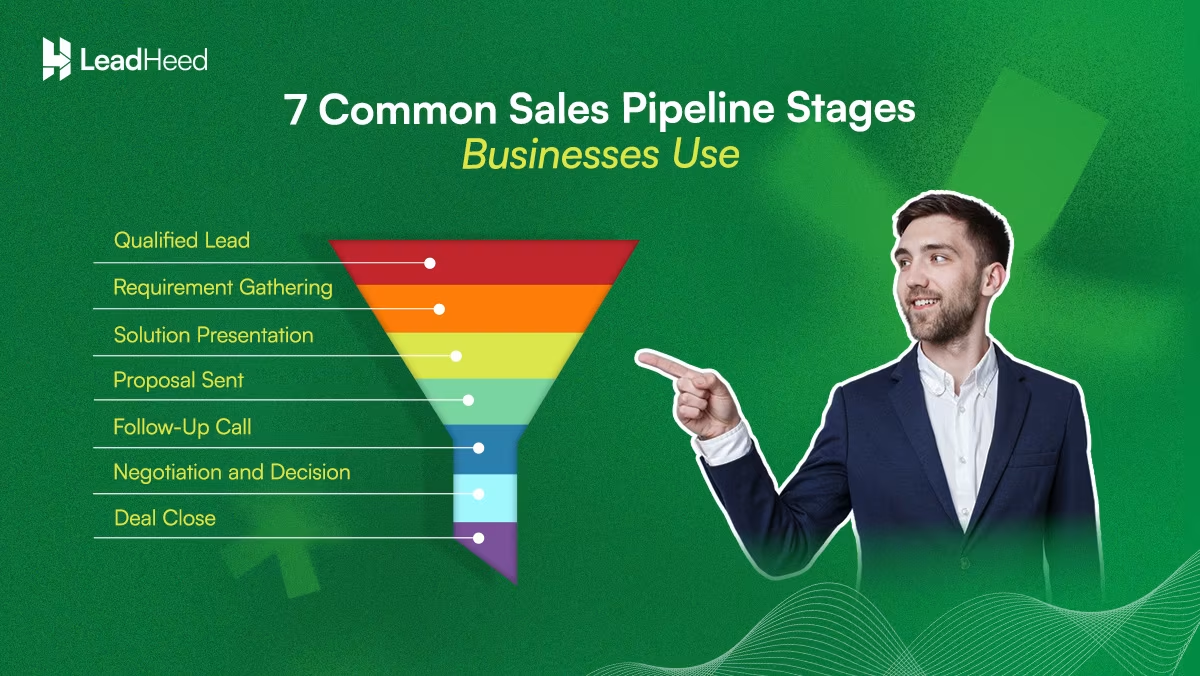
A typical sales pipeline includes seven stages: lead qualification, requirement gathering, solution presentation, proposal, follow-up, negotiation, and closing.
1. Qualified Lead
You create a qualified lead list only after the lead meets your minimum criteria (right customer type, real need, and basic willingness to talk). Here, sales teams evaluate if the captured lead has a real need, enough budget, decision-making authority, and a reasonable timeline. The stage often involves short calls, emails, or forms to gather basic information.
When qualification is done well, salespeople avoid wasting effort on poor-fit leads and can give more attention to prospects with real potential.
What to do during the lead qualification stage:
- Review lead details and background
- Confirm need, budget, authority, and timeline
- Ask basic questions via call/email/form
- Set the next action, such as scheduling a call
2. Requirement Gathering
In this stage, you make meaningful contact with the qualified lead and start learning about their needs or expectation on your product or service. Interaction happens through phone calls, emails, video meetings, or in-person visits. The goal is to build a connection, introduce the company, and create a comfortable environment for open discussion.
A salesperson focuses on learning about the prospect’s goals, problems, and expectations. Careful listening during this stage allows sales representatives to present their solution in a way that aligns with the customer’s real needs.
What to do during the requirement gathering stage:
- Reach out to the client
- Ask questions to understand needs, challenges, and urgency levels
- Document requirements and insights in the CRM system
- Agree on the next step, such as a demo, consultation, or site visit
3. Solution Presentation
Solution presentation involves showing how the product or service addresses the prospect’s specific challenges. You prepare demonstrations or presentations that highlight features, benefits, pricing, and timelines.
Clear communication is essential during this stage as prospects should easily understand how the solution works and what value it brings. You can offer short trials, sample setups, and case studies to increase confidence in the offered solution.
What to do during the presentation stage:
- Prepare a tailored demo or presentation
- Explain features, benefits, and pricing
- Share examples, case studies, or visuals
- Answer questions and handle concerns
4. Proposal Sent
When the buyer agrees that your product and service can fulfill their needs and decides to proceed towards purchase, a written proposal is sent. The offer explains what the customer will get, how it will be delivered, and what the total cost will be. It also sets clear expectations by outlining scope, timelines, support, and payment terms.
If your proposal matches the buyer’s requirements and you address their concern quickly, the deal often moves directly into approval and then closing.
What to do during the proposal stage:
- Create and send the proposal or quote
- Confirm scope, timeline, and deliverables
- Explain pricing, billing, and contract terms
5. Follow-Up Call
After the proposal is sent, the buyer often needs approval from leadership, finance, procurement, or legal before purchase. Deals often slow down here because approvals take time, and different people may have questions. If you do not follow up, the prospect may delay the decision, and the deal can go cold. So, the salesperson should call or send automated emails to remind them of the ongoing deal and keep the conversation active.
During this stage, the focus is on guidance, not pressure. It is a chance for sales reps to clarify doubts, and guide the buyer to move closer to a final decision and prevent unnecessary delays.
What to do during the follow-up stage:
- Confirm the proposal has been received and reviewed
- Ask for feedback and identify questions or concerns
- Clarify scope, pricing, timelines, or terms if needed
- Schedule a call or meeting for the next step, i.e, negotiation
6. Negotiation and Decision
Negotiation begins when the prospect reviews the proposal and begins discussing terms. Topics such as pricing, delivery schedules, support services, and contract conditions are commonly addressed. Customers may ask for discounts, extra features, or changes to the agreement.
Successful negotiation requires flexibility, patience, and transparency. Your aim is to meet customer expectations while protecting company interests. Both sides work toward an agreement that feels fair and practical. The outcome, whether the deal is won or lost, is also determined during this stage.
What to do during the negotiation stage:
- Discuss and adjust pricing or scope (if needed)
- Finalize timelines, support, and contract terms
- Get internal approvals when required
- Confirm the final decision from the prospect
7. Deal Close
The deal is closed when the prospect officially agrees to purchase. The client signs the contract, completes payment arrangements, and gives final approval. All necessary documents are reviewed to ensure accuracy and compliance with company policies.
Additionally, not all deals in the pipeline are successfully closed. Some may pause or fall through due to budget issues, changing needs, delays in approval, or choosing another option. In those cases, the sales team records the reason and follows up later if there’s a chance to restart the deal.
What to do during the deal closing stage:
- Collect signatures and final approvals
- Confirm payment method and billing details
- Verify contract accuracy and compliance
- Update CRM and notify internal teams
- Record outcomes (won/lost) and reasons
Build a Clear, High-Converting Sales Pipeline with LeadHeed
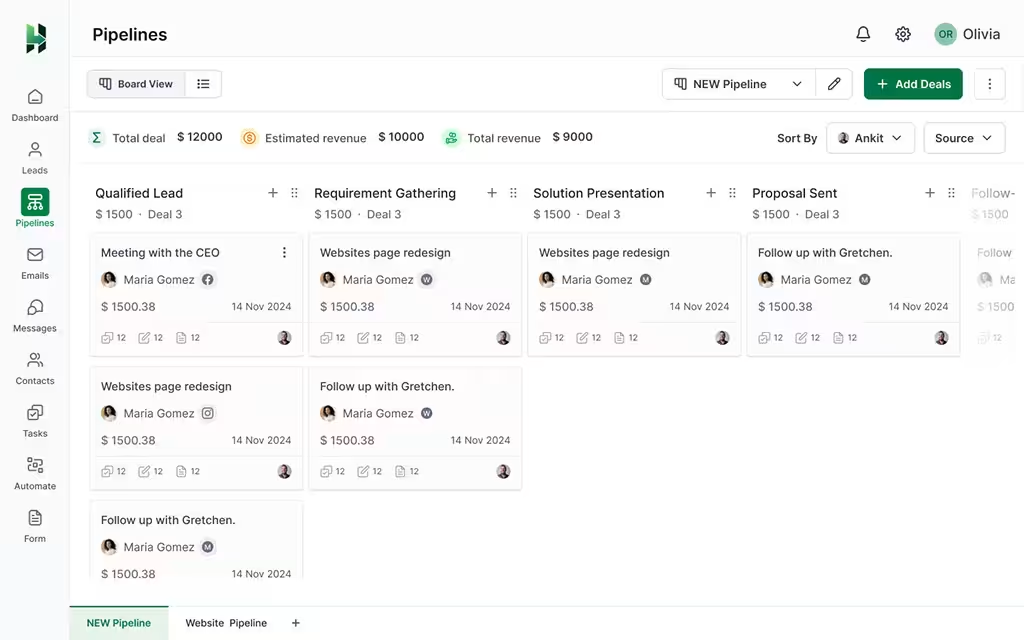
Manage every stage of your sales pipeline in one place with LeadHeed’s visual pipeline, task assignments, and automated follow-ups.
Best Practices to Improve Sales Pipeline Stage
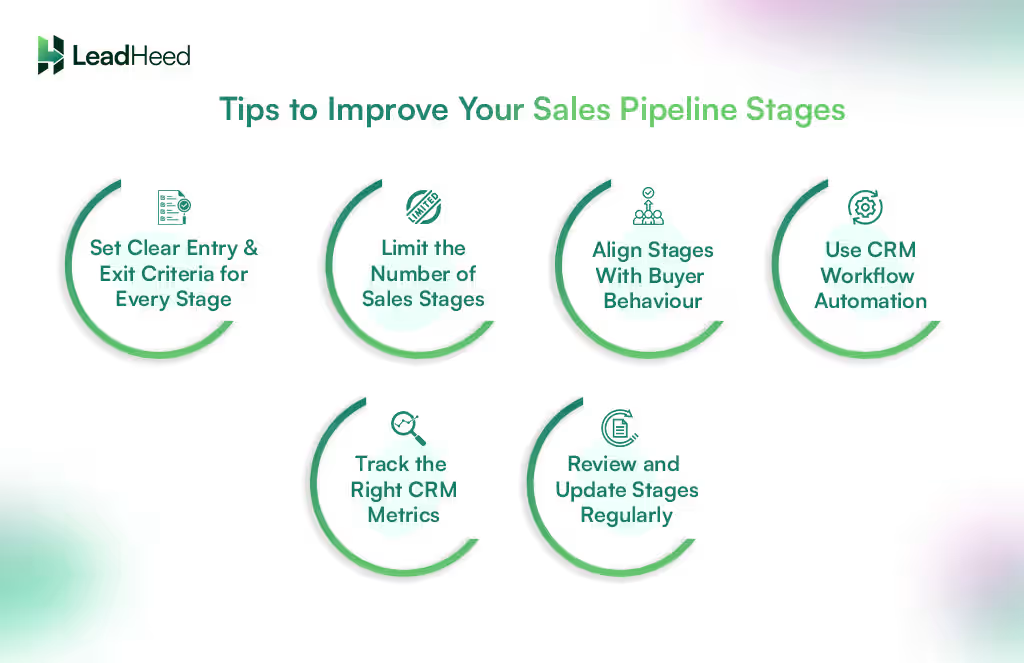
To improve sales pipeline stages, teams should define clear stage rules, limit pipeline complexity, and structure stages around real buyer behavior. Similarly, CRM automation, performance tracking, and regular updates keep the pipeline healthy and predictable.
I. Set Clear Entry and Exit Criteria for Every Stage
Reps should know exactly when a deal enters a stage and what must happen before it moves forward. For example, a lead should only move from qualification to discovery once budget, need, and decision authority are confirmed. Clear rules keep crm sales stages accurate and prevent deals from staying in the wrong stage.
II. Limit the Number of Sales Stages
Too many stages slow down CRM reporting, confuse reps, and make it harder to see where deals are getting stuck. Most high-performing teams operate well with five to seven core stages. Fewer stages encourage reps to focus on moving deals forward rather than updating statuses.
III. Align Stages With Buyer Behavior
Each stage should match a real step in the buyer’s journey, such as researching options, comparing vendors, requesting pricing, or seeking internal approval. When stages mirror buyer actions, reps can respond more effectively, offer the right information at the right time, and avoid pushing prospects before they are ready.
IV. Use CRM Workflow Automation
Set up CRM workflow automation to trigger actions at every pipeline stage, such as sending follow-up reminders or creating tasks and scheduling an appointment when a deal moves forward. Automated workflows reduce delays and ensure sales reps act at the right time without manual effort.
V. Track the Right CRM Metrics
Monitor CRM metrics, such as conversion rates between stages, average time spent in each stage, win rates, and deal value, to know whether deals are progressing in a healthy way. Tracking these numbers helps managers spot problems early, such as low qualification quality or slow proposal follow-ups, and coach teams more effectively.
VI. Review and Update Stages Regularly
Sales processes change as markets, products, and customers change. Reviewing your pipeline helps you spot bottlenecks and outdated steps. Also, small adjustments over time keep the process practical and relevant.
Conclusion
A clear sales pipeline gives structure to every stage of the buying process. It creates shared standards, improves collaboration, and ensures every opportunity receives the right attention at the right time. When everyone follows the same process, results become more predictable and easier to improve.
By following consistent stages, using CRM tools wisely, and reviewing performance regularly, sales teams can improve close rates and predict revenue more accurately. Over time, this approach builds a stable, scalable sales operation and supports long-term customer relationships.
With LeadHeed, managing your sales pipeline stages becomes simple, visual, and effective. The platform allows you to define custom stages, assign tasks at each stage, automate email follow-ups and reminders, and track progress from a single dashboard. From lead capture to deal close, every stage is visible, measurable, and actionable. Start your free trial today!
Frequently Asked Questions (FAQs)
What is the Difference Between a Sales Pipeline and a Sales Funnel?
A sales pipeline reflects the salesperson’s workflow, showing the practical steps and daily actions used to move prospects toward closing. In contrast, a sales funnel represents the buyer’s journey, highlighting how leads progress from interest to purchase and where conversions or drop-offs happen.
How many stages should a sales pipeline have?
A sales pipeline should usually have 5 to 7 stages, enough to clearly track each step from lead generation to deal closure without making the process too complex. However, the exact number depends on your sales cycle, deal size, and customer behavior
Can a sales pipeline be customized?
Yes, teams can adjust sales pipeline stages, rules, and workflows based on deal size, target audience, and buying behavior to match your business model, sales process, and customer journey.
Which CRM Metrics Indicate a Healthy Sales Pipeline?
CRM metrics such as pipeline growth rate, sales velocity, deal slippage rate, and customer acquisition cost (CAC) indicate how healthy a sales pipeline is. When these numbers remain stable or improve, it shows efficient lead management and strong closing potential.