

Shortening the sales cycle is the best practice to boost your revenue by completing sales in a short period of time. The more time your deal spends in the pipeline, the more costly it becomes to convert leads. Longer sales cycles don’t just stall revenue growth; they also weaken the sales process, consuming the time of a prospect. To shorten your sales cycle, you must focus on efficiency more than speed.
Sales cycles don’t lengthen because buyers take more time to make a decision; it is due to sellers failing to qualify leads and create urgency. Sales representatives should be fast and should reduce complexity, identify challenges before they appear, and keep deals moving with a problem-centric approach.
Highlights
- Define and manage each sales cycle stage clearly to eliminate confusion, reduce delays, and ensure every deal moves forward with purpose and consistency
- Focus on early lead qualification and buyer intent to avoid wasting time on low-converting prospects and improve overall sales efficiency
- Use automation for follow-ups, task management, and workflows to maintain consistent engagement and prevent deals from stalling in the pipeline.
- Leverage CRM visibility and tracking to identify bottlenecks, optimize strategies, and continuously shorten the sales cycle for predictable revenue growth.
What is a Sales Cycle?
A sales cycle is the structured process sales teams follow to turn prospects into customers. It starts from the first interaction and moves through stages like qualification, nurturing, proposal, and closing. It is a sales process of converting a prospect from the initial stage of the sales pipeline to a closed deal. Well-defined sales cycle stages help teams stay organized, identify bottlenecks, and close deals more predictably.
Common Sales Cycle Stages
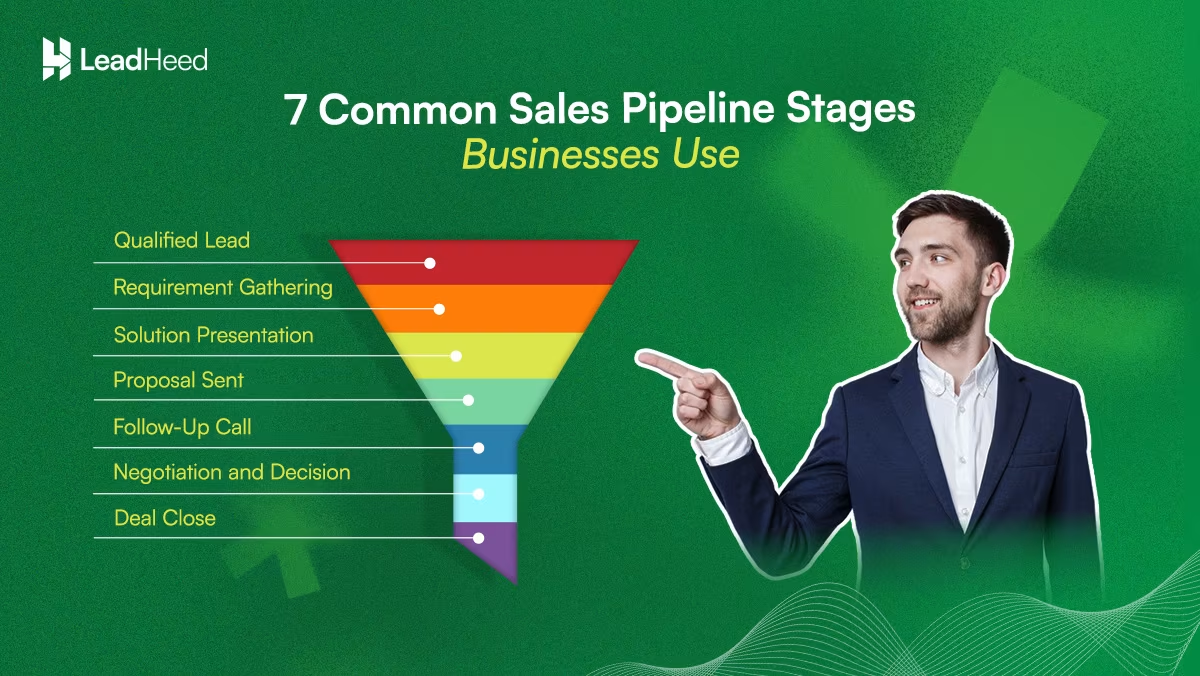
A structured sales cycle keeps deals moving forward and removes delays caused by confusion or missed actions. Below are the common sales cycle stages that businesses use.
- Prospecting: Identify relevant leads using centralized data and integrations, ensuring only high-potential opportunities enter the pipeline.
- Leads Qualification: Filter prospects based on intent and fit, while lead scoring and tracking help prioritize deals that are more likely to convert faster.
- Initial Contact: Builds the first connection through timely and consistent communication, supported by automated email management to avoid delays.
- Presentation or Demo: Demonstrate value clearly and move decision-making forward, while engagement tracking helps refine follow-ups based on prospect behavior.
- Closing Sales: Finalize the deal with clear next steps, supported by pipeline visibility and task management to ensure no opportunity is left ignored.
- Post Sales Follow-up: Engage with customers after sales to retain them in the future, and also, after building trust through engagement, you get more referrals.
These are the common stages of the sales cycle generally followed by businesses. According to the industry you belong to, your sales strategies can be different. People use customer relationship management software to customize their sales pipeline and shorten the sales process.
With LeadHeed, you can create your own sales pipeline that matches your business strategy and manage deal stages more effectively to close deals faster and eliminate deal rotting.
Why Does the Sales Cycle Become Too Long?
The sales cycle becomes increasingly long because of unplanned tactics, complex decision-making, economic caution, and research-driven buyers. Stages of the sales pipeline should be well managed and optimized with perfect strategies to close deals on time with high conversions to win deals. Let’s discuss some primary reasons for the sales cycle to become too long:
- Poor lead qualification: The leads you select from the lead list should be sales qualified because investing your valuable time in unqualified leads delays your sales cycle.
- Delayed follow-ups: You must engage with the prospect at the right time to make them feel valued. Delay in your engagement has a high chance for leads to choose your competitor as their solution.
- Lack of urgency: Create genuine urgency with prospects to convert them into paying customers and make them purchase the product on time.
- Complex decision-making by buyer: When prospects you are dealing with make a complex decision that takes more time, you may not convert them in the targeted timeline.
9 Proven Strategies to Shorten Your Sales Cycle
A shorter sales cycle improves revenue predictability and reduces the cost of conversion by eliminating delays across stages. Each strategy works best when supported by automation, tracking, and clear pipeline visibility.
Here are 9 proven strategies that help shorten your sales cycles:
1. Qualify Leads Early
Early qualification ensures only high-intent prospects enter the pipeline and reduces time spent on unqualified leads. Clear criteria like need, budget, and urgency help move deals forward without unnecessary effort. Lead scoring and lead tracking features make prioritization faster and more accurate.
Qualify your Leads Faster with LeadHeed
Prioritize your leads using tags and segment them based on their urgency, so your team can follow-up faster and close deals with more confidence.
2. Define Clear Buyer Personas
Define buyer personas to improve targeting and align messaging with real customer needs. Focus on communication to reduce your confusion and speed up decision-making. Centralized customer data helps you to refine personas based on actual interactions and outcomes.
3. Respond to Leads Faster
Responding fast is a must in sales because while you, as a sales rep, take a long time to respond to the inquiries of prospects, it makes them feel ignored by the company, and they choose your competitor as their solution. A faster response pulls prospects towards you because of the value you have provided to them.
4. Take a Consultative Sales Approach
Act as a consultant more than a sales representative to make your prospects work with you comfortably, and you can guide them as a consultant towards deal closure. Consult your prospects with personal questions and note their pain points to offer them the best solution and gain their trust. Instead of focusing on direct sales, a pitching consultation is a good approach to maintain close engagement with prospects.
5. Increase Marketing and Sales Alignment
The marketing team passes the qualified leads for further nurturing. To build trust, the promises made by the marketers should align with the offers made by the sales team. The marketing and sales departments should organize a campaign together, sharing all data to align sales and marketing properly; their solid alignment eliminates confusion and converts leads quickly.
6. Automate Repetitive Tasks
Task and sales automation is an important aspect in every sales pipeline because there are many prospects you need to take care of. Automation removes delays caused by manual follow-ups, task assignments, and reminders. Consistent workflows keep every deal progressing without gaps. Workflow automation ensures actions are triggered at the right time to maintain proper engagement and momentum.
Automate your Workflows with LeadHeed
Set up task and email automation to follow-up on time, responsibilities clear, and every opportunity moving forward.
7. Personalize Every Interaction
Engage with customers throughout the nurturing phase to understand their nature and behaviour, so you can personalize interactions. Activity tracking and interaction history help maintain personalized context in every conversation. Relevant conversations address specific pain points and reduce hesitation to talk and negotiate.
8. Address Objections Proactively
Proactive objection handling removes doubts before prospects block deals. Early clarity builds confidence and reduces communication challenges. With a stored communication history, you can identify and resolve common concerns efficiently. Keep in mind, you are the solution prospects rely on to address the problems and pain points they have been facing.
9. Create a Mutual Action Plan
A mutual plan is a shared document that outlines every step, milestone, and responsibility of both buyer and seller. By defining key milestones, deadlines, and responsibilities, a robust mutual action plan (MAP) promotes responsibility and provides visibility into exactly where a deal might be stalling. A shared MAP defines each step for buyers and reps with a fixed deadline to align the sales process for deal closures on time.
Final Thoughts
The speed of the sales cycle enhances revenues and lowers the cost of customer acquisition by removing delays and inefficiencies. An organized system through the sales cycle phases will make sure that each activity is focused and moving the deal forward. Regular qualification, prompt participation, and proactive management of issues lead to an easier way of closing deals.
A good sales representative tracks revenue and designs their strategic sales pipeline as per the nature of the business and prospects. Sales pipeline management is easier when performed with CRM software like LeadHeed, where you can customize your deal stages, track estimated revenue, and also add deal notes for the representatives to tailor personalized conversations with leads. Sign up for LeadHeed today!!!
FAQs
How long should a healthy sales cycle be?
There is no fixed answer for this question. Normally, it is considered 30 days for normal deals, but it depends on price and complexity. However, if your sales cycles are lengthy compared to the industry type, you need to refine your sales strategy and start increasing urgency.
How does lead scoring help shorten the sales cycle?
Lead scoring prioritizes the leads that are qualified for sales pitching by giving them tags or marks as per their nature and behaviour.
How does automation help reduce sales cycle time?
Automation removes manual delays by handling follow-ups, task assignments, and reminders, ensuring consistent engagement and faster deal progression.
How does CRM help in shortening the sales cycle?
CRM improves visibility, tracks interactions, automates workflows, and helps prioritize leads in a single centralized system, which ensures faster and more efficient deal closure.
Which CRM is best for shortening a sales cycle?
LeadHeed CRM is the best CRM that helps in shortening the sales cycle through its customizable sales pipeline management software and Sales tracking software that tracks deal status after qualifying leads and moving to a deal.