
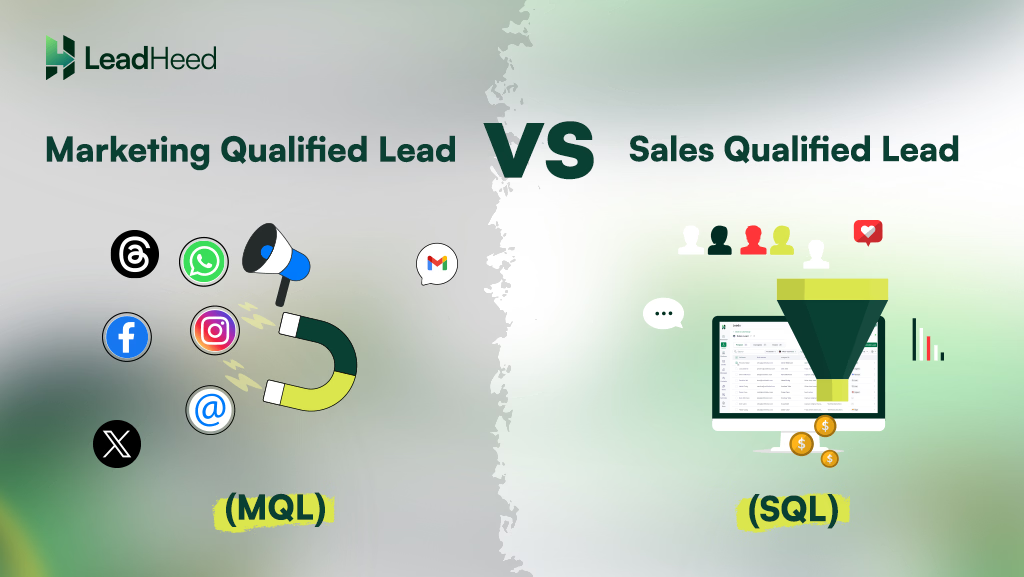
Sales and marketing alignment is essential for business growth, but challenges often arise during the lead handoff from one team to the other. Marketing may believe a lead is ready to move forward, while sales may see that same lead as needing more nurturing. The gap often comes from a lack of clarity around MQL vs. SQL.
A Marketing Qualified Lead (MQL) is a prospect who has shown interest in your business, while a Sales Qualified Lead (SQL) is a prospect who is ready for direct outreach from the sales team. Although the difference may seem simple, the way these stages are defined has a major impact on conversion rates, pipeline efficiency, and revenue performance.
When both teams have a clear understanding of MQL and SQL, marketing can hand off leads with greater confidence, and sales can focus on prospects who are more likely to convert. It creates a smoother handoff process, improves follow-up, and delivers a better experience for potential customers.
Highlights
- A prospect who has a genuine interest in the product but is not yet ready to purchase it is known as a Marketing Qualified Lead (MQL).
- A prospect with high purchasing intent is known as a Sales Qualified Lead (SQL).
- Purchasing intent is the main difference between MQLs and SQLs, where MQLs only have interest in studying about the product, but SQLs are ready to buy and talk less.
- MQL lies at the middle of the sales funnel (MOFU), and SQL lies at the bottom of the funnel (BOFU).
- Moving leads from MQL to SQL requires shared criteria, lead scoring, strong nurturing, fast follow-up, and a smooth handoff process.
What is a Marketing Qualified Lead (MQL)?
A Marketing Qualified Lead (MQL) is a person or a business that has shown a genuine interest in your product and service, who is more likely to be a paying customer compared to a random visitor. These leads are qualified by the marketing team based on their actions, like downloading e-books, signing up for webinars, or visiting product pricing pages frequently.
Although those leads’ actions show that they are interested, they may not be ready to talk to the sales team yet. They usually need more nurturing before moving to the next stage.
How to Identify MQL?
Identifying an MQL requires a combination of fit and engagement. A lead may be considered an MQL if they match your target audience profile and take actions that show meaningful interest.
Common indicators for marketing qualified leads include:
- Sustainable Engagement Pattern: An MQL lead interacts with your brand consistently over time, not just once. It includes repeated website visits, multiple content downloads, or ongoing interaction with emails and campaigns.
- Alignment with Ideal Customer Profile (ICP): The lead should match your target audience in terms of firmographic data (industry, company size), geographic location, and demographic data (job seniority or role). High engagement does not count as an MQL if the person does not fit your ICP.
- Active Research Behaviour: When someone spends time comparing options and learning more about the product, they are showing active research behaviour. It means they are moving from interest to possible purchase.
- Passed Scoring Thresholds: Many companies use lead scoring to assign points based on actions, profile fit, and engagement level. Once a lead reaches the required score, it is considered qualified enough to be treated as a Marketing Qualified Lead.
What is a Sales Qualified Lead (SQL)?
A Sales Qualified Lead (SQL) is a prospective customer who has been researched, examined, and is ready for direct sales engagement with clear purchasing intent.t. At this stage, the lead has moved beyond basic interest and shown clear signs of purchase intent, making them a strong opportunity for the sales team.
In most cases, an SQL has already identified a specific problem or need and is actively searching for the right solution. They are often ready for the next step in the buying journey, such as a sales call, product demo, consultation, or pricing discussion.
How to Identify SQL?
An SQL is identified through signals that indicate buying readiness, such as requesting a demo, asking for pricing, booking a consultation, or directly expressing interest in speaking with sales. In some cases, frameworks like BANT (Budget, Authority, Need, Timeline) or CHAMP (Challenges, Authority, Money, Prioritization) are used to determine whether a lead is sales qualified.
The indicators for sales qualified leads are:
- Active Buying Intent: An SQL shows a strong interest in buying the product or service. They may ask for a demo, request pricing, or contact the sales team directly.
- Fits the Ideal Customer Profile: The lead should match the company’s target customer in terms of need, budget, industry, or decision-making role. A good fit means the sales team is more likely to convert the lead into an opportunity.
- Defined Need or Problem: An SQL usually has a clear problem that needs to be solved. They are looking for a real solution, not just browsing.
- Active Engagement with Sales Staff: The lead interacts directly with the sales team through calls, emails, meetings, or follow-up questions.
- Ready for Sales Conversation: At this stage, the lead is open to having a direct discussion with the sales team. They are willing to share details such as their budget, schedule, goals, and specific needs.
- Qualified by Sales Criteria: Sales teams review whether the lead has the budget, authority, need, and right timing to buy. If the lead meets these points, it is considered ready for active sales follow-up.
Differences Between Marketing Qualified Lead (MQL) and Sales Qualified Lead (SQL)
Marketing-qualified leads are those prospects interested in learning more about the product, while sales-qualified leads are potential customers who have demonstrated clearer buying intent and meet the criteria for direct sales outreach.
Below is the detailed comparison between MQL and SQL:
| Features | Marketing Qualified Lead (MQL) | Sales Qualified Lead (SQL) |
| Definition | Prospects who are interested in a product or service but are not yet ready to pay for it. | Prospects who know about the product and services with clear buying intent and are ready for sales pitching. |
| Intent | Research and learning are the intent of MQLs. | Evaluating and purchasing is the intent of SQLs. |
| Actions | The actions of these leads are downloading ebooks, attending webinars, etc. | The actions of these leads are requesting a demo and price discussions. |
| Ownership | The marketing team takes ownership of the leads. | The sales team takes ownership of the leads. |
| Goal | Builds trust of prospects towards the product and service. | Closing the deals with sales-ready prospects. |
| Engagement | They interact passively, focusing on content consumption. | They interact actively, focusing on sales conversations. |
| Funnel Stage | It lies at the middle of the sales funnel. | It lies at the bottom of the sales funnel. |
Why Understanding the Difference Between an MQL and an SQL is Important?
It is important to know the difference between an MQL and an SQL because it creates a clear process for moving leads through the sales funnel. When both teams understand which leads are ready for the next step, they can work better together and avoid confusion. It leads to better follow-up, stronger customer relationships, and more sales.
Sales Efficiency
If salespeople contact every lead, they may waste time on people who are only exploring and not ready to make a decision. By separating MQLs and SQLs, marketing handles early-stage leads while sales focuses on serious buyers. It saves time and helps the sales team work more effectively.
Sales and Marketing Alignment
A clear separation between MQLs and SQLs strengthens coordination between sales and marketing. Both teams can follow the same criteria to decide when a lead is ready to move forward in the funnel. It reduces misunderstandings and makes the handoff process more organized. In this way, both departments work together more smoothly toward shared business goals.
Improved Revenue Growth
Having proper knowledge about the leads improves revenue growth because it helps in separating future interest from active buying intents. It allows organisations to correctly allocate time, effort, and resources toward high-potential prospects, which results in improved conversion rates and revenue increases.
Shorten Sales Cycle
Not every lead should enter the sales process at the same stage. SQLs are already closer to making a purchase, so sales teams do not need to spend as much time building initial interest. Because of this, conversations can move faster toward decision-making and closing.
Enhanced Customer Experience
Marketing qualified leads are nurtured through personalized content, whereas sales qualified leads are ready for direct interaction with sales representatives. Understanding this difference helps your team prevent premature sales pitches and avoid pushing sales conversations too early, which can discourage or annoy prospects. As a result, customers experience a more natural and effective buying journey.
Where Do MQL and SQL Fall in the Sales Funnel?
Based on a lead’s level of readiness, the sales funnel is divided into three key stages: Top of the Funnel (TOFU), Middle of the Funnel (MOFU), and Bottom of the Funnel (BOFU). Since MQLs and SQLs are both qualified leads, they fall under MOFU and BOFU stages, respectively, depending on how ready they are for direct sales engagement.
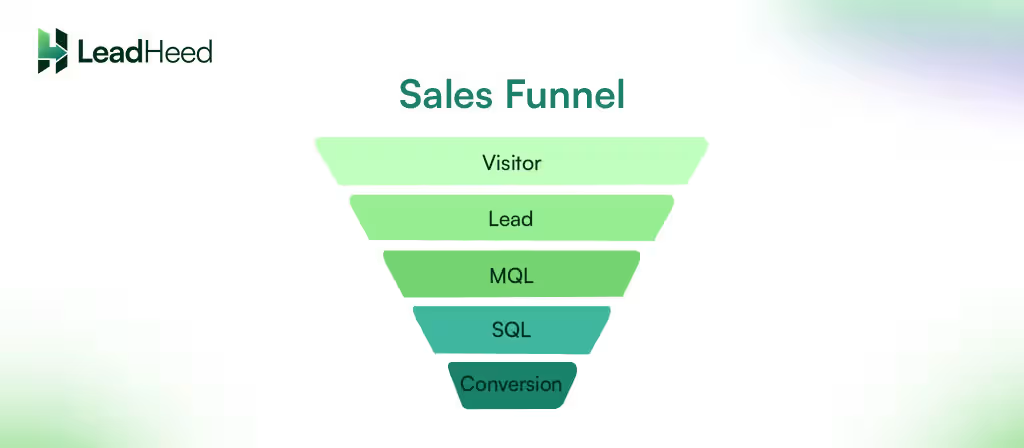
MQLs: Middle of the Funnel (MOFU)
Marketing Qualified Leads usually fall in the middle of the funnel because they have already shown enough interest to stand out from regular visitors, but are still in the consideration phase. They still need guidance and nurturing from the marketing team before they are ready to speak with sales.
SQLs: Bottom of the Funnel (BOFU)
Sales-qualified leads fall at the bottom of the funnel because this is the final, critical, and narrowest stage for the buyer’s journey, where the intent is high, and purchase is about to happen. SQLs are ready for face-to-face engagement with the sales team, where personally customised communication and offers can convert them into paying customers.
How to Convert Leads from MQL to SQL?
Converting a lead from MQL to SQL means moving someone from marketing interest to sales readiness. It happens when the lead not only engages with your content but also fits your target audience based on factors like industry, company size, budget, or decision-making role. A fast and personal follow-up from sales helps confirm their needs and interests. If the lead is qualified and open to a conversation, they become an SQL.
Align Sales and Marketing
A smooth transition from MQL to SQL depends on both teams agreeing on what qualifies a lead for sales outreach. When marketing and sales use shared criteria, handoffs become more accurate, and sales teams can focus on leads that are more likely to convert.
Implement Lead Scoring
Assigning numerical points according to high-intent behavior and demographic fit helps sales representatives know which leads deserve immediate attention. When points are tied to actions like viewing pricing pages, downloading case studies, or requesting a demo, it becomes easier to identify who is showing serious interest. It gives both teams a more reliable way to decide when a lead is ready to move forward.
Define High-Intent Signals
An MQL may show interest by downloading an eBook or engaging with your content, while an SQL shows stronger intent through actions like visiting the pricing page multiple times, requesting a demo, or checking product comparison pages. To make the transition smoother, you should define these high-intent actions clearly and use them as signals for timely sales follow-up.
Nurture with Contents
To move MQLs closer to becoming SQLs, you should focus on helping rather than selling. Instead of sending hard sales messages too soon, give leads useful content that matches what they are interested in, such as case studies, whitepapers, guides, or interactive tools. When you respond to their behavior, like repeated visits to your pricing page or interest in a specific topic, you show that you understand what they need. It makes the experience feel more personal and helps guide them naturally toward a demo or consultation.
Automate the Handoff
A manual handoff can slow things down and create confusion, especially when you are managing a large number of leads. For such cases, you can use CRM or marketing automation tools. Once a lead meets your SQL criteria, the system can notify sales, assign the lead, and share the right information, so no valuable opportunity gets missed.
Engage Quickly
A quick positive reaction to the interest of the high-intent buying leads saves time for both buyer and seller, which prevents immediate frustration and builds good trust among them. Using behavioural triggers like automatically emailing testimonials after prospects read the case study to know their interest helps ensure the sales team engages quickly and spends time on sales-ready prospects only.
Boost Growth with Smarter MQL and SQL Management with LeadHeed
MQLs and SQLs play different but equally important roles in the lead journey. While MQLs reflect early interest and engagement, SQLs represent leads that are more prepared for direct sales interaction. Understanding this difference helps businesses create a smoother handoff between marketing and sales, improve lead quality, and focus efforts where they matter most. When both teams work with clear definitions and a shared process, the result is better alignment, stronger conversions, and a more effective customer journey.
Clear lead qualification works best when it is backed by a CRM that keeps every step visible. LeadHeed, an all-in-one CRM software, helps you manage both MQL and SQL stages without the mess of separate tools. It lets you capture leads from multiple channels, organize them with tags and filters, convert the best-fit leads into deals, and keep follow-ups moving with automation and built-in email management.
Sign up for LeadHeed for free and turn lead management into a process your team can actually follow.
Frequently Asked Questions (FAQs)
What comes first, MQL or SQL?
A lead usually becomes an MQL first when they show interest and engage with your marketing, and with further nurturing, it can move to the SQL stage once it meets the criteria for sales outreach.
Do all SQLs become customers?
No, some of the sales-qualified leads do not transform into customers. Even when a lead shows strong buying intent, some may drop off because of changing needs, limited budget, or a better offer from a competitor.
What happens if MQLs aren’t converting to SQLs?
If MQLs aren’t converting to SQLs, it typically highlights a misalignment between marketing and sales, often caused by either misguided targeting or premature lead qualification and rejection.
Can a lead skip the MQL stage?
Yes, a prospect can go directly from a raw lead to an SQL if their first interaction is a high-intent action, such as requesting a quote directly from a search ad.