

B2B SaaS sales becomes harder to manage as the team grows. What worked with a few reps stops working when you have more leads, more handoffs, and more deals moving at once. Without a clear structure, pipelines get messy, follow-ups become inconsistent, and forecasts change every week.
A strong Sales Operations function builds the systems, processes, and reporting that keep sales predictable and scalable. It sets clear pipeline stages, improves CRM data quality, standardizes lead routing, and creates reporting that leaders can trust.
With the right Saas Sales Operations team structure, sales reps spend less time on admin work and more time on high-value selling, while managers gain predictable visibility into performance and revenue.
What Is Sales Operations in B2B SaaS?
Sales Operations (Sales Ops) is the function that makes sales execution repeatable and measurable. It builds the processes, systems, and reporting for the sales team to keep the pipeline clean and the forecast reliable.
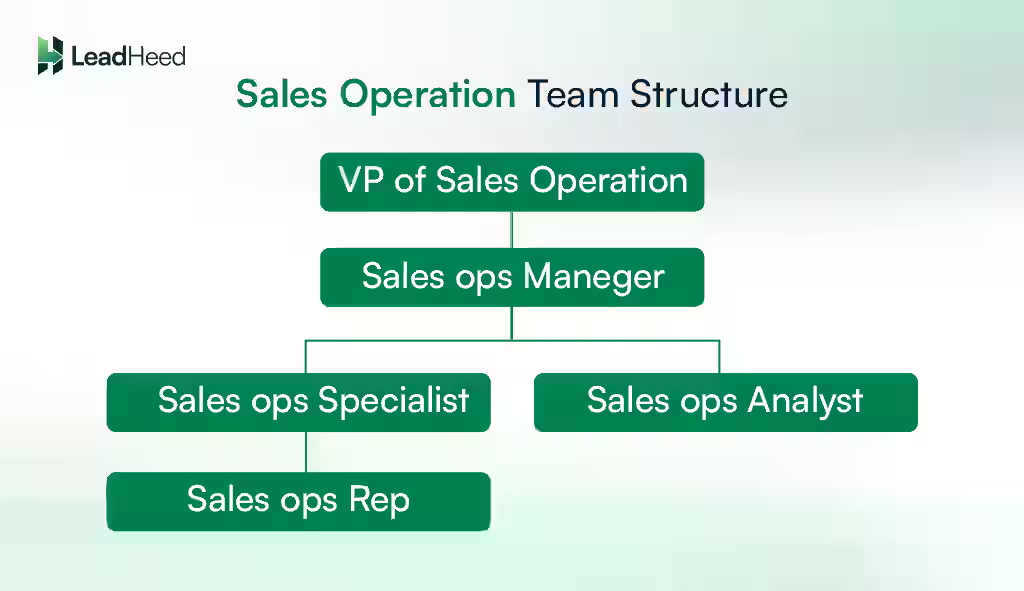
Sales Ops does not replace selling. It removes friction so reps can sell faster and managers can make better decisions.
In B2B SaaS, Sales Ops typically owns:
- Sales process and pipeline rules: stages, exit criteria, deal hygiene, deal aging
- CRM ownership: setup, fields, automation, integrations, permissions, data quality
- Reporting and insights: dashboards, funnel metrics, conversion rates, performance tracking
- Forecasting support: pipeline coverage, risk flags, forecast cadence
- Planning and operations: territories, quotas, capacity planning, and often commissions support
Sales Ops vs RevOps (Where Sales Ops Fits)
Sales Ops focuses on improving how the sales team runs day to day. It owns the sales process, CRM setup, pipeline hygiene, reporting, forecasting support, and sales planning tasks, like territories or quotas. Its goal is to reduce admin work, remove process confusion, and give sales leaders clean data to manage performance.
Meanwhile, RevOps (Revenue Operations) aligns operations across the full revenue engine (typically Marketing, Sales, and Customer Success). It connects the entire customer journey from first touch to renewal by standardizing definitions (like MQL/SQL), fixing handoffs, improving lifecycle reporting, and coordinating systems and data across teams. In many SaaS companies, Sales Ops becomes part of RevOps as the company scales.
When Sales Ops is enough:
- Small sales team with a simple funnel.
- Main problems are CRM setup, pipeline stages, and forecasting.
- Marketing and CS processes do not need deep operational alignment yet.
When to move toward RevOps:
- Leads move through multiple handoffs (marketing → SDR → AE → CS/AM).
- Reporting needs to cover the full funnel, retention, and expansion.
- Definitions and data differ across teams, causing confusion.
- You need one team to own the revenue process, systems, and analytics end-to-end.
3 Common Models for a B2B SaaS Sales Ops Team Structure
Sales Ops team structure depends on how your sales org sells and how complex your handoffs are. Some teams need one person to own everything end-to-end. Others need specialized roles to keep CRM, reporting, forecasting, and deal support running smoothly.
The following are the 3 most common sales team operations structures that B2B SaaS companies use.
- The Island Model
- The Assembly Line Model
- The Pod Model
1. The Island Sales Team Structure
The Island model is a centralized Sales Ops setup where one person (or a small team) owns most operations end-to-end. In this sales operations team structure, a small, centralized group (often one person early on) handles everything: CRM setup, reporting, process rules, lead routing, and forecasting support.
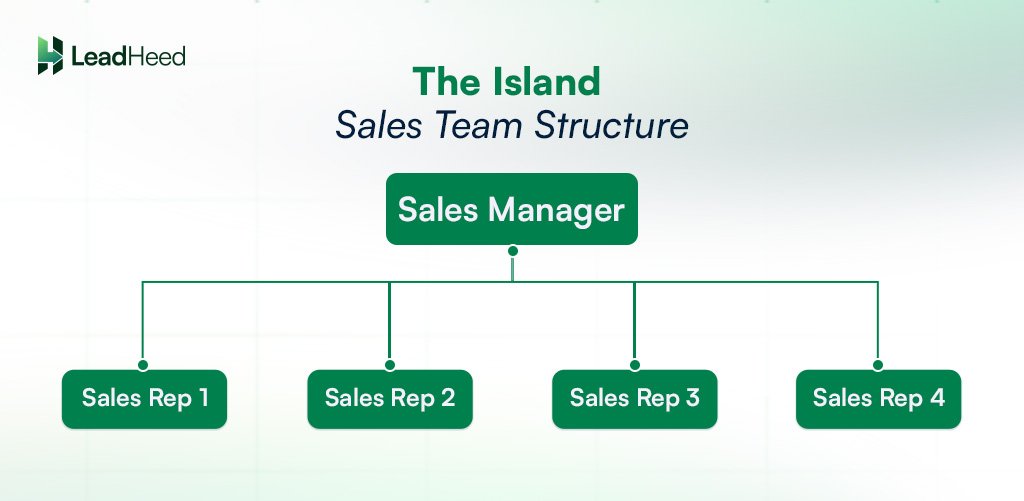
When you use the Island for your B2B SaaS sales operations team structure, it keeps decisions fast and ownership clear because one team (often one person early on) controls the system and standards.
2. The Assembly Line Sales Team Structure
In the Assembly Line sales ops team structure, different people own different areas, such as CRM/systems, analytics/reporting, forecasting, compensation, and deal desk support.
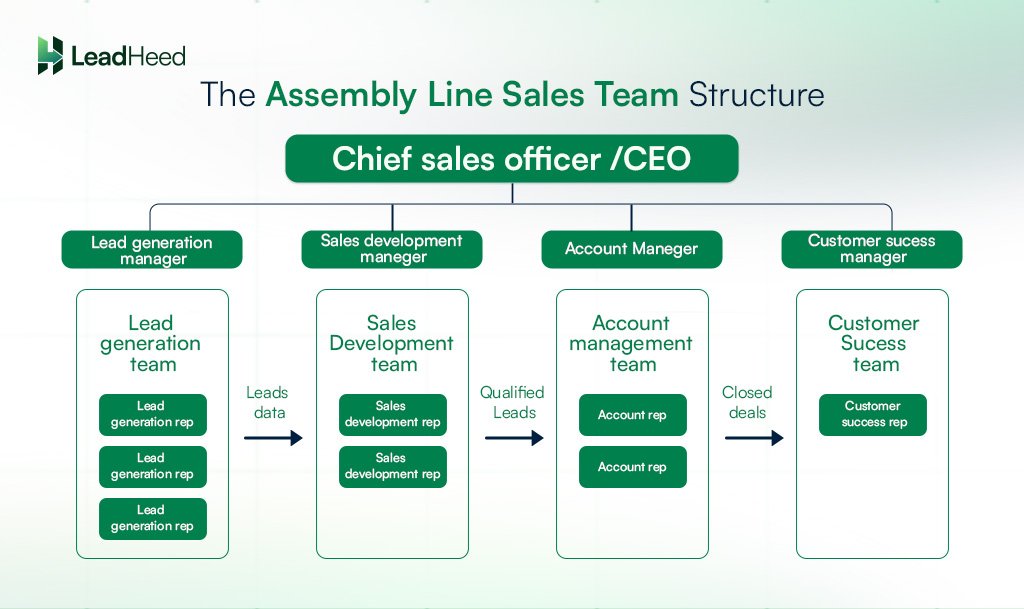
The assembly line sales team structure improves speed and quality because specialists handle their own “lane” and build deeper expertise. It fits SaaS companies with higher deal volume, multiple teams, and more complex planning needs.
3. The Pod Sales Team Structure
The Pod sales team structure is an embedded setup where ops support aligns to specific sales segments or teams (SMB, Mid-Market, Enterprise, regions). Each pod gets dedicated ops support that understands its pipeline, targets, and daily workflow. It makes Sales Ops more responsive and aligned to what the sales team needs right now.
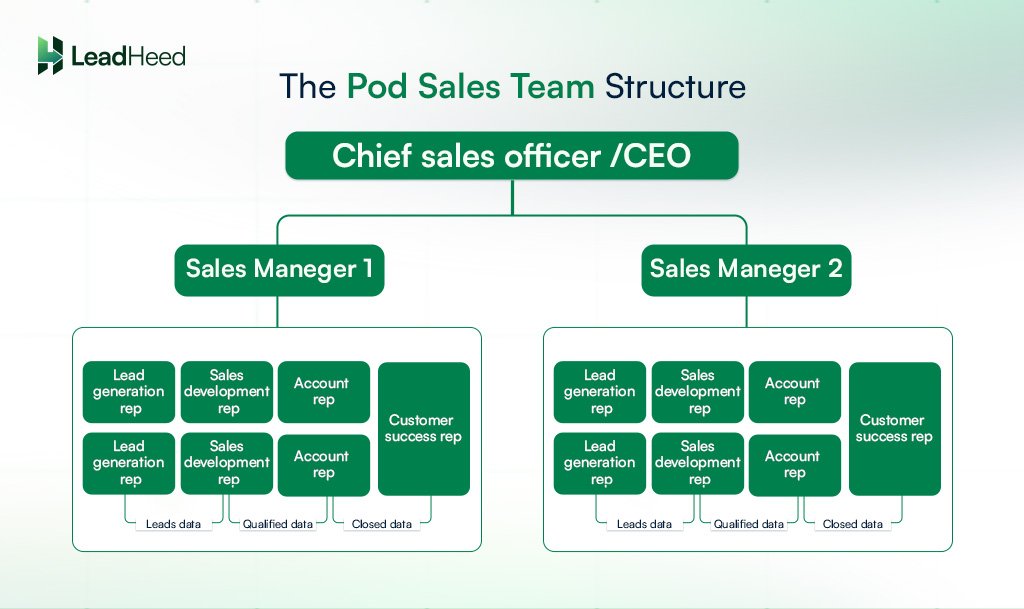
The Pod sales model increases responsiveness because each team gets ops help that understands their sales motion, pipeline needs, and reporting requirements. It works best for B2B SaaS companies where each segment sells differently and needs different dashboards, rules, and support.
Roles of a B2B SaaS Sales Team
A B2B SaaS sales team usually splits roles based on two things: where the lead comes from (inbound vs outbound) and what happens after the first conversation (closing, onboarding, renewals, expansion). As the company grows, the roles become more specialized to increase speed, focus, and conversion rates.
SDR / BDR (Sales Development / Business Development)
A sales development representatives (SDR) qualify inbound leads and book meetings for Account Executives, while business development representatives (BDR) often focus more on outbound prospecting and generating new opportunities. Their job is to identify fit, confirm interest, and set the next step.
Account Executive (AE)
Account executives run discovery, product demos, proposals, and negotiations. They own the deal from qualified opportunity to close. In some teams, AEs are “full-cycle” and also prospect, but in most scaling SaaS orgs, SDRs handle top-of-funnel.
Sales Engineer (SE) / Solutions Consultant
SEs support AEs on technical or complex deals. They handle deeper product validation, integrations, security questions, and tailored demos. This role becomes important when customers require proof before purchase.
Account Manager (AM)
Account Managers focus on expansion and relationship management after the deal closes. They drive upgrades, cross-sells, and renewals in some orgs. In other orgs, AM and CSM responsibilities overlap depending on company structure.
Customer Success Manager (CSM)
CSMs help customers adopt the product and achieve results. They reduce churn by improving onboarding, usage, and long-term success. In many SaaS companies, CSMs handle renewals for smaller accounts, while AMs focus on expansion in larger accounts.
Sales Manager / Sales Leader
Sales leaders manage coaching, performance, pipeline reviews, and forecasting. They ensure reps follow the process and hit targets. They also work closely with Sales Ops on reporting, territories, and pipeline health.
Tools that a B2B SaaS Sales Team Must Have
A B2B SaaS sales team needs tools that reduce manual work and keep every lead, deal, and follow-up organized. You must have a stack that supports prospecting, selling, forecasting, and handoffs without losing visibility.
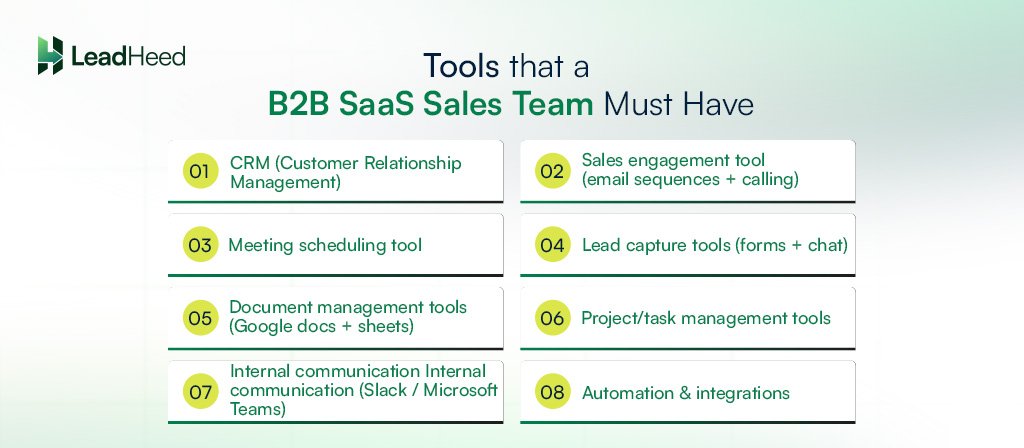
1. CRM (Customer Relationship Management)
A CRM is the core system where you track leads, contacts, deals, pipeline stages, and follow-ups. It keeps customer history in one place and helps the team stay persistent. Without a CRM, reporting and forecasting become unreliable.
2. Sales engagement tool (email sequences + calling)
A telephony system and engagement tools help sales reps run outreach at scale with email sequences, follow-ups, and call tracking. It improves response rates and keeps activity organized without relying on manual reminders.
3. Meeting scheduling tool
A scheduling link reduces friction and increases booked meetings. It saves time for both sides and makes it easier for SDRs and AEs to move leads to the next step.
4. Lead capture tools (forms + chat)
Forms, chat widgets, and inbound capture tools help you collect leads from website traffic and route them to the right rep. Fast capture and fast response often decide who wins the deal.
5. Document management tools (Google docs + sheets)
Document management tools (Google workspace, Docs + sheets, etc) keeps proposals, pricing sheets, case studies, and contracts organized and easy to find. It also speeds up approvals and signatures with standard templates.
6. Project/task management tools
Project management tools like Asana and ClickUP helps sales teams track internal tasks (proposal prep, onboarding coordination, implementation steps, and cross-team follow-ups).
7. Internal communication (Slack / Microsoft Teams)
Sales moves faster when reps can quickly ask questions, share deal updates, and get approvals from product, finance, or leadership. It also helps teams coordinate handoffs between SDRs, AEs, and Customer Success.
8. Automation & integrations
Automation tools connect your CRM with forms, email tools, calendars, ads, and spreadsheets. They reduce manual data entry, automate lead routing, and trigger follow-ups or notifications automatically.
Using LeadHeed for your Sales Teams
A B2B SaaS Sales Ops team structure only works when it matches your sales motion and keeps execution consistent.
LeadHeed covers most of the core tools a B2B SaaS sales team needs inside one system, so you do not have to stitch everything together with multiple apps. You can capture inbound leads using forms, organize every lead and contact in one place, and move deals through a clear pipeline with consistent stages.
Instead of switching between spreadsheets and tools to understand deal status, your team can see what is moving, what is stuck, and what needs attention.
If you want a simple and easy-to-use CRM for your sales team to use daily, LeadHeed is a best option. Sign up for LeadHeed for free and standardize your workflow for improved sales operations.
FAQs
When should a SaaS company hire its first Sales Ops role?
Most SaaS teams need Sales Ops when deal volume increases and sales leaders struggle with CRM consistency, forecasting accuracy, lead routing, and admin load on reps.
What are the key responsibilities of Sales Ops?
Sales Ops typically manages CRM setup, pipeline stages and rules, lead routing, reporting and dashboards, forecasting support, territory and quota planning, and sometimes commissions and deal desk workflows.
How do you structure Sales Ops for SMB vs Enterprise?
SMB teams usually need a lean, centralized model with simple automation and reporting, while Enterprise teams often need specialized roles (systems, analytics, deal desk, comp) or embedded ops pods aligned by segment.
How does Sales Ops improve forecasting?
Sales Ops improves forecasting by standardizing pipeline stages, enforcing required deal fields, tracking deal health, and building dashboards that show pipeline coverage and risk clearly.