
Understanding our customers’ problems is more important than offering a solution in sales and marketing. Most of the prospects discuss what they see on the surface, like missed follow-ups, slow processes, and inconsistent results, but those symptoms rarely explain why they are not initiating any action. When pain stays unclear, urgency stays low, and deals drift away.
The Sandler pain funnel gives you a clear way to uncover what sits beneath surface complaints. It helps you ask structured questions that move from a broad issue to specific consequences, business impact, and emotional weight. Rather than forcing the products on the customers, it involves listening and identifying the problems of the candidate.
Highlights
- Sandler’s pain funnel is a sales questioning framework that identifies customer pain points.
- It helps you qualify faster, build trust, and create urgency by making the cost of inaction clear.
- The Sandler pain funnel questions guide discovery step by step to reveal details, prior attempts, emotional drivers, and the consequences of doing nothing.
- Pain funnel questions can feel slow or intrusive if used poorly, and it works best when the seller has strong listening skills and the sales cycle allows deeper discovery.
- Sandler focuses on uncovering pain and urgency, while frameworks like BANT, MEDDIC, SPIN, and CHAMP add structure around budget, authority, decision process, and measurable outcomes.
What is the Sandler Pain Funnel?
The Sandler pain funnel is a sales questioning framework designed to uncover a prospect’s real pain, not just the surface problem they mention first. It uses structured funneling questions to move from a broad issue to a specific issue, consequences, and urgency.
Every question helps to reveal more details and helps sales professionals to understand what the real problem is and why it needs to be solved. It creates a more honest conversation, improves qualification, and makes the value of your solution easier for the prospect to understand, because they define the pain in their own words.
Why Does the Sandler Pain Funnel Matter?
Use of the Sandler pain funnel helps sales teams avoid wasting time on unqualified leads by quickly finding out if a prospect has a real problem to solve. As the conversation goes deeper, the prospect sees the cost of the problem and becomes more ready to take action. It helps build trust, highlights the value of your solution, and keeps the sales process shorter and more focused.
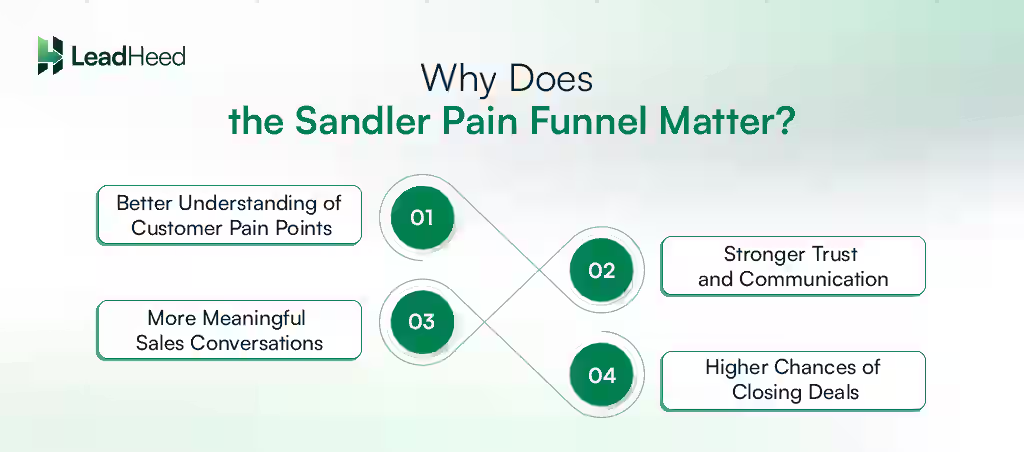
I. Better Understanding of Customer Pain Points
By transforming a traditional sales pitch into consultative sales questions, representatives can better understand the pain points of the prospects. When prospects explain their situation in detail, sales reps can recommend solutions that fit the real problem instead of guessing.
II. Stronger Trust and Communication
Sandler pain funnel focuses on selling with empathy, which helps them feel heard and makes discussions more open and honest. The thoughtful discovery questions and listening to customers authentically build stronger trust and improve communication between sales representatives and the customers.
III. More Meaningful Sales Conversations
The Pain funnel keeps the conversation client-focused by exploring consequences, impact, and urgency before presenting a solution. That depth makes discussions more relevant and helps prospects see why change matters now.
IV. Higher Chances of Closing Deals
Prospects who fully understand their pain are more likely to commit to a solution. The Sandler pain funnel helps you uncover the consequences of the problem, such as delays, missed opportunities, or team pressure. When the consequences are clear, the next steps feel necessary.
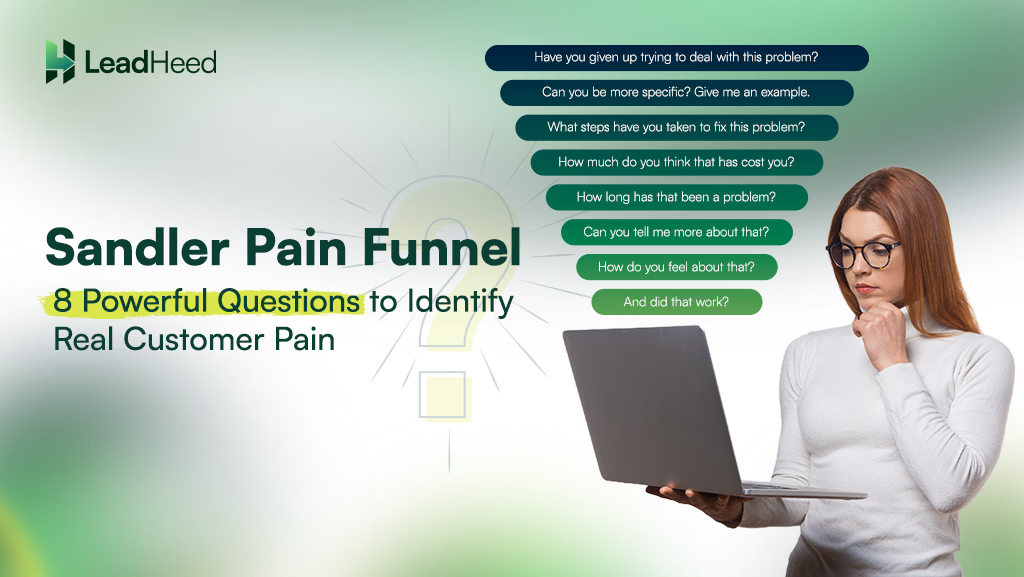
8 Best Sandler Pain Funnel Questions with Example
The value of the Sandler pain funnel comes from its order. Starting broad keeps the prospect comfortable, and going deeper step by step reveals details, impact, and urgency. Each question builds on the previous answer and brings the conversation closer to the root issue.
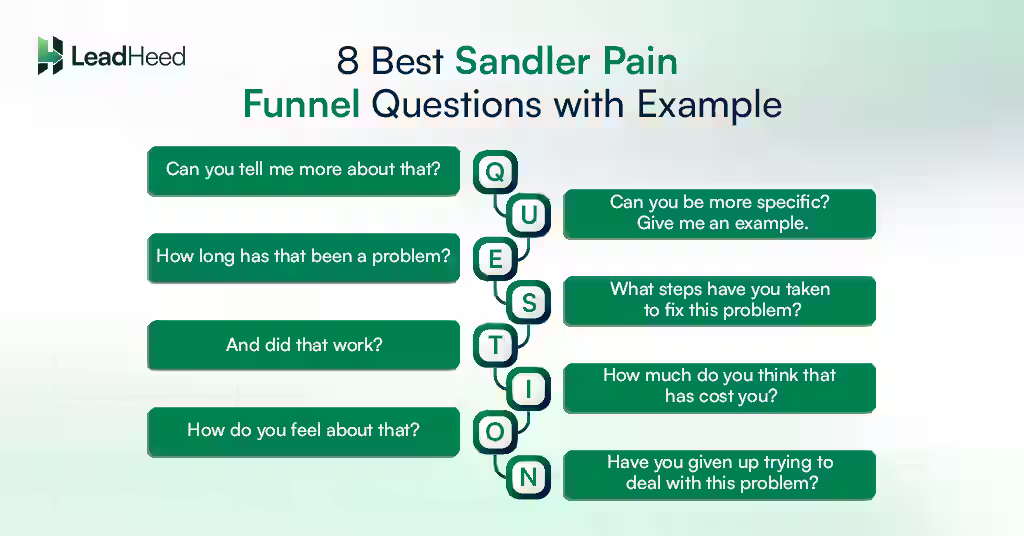
1. Can you tell me more about that?
It is an open-ended question aimed to prompt the prospects to give more details about the confusion they are being affected by and start to explain the problem in brief. It eliminates yes/no answers and helps uncover what they mean, what happened, who was involved, and why the issue matters to them.
2. Can you be more specific? Give me an example.
Requesting specificity moves the conversation from general statements to real situations. An example clarifies what “often,” “bad,” or “difficult” actually looks like in real life, which reduces misunderstandings, making it easier to identify what needs to change and what success would look like.
3. How long has that been a problem?
The question helps you understand the history of the issue and how serious it has become over time. It shows whether the problem is new, ongoing, or getting worse. It also signals the urgency of a problem, whether it is a temporary, recurring, or long-term challenge that needs a real solution.
4. What steps have you taken to fix this problem?
Asking about prior attempts reveals what the prospect has already tried and how much effort they’ve invested. Here, you can check the possible frustrations, internal obstacles, and why previous solutions didn’t work. It also prevents you from repeating ideas they’ve already tested.
5. And did that work?
Asking this helps you evaluate the results of the client’s previous efforts. It reveals what improvements they did (or didn’t), how consistent those results were, and what limitations remained. It also shows you where they’re still dissatisfied, so the conversation naturally shifts toward what a better solution would need to do.
6. How much do you think that has cost you?
The goal of this question is to turn a vague problem into something measurable. It prompts the prospect to think about what the issue is costing them in money, time, energy, and resources. Even if they can’t give an exact figure, an estimate helps highlight the real impact and shows whether the problem is big enough to require action.
7. How do you feel about that?
Asking about feelings brings out emotional drivers like frustration, fear, guilt, sadness, or anger, which often influence behavior more than logic does. Emotional clarity helps determine what support the person needs and what might be blocking progress. Feelings also reveal how important the issue is, because strong emotions usually signal high personal stakes.
8. Have you given up trying to deal with this problem?
The question checks whether the person feels defeated or still believes improvement is possible. It can uncover exhaustion, hopelessness, or fear of failing again. If they have not given up, it highlights motivation that can be built on; if they have, it shows that encouragement and smaller, manageable steps may be needed.
Here’s an example of how Sandler pain funnel questions are used in a real-life conversation:
|
Sales rep: Can you tell me more about what issue you are facing? Sales rep: Can you be more specific about the problem? Sales rep: How long has that been a problem? Sales rep: What steps have you taken to fix this problem? Sales rep: And did that work? Sales rep: How much do you think that has cost you? Sales rep: How do you feel about that? Sales rep: Have you given up trying to deal with this problem? Sales rep: Understood. If a tool helped you capture every message and lead in one place, assign follow-ups, and track each lead through a pipeline, would you want to explore it? |
Limitations of the Sandler Pain Funnel
The sandler pain funnel requires high emotional intelligence and trust; without those, the questions can feel scripted, intrusive, or manipulative. It’s also often too slow and consultative for quick, low-cost, transactional sales cycles.
I. Requires High Emotional Intelligence
A salesperson must have the empathy and conversational skills to flow questions naturally, and the questions asked should be natural because it seems like the salesperson is forcing the prospect to buy their product. This step can be challenging for some of the inexperienced representatives.
II. Not Suitable for all sales cycles
A deep and consultative kind of approach may only be suitable for high-value, complex, or B2B sales because it may be over-committed for quick, transactional, or low-cost sales. In fast-paced transactional sales, the customer wants a quick and efficient solution rather than a consultative session.
III. Risk of Overdesigning the Conversation
Inexperienced representatives may lead to a robotic conversation rather than a natural one, which feels like being forced into interrogation, destroying the sales. This approach disrupts the natural flow and makes it a misleading sales pitch due to the forceful conversation.
IV. Potential Perceived Manipulation
Questioning and conversing with prospects without any genuine empathy may feel like manipulation or an interrogation to them. If the structure is not natural, well planned, or scripted, then the prospects may feel pressured or managed rather than being understood.
V. Requires Trust Before Use
sandler pain funnel demands a high level of emotional intelligence, patience, and time investment from a salesperson. Without this trust, prospects don’t like being asked deep, investigative questions, and this may hold back the deal.
Sandler vs Other Lead Qualification Frameworks
Sales teams use different qualification frameworks to improve discovery and avoid chasing the wrong deals. Each framework asks different types of questions and fits different sales situations. The Sandler pain funnel stands out because it goes deeper into consequences and urgency, while many other frameworks focus more on decision readiness, budget, or timeline.
1. Sandler vs SPIN Selling (Situation, Problem, Implication, Need-payoff)
SPIN is a framework designed to shift the focus of prospects from product features to expose an urgent solution. It focuses on four types of questions:
- Situation: The current workflow.
- Problem: Explore the obstacle.
- Implication: Highlight the consequences of delay.
- Need-Payoff: Demonstrate how the proposed solution could fix the problem.
Similarities: Structured questioning to guide the conversation towards identifying the problem.
Differences: SPIN is more structured and logically designed to build a business case, but Sandler is more concentrated on the emotional and personal impact of the pain. SPIN often looks for benefits, whereas Sandler focuses on emotional pain points.
2. Sandler vs BANT (Budget, Authority, Need, Timing)
BANT works as a filtering checklist that determines if the prospect is worth pursuing or not, and also doesn’t waste time on unqualified leads. Its Criterias are:
- Budget: Does the prospect have a budget?
- Authority: Does the person conversing have authority to sign a contract?
- Need: Does the prospect actually need your service?
- Timing: What is the urgency?
Similarities: Qualification of prospects early in the sales process is the aim of both Sandler and BANT.
Differences: BANT is a quick checklist that acts as a logical and structural filter to validate the lead if it is worth pursuing. In contrast, the Sandler pain funnel is a deep conversational technique that consults the prospects and finds the pain points to provide them with the best solution.
3. Sandler vs MEDDICC (Metrics, Economic Buyer, Decision Criteria, Decision Process, Identify Pain, Champion, Competition)
The MEDDICC sales framework is used in complex B2B sales to ensure opportunities are possible. It focuses on:
- Metrics: What are Measurable results expected by prospects?
- Economic Buyer: Who controls the budget?
- Decision Criteria: What are the factors influencing financial decisions?
- Decision Process: How will the decision be made and approved?
- Identify Pain: What are the specific problems?
- Champion: Who supports the prospect?
- Competition: Who else is being considered?
Similarities: Both frameworks qualify and manage complex high-stakes sales.
Differences: MEDDICC is an inflexible, across-the-board checklist to manage enterprise deals, but Sandler is more focused on a natural, emotional, human side framework, which ensures buyers want to change.
Conclusion
The Sandler pain funnel is a simple and effective way to understand customer problems. By asking clear questions and listening carefully, sales and marketing teams can uncover real pain points and recommend the right solutions. When used well, it helps qualify leads faster, keeps conversations focused, and improves closing rates. Sandler also supports a trust-building approach because it relies on empathy and understanding rather than pressure.
If you want a simple CRM that helps you turn better discovery into consistent follow-ups and cleaner deal progress, consider LeadHeed. Our all-in-one CRM helps you save key pain points in each contact, track deals in a clear pipeline, and set reminders so you follow up on time. LeadHeed also keeps emails and customer messages in one place, so your team stays on the same page. Start LeadHeed free trial today!
Frequently Asked Questions
How does the pain funnel differ from traditional sales systems?
Traditional sales systems often focus on pitching solutions early, but the pain funnel identifies the real pain points of prospects and provides the required solution.
Why is the order of questions important?
A structured order keeps prospects comfortable while you go from board intellectual to deeper into the problem. It also helps you connect the issue to measurable impact, which makes the next steps easier to agree on.
When should the pain funnel be used?
You should use the sandler pain funnel during the discovery stage of a sales conversation when a prospect shares a problem, but the impact, urgency, or root cause is still unclear.
What should I do after completing the pain funnel?
After completing the pain funnel, summarize the prospect’s key pain and impact, confirm agreement, and propose a clear next step (demo, proposal, or follow-up) tied directly to solving that pain.