
You publish a strong guide, promote it on social media, and people read, scroll, and share it, but you still do not know who the visitors are. Most people leave without subscribing, booking a call, or sharing any details, so you cannot follow up or qualify their interest. As a result, your content performed well, but it did not create leads.
Instead of giving away your valuable resource with no next step, you can use gated content and place it behind a simple form. Interested readers exchange basic details, like name and email, to access the resource, which turns anonymous traffic into identifiable leads and gives you a clear path for nurturing.
Highlights
- Gated content is a premium digital asset that users can access only after submitting details like name and email through a form.
- Gated content marketing helps businesses generate high-intent leads, segment audiences, personalize outreach, and track content performance more clearly.
- Common gated content examples include guides, reports, webinars, templates, tools, demos, free trials, and email courses.
- Content gating can increase lead volume and intent signals, but it can also reduce conversions if the offer or form is weak.
- Use strong assets, short forms, clear landing pages, and track results like conversion rate and engagement on gated content.
What is Gated Content?
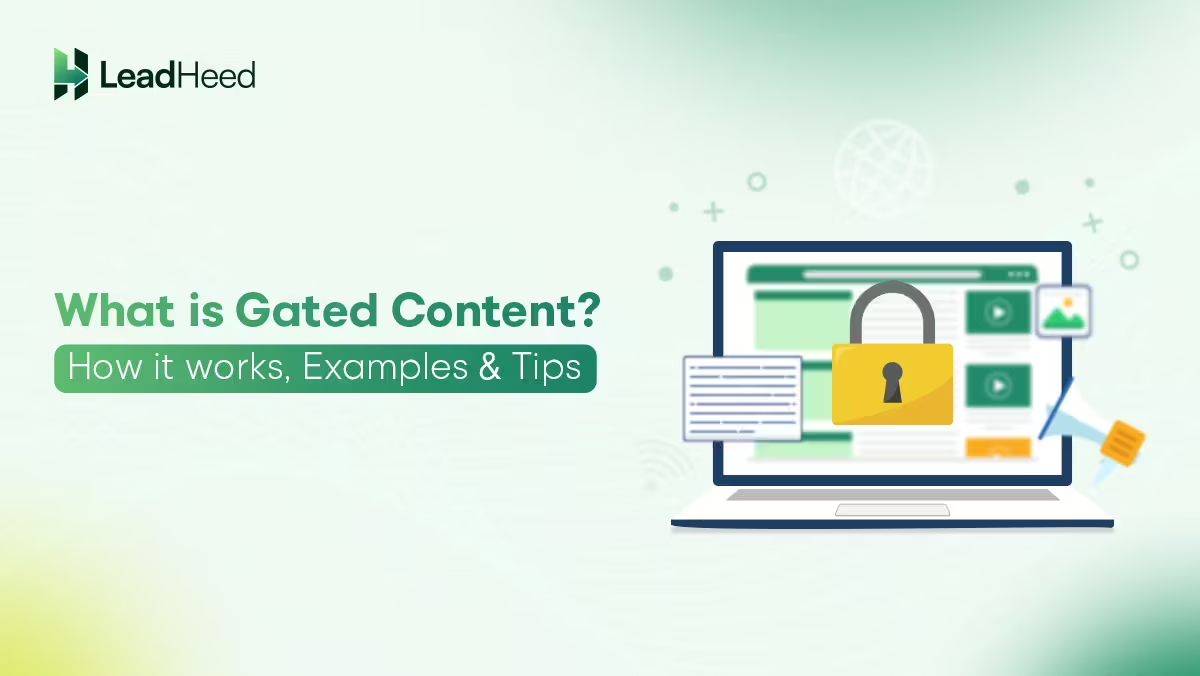
Gated content is valuable digital material, such as eBooks, webinars, templates, or industry reports, that is accessible only after a visitor submits a lead-capture form. The form typically requests details like a name, email address, company, or job title. Because these resources are usually original and not easy to find through a quick search, people are often willing to share their information in exchange for access.
Organizations use gated content as a strategic marketing tool to generate leads and identify people who are interested in a specific topic or solution. When someone shares their details to unlock an asset, they signal a genuine interest in the topic. It makes gated content marketing useful for qualifying prospects, segmenting them by intent, and sending follow-up messages that match their needs.
How Does Gated Content Work?
Gated content offers a high-value resource, placing it behind a form, collecting visitor details, and then delivering the asset instantly. It helps you turn anonymous website visitors into leads you can follow up with. Instead of hoping readers subscribe or contact you on their own, it creates a clear next step and makes lead generation measurable.
1. Offer Selection
You should first choose a resource worth gating, such as a guide, template, checklist, webinar replay, report, or toolkit. The more useful and specific the asset is, the more likely visitors will share their details to access it. The content should solve a real problem or help the visitor achieve a clear outcome.
2. Landing Page Setup
Next, you create a landing page that explains the offer clearly. The page highlights what the resource includes, who it is for, and what results it helps the visitor get. A strong headline, short description, and clear call-to-action help visitors understand the value quickly and encourage sign-ups.
3. Form and Data Capture (The Gate)
Then, you add a lead capture form, which works as the “gate.” Visitors enter details like name and email address, and sometimes company name or job title, to access content. The goal here is to collect only the information you truly need, because longer forms usually reduce conversions.
4. Instant Content Delivery
After form submission, the visitor gets immediate access to the content. You can send an automated email with the download link or an unlocked page with a thank-you message. Fast delivery builds trust and ensures the visitor receives the value they expected.
5. Follow-Up and Nurturing
Finally, you use the collected details to nurture or follow up. You can tag leads based on the asset they downloaded, send related resources, and start a nurture sequence that matches their interest. It helps you qualify prospects, continue the conversation, and move leads toward a demo, call, or purchase.
Why Businesses Use Gated Content Marketing?
Businesses use gated content to turn valuable resources (ebooks, webinars, templates) into leads by collecting emails and contact details from interested prospects. It also helps qualify buyers and track performance by showing exactly who engaged and what topics drive conversions.
- High-Intent Lead Generation: Gated assets capture contact details from people who already care about the topic, so your content starts producing leads, not just page views.
- Better Lead Qualification: People who take the time to submit their details usually have a clearer need, which helps your team create a quality sales lead list.
- Audience Segmentation: When someone downloads a specific asset, you learn what they care about. That makes it easier to segment leads by topic, role, or need and send relevant content and offers later.
- Better Personalization and Follow-Up: Because you know what the lead requested, you can tailor follow-ups by sending a related checklist, a case study, or a product walkthrough. It improves response rates and builds trust faster.
- Clearer Performance Tracking: You can track conversion rates, identify which assets generate qualified leads, and connect content performance to pipeline and revenue outcomes.
Examples of Gated Content
Some common examples of gated content are downloadable guides, industry research reports, webinars, templates, free calculators/tools, product demos, and email learning series. Businesses place these behind forms to collect lead information such as name, email, role, or company details.
1. Guides and Ebooks
A downloadable ebook or guide is a detailed PDF (often 10–50 pages) that you can read on your phone or computer. It usually contains lots of helpful information, like tips, steps, or examples. Businesses gate these assets because they require time and expertise to create, and they attract people who want more than a quick overview.
To access it, you’ll usually see a simple form on a landing page asking for your name and email (sometimes your job title or company, too). After you fill out the form, you can download the PDF right away, or you can receive it in your email.
2. Industry Reports and Research
Reports and research assets include original data such as surveys, benchmarks, trend analysis, or market insights. These assets often attract strong interest and generate conversions because visitors cannot easily find the same information elsewhere.
Since the value is higher, the form to access it often asks for more than just a name and email. It may request a work email, role, industry, or company size so the business can qualify and segment leads.
3. Webinar Registration
A webinar is an online session where a company teaches something, demonstrates a process, or discusses a topic in depth. It may include live chat or Q&A, which makes it more interactive than reading an article.
Webinars are usually gated through a registration form. People sign up beforehand to attend live, and later the recorded version can also be gated for on-demand viewing, which gives the company two chances to collect leads from the same content.
4. Downloadable Templates
Instead of creating documents from scratch, nowadays users seek pre-built templates to get a quick and professional starting point for their work. So, many companies offer ready-made presentation slides, resume/CV layouts, proposal formats, or social media planning templates, which are hidden behind the form.
Users usually need to enter details such as their name and email address before downloading the file. Since these resources are directly usable and help save time and effort, they are highly valuable and are an effective lead generation tool.
5. Free Tools and Calculator
Free tools and calculators, such as ROI calculators, pricing tools, loan calculators, savings estimators, and SEO audit tools, are useful interactive resources that let users enter their own data and get instant results. Many businesses allow users to use the tool first, but ask for details such as name and email to view the full results, a detailed breakdown, or a downloadable report.
The free gated tools work well because users already see the value of the tool before they are asked to fill out a form. For businesses, it generates high-intent leads, and for users, it feels like a fair exchange because they receive practical and personalized output.
6. Product Demo Request
Demo pages collect a few details because the walkthrough is designed to fit your needs, not deliver the same pitch to everyone. When you share information like your name, work email, role, team size, and what you’re trying to achieve, the presenter can choose the most relevant features and use real examples that make sense for your situation.
To make booking easier, many companies include a scheduler right after the form so you can pick a time immediately. After the submission, you receive a confirmation email and calendar invite, and the team uses your answers to plan the right follow-up.
7. Free Trial
For digital products and software, a free trial is often the best way to show value. It gives users limited-time access to premium features so they can test the product in a real working environment. Since the trial usually starts only after account creation or form submission, it fits clearly under gated content.
Many companies design free trials carefully so users can experience the most important benefits early. They may provide guided setup steps, sample data, or suggested actions to help users get started quickly and avoid confusion. This improves the user experience while also helping the business generate stronger leads and better conversion opportunities.
8. Email Courses / Drip Series
Some topics are too long or too complicated to explain in just one email or one downloadable file. In that case, a company divides the content into an email course or drip series, where lessons are sent step by step over several days or weeks.
To access the full series, users usually need to sign up with their email address, which makes it a form of gated content. Because the lessons are delivered over time, the company has multiple opportunities to engage subscribers, build trust, and guide them toward a product or service in a natural way.
Gated Content vs. Ungated Content
Gated content requires users to fill out a form (usually with contact details) before they can access it, and is mainly used for lead generation. On the other hand, ungated content is freely available to everyone without any sign-up or form and is better for reach, trust-building, and SEO.
Here’s the quick comparison between gated content vs ungated content:
| Factor | Gated Content | Ungated Content |
| Access | Requires a form submission to unlock the asset | Available instantly with no form |
| Primary Goal | Lead capture and qualification for gated content marketing | Awareness, traffic growth, and education |
| Content Types | Premium assets like templates, reports, webinars, toolkits, and detailed guides | Blogs, tutorials, product pages, FAQs, videos |
| User Effort | Higher effort (users must share details first) | Low effort (instant access and easy to share) |
| SEO visibility | Limited, since key content is behind the gate | Strong, since the content is fully crawlable |
| Business Outcome | Helps capture leads, segment contacts, and support email nurturing | Mostly anonymous engagement (views, clicks, time) |
Pros and Cons of Gated Content
Gated content is effective for turning anonymous traffic into measurable leads because it captures contact information, reveals buyer interest through download behavior, and supports segmented nurturing. However, the form requirement can increase drop-off rates, reduce organic visibility for the asset, and weaken lead quality if the offer is not relevant and premium.
Pros of Gated Content
- Gated content converts anonymous visitors into real contacts by collecting details through a form.
- People who submit their information usually have a stronger interest, which makes lead qualification easier.
- With content gating, you can tag leads based on what they downloaded and send follow-ups that match their needs.
- Gated content marketing helps you build an email list and run nurture sequences that move leads toward a demo or purchase.
- You can connect assets to conversions, MQLs, and the pipeline, not just page views.
Cons of Gated Content
- Forms add an extra step, so some visitors will leave even if the content is good.
- Search engines cannot fully crawl locked content, so it may not rank as well as ungated content.
- If the asset does not feel worth the form, users may abandon or lose confidence in the brand.
- Long forms or unclear values can cause fake emails or incomplete details, reducing lead quality.
- Without a clear nurture plan, you collect leads but fail to convert them into opportunities.
When to Gate Your Content?
You should gate content when it solves a specific problem, provides original research, or supports high-intent buyers with assets like pricing guides, demos, and technical resources. For newer brands, it is usually better to ungate more content first to build trust, visibility, and organic traffic.
- When the Content Value is High: If your guide or tool solves a specific, painful problem for a user, they are much more likely to fill out a form to get it.
- When You Have Original or Exclusive Data: If you’ve conducted a survey or study that isn’t available anywhere else, that exclusivity makes your material suitable for gating.
- When You Are Targeting Bottom-of-the-Funnel Leads: Use gates when the content is designed for people close to making a purchase (like a pricing guide or a demo) rather than those just browsing.
- When Your Brand is Already Established: If people already trust your expertise, they won’t hesitate as much to sign up. If you are a new brands ungate content first to build initial trust.
- When the Content is Resource-Heavy to Create: If you invested substantial time, expertise, and budget to create a custom tool or content, asking users for an email before downloading or using it is justifiable.
Best Practices for Making Gated Content More Effective
To make gated content marketing more effective, create valuable assets like guides, templates, and reports that solve a specific audience problem. Pair the content with short lead capture forms, strong CTA copy, buyer-journey-based gating, and perform A/B testing to improve the gated content strategy.
I. Offer High-Value Content
Your gated asset should solve a clear challenge and include exclusive, high-quality information that is not easily available elsewhere. When users believe the content is worth it, they are more likely to complete the form and become qualified leads.
II. Match the Gate to the Buyer’s Journey
Use lighter gates (like email-only forms) for top-of-funnel content and stronger qualification forms for bottom-of-funnel assets like demos or case studies. This approach improves user experience while helping your marketing funnel capture the right leads at the right stage.
III. Create a Strong Landing Page
Build a dedicated landing page with keyword-rich headings, a clear value proposition, and search-optimized copy to help your gated content rank in search engines. Even though the asset is gated, the landing page can still drive organic traffic through SEO content marketing best practices.
IV. Keep Forms Short and Relevant
Ask only for the information you truly need, such as name and email, to reduce friction and increase form submissions. Shorter forms typically improve conversion rates, especially on mobile devices, while still supporting effective lead capture.
V. Use Clear CTAs and Benefit-Driven Message
Your call-to-action should clearly tell users what they will get, such as “Download the Free B2B Lead Generation Guide” instead of a generic “Submit.” Benefit-driven copy increases clicks because it highlights the outcome, making gated content more compelling and action-oriented.
VI. Test and Optimize Continuously
Run A/B tests on headlines, form length, CTA buttons, and landing page layouts to identify what improves performance. Regular optimization helps increase engagement, lower bounce rates, and make your gated content strategy more effective over time.
Conclusion
Gated content helps you turn valuable resources into leads by asking visitors to submit their details before they access an asset. It gives your content a clear next step, helps you capture high-intent prospects, and allows you to follow up based on what people actually requested. When you offer strong value, keep the form short, and deliver the asset instantly, gated content can consistently support lead generation.
With LeadHeed, you can run gated content more smoothly. LeadHeed web forms help you collect lead details from landing pages and send those leads directly into your CRM, where you can organize them, assign follow-ups, and trigger automated workflows. Start LeadHeed free trial today!
Frequently Asked Questions
Is gated content SEO-friendly?
Gated content is not fully SEO-friendly because search engines cannot crawl and index the locked asset itself, so it usually won’t rank like an ungated page. Still, an optimized landing page can rank and bring traffic to the gated offer.
How to create gated content?
You can create gated content by producing a valuable asset and placing it on a dedicated landing page with a clear benefit-driven message. Then, add a short form to unlock access and deliver the asset instantly, and finally follow up with relevant emails.
How to measure engagement on gated content assets?
To measure engagement on gated content assets, track landing page traffic, form conversion rate, and post-download actions like email opens/clicks, webinar attendance, and repeat visits. Then link those leads to outcomes such as MQLs, SQLs, demo requests, and pipeline to see which assets drive real results.
How much information should I ask for in a gate form?
For most gated content, ask for only the essential information needed for follow-up, such as name and email. You can add extra fields (company, job title, team size, phone) only when the asset has high value or buying intent, and you will actually use that data to personalize outreach.