
Running an ecommerce business often feels like juggling ten tabs at once. Orders keep coming in, customers ask questions, carts get abandoned, and marketing emails need to go out. Somewhere in all that noise, customer data is scattered across tools, which makes it hard to understand buyers and build loyalty.
An ecommerce CRM brings all customer information into one system. It helps personalize marketing, track interactions, and create consistent experiences across the customer journey.
By the end of this article, you will understand what ecommerce CRM is, why it matters, and some of the best ecommerce CRM to implement in your store.
What is Ecommerce CRM?
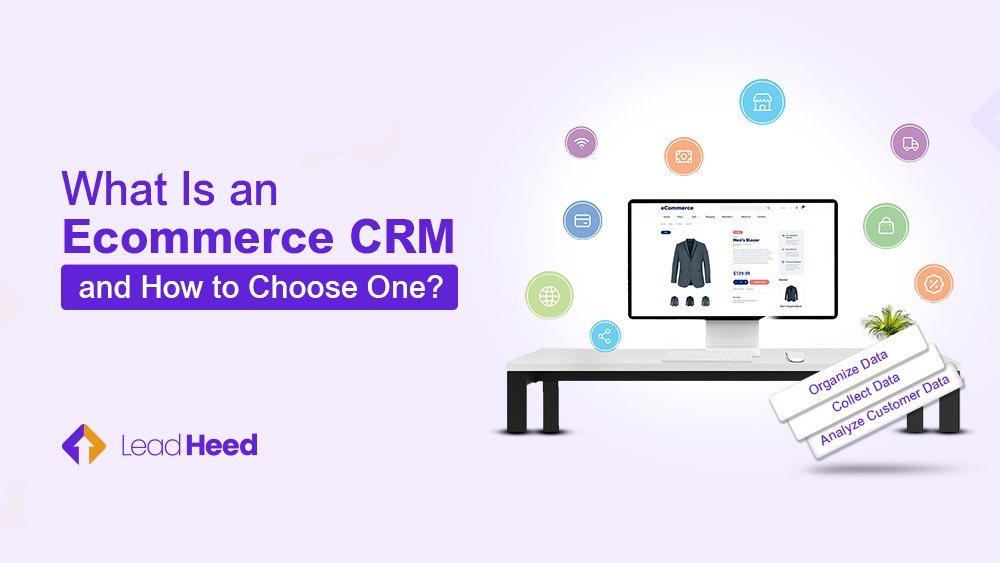
Ecommerce CRM is a software designed explicitly for online stores to collect, organize, and manage customer data in one place. It tracks key information such as purchase history, browsing activity, communication records, and customer preferences across the entire shopping journey. This allows brands to understand customers better and deliver more relevant experiences.
Unlike traditional CRM systems that focus mainly on sales teams and deal tracking, ecommerce CRM is built for online selling. It supports high-volume transactions, repeat purchases, and personalized marketing through features like order history, customer segmentation, and automated follow-ups. This makes it easier to turn first-time buyers into loyal customers.
Key Features of an Ecommerce CRM
Key features of an ecommerce CRM include unified customer and order data, automated multichannel messaging, and behavior-based customer segmentation. These systems also provide live sales and inventory tracking along with analytics that forecast performance and repeat purchase trends.
Centralized Customer and Order Data
An ecommerce CRM stores customer details, order history, and interactions in one place. This gives you a complete view of each customer and removes the need to switch between tools. It also helps teams stay aligned with consistent and accurate data.
Smart Customer Segmentation
Customers can be grouped based on behavior, purchase history, or preferences. This helps you send more relevant messages and target the right audience at the right time. Better segmentation leads to higher engagement and improved conversions.
Automated Email, SMS, & Multichannel Messaging
Automation allows you to send timely messages across email, SMS, and other channels. Actions like purchases, cart abandonment, or inactivity can trigger these messages. With this, customers now receive the right message without any manual effort.
Real-time Sales, Order, & Inventory Tracking
The system tracks sales performance, order status, and inventory levels in real-time. This helps you manage stock better and respond quickly to demand changes. It also reduces the risk of overselling or missed opportunities.
Predictive Analytics & Performance Reporting
Advanced CRMs have built-in analytics that use data to forecast sales trends, identify high-value customers, and measure campaign performance. These clear reports show what is working and where improvements are needed, helping online stores plan marketing, inventory, and growth strategies more effectively.
Benefits of Ecommerce CRM
An ecommerce CRM helps online businesses move beyond one-time transactions by building stronger customer relationships. By centralizing data and automating key processes, it supports growth, improves efficiency, and creates more consistent customer experiences.
Deeper Customer Insights
An ecommerce CRM gives you a clear view of customer behavior, preferences, and purchase history. This insight helps you understand what drives buying decisions and identify opportunities for retention.
Personalized Automated Marketing
Marketing campaigns can be tailored automatically based on customer actions and segments. This leads to more relevant messages, higher engagement, and better conversion rates.
Faster Customer Support
Support teams can access complete customer profiles in one place. This reduces response time and helps resolve issues more effectively.
Smarter Data-driven Decisions
With real-time data and clear reports, teams can see what is actually working and what is not. This helps teams respond faster to changes instead of waiting for delayed insights. Decisions become more confident because they are backed by real customer behavior.
Improved Team Efficiency
Automation and shared data reduce repetitive tasks and the back-and-forth between teams. Everyone stays aligned, which frees up time to focus on work that truly moves the business forward. As a result, teams can get more done without feeling overwhelmed.
How to Choose the Right Ecommerce CRM?
When choosing an ecommerce CRM, prioritize platform compatibility, easy navigation for your team, and the flexibility to handle more customers and orders as you scale. Look for built-in segmentation, automated messaging across channels, and real-time tracking to improve engagement and retention.
-
Check Platform Compatibility
Make sure the CRM works smoothly with your ecommerce platform, whether you use Shopify, WooCommerce, or another solution. Seamless integration keeps customer, order, and inventory data synced automatically. This prevents data silos and reduces manual updates that often lead to errors.
-
Consider Ease of Use
A good ecommerce CRM should be easy to use for everyone on your team. Look for a clean interface with simple navigation and clear workflows. When the system is easy to understand, teams adopt it faster and use it more consistently.
-
Review Scalability
Pick a CRM that does not limit you as your store grows. It should handle more customers, orders, and sales channels without performance issues. This saves you from the hassle of changing systems later when your business is bigger.
-
Look for Strong Integrations
A good CRM should work well with the tools you already rely on. Whether it is email, SMS, payments, or marketing platforms, everything should connect smoothly. This keeps daily work simple and reduces manual back-and-forth between tools.
-
Evaluate E-commerce-Focused Features
Not all CRMs are built for online selling. Prioritize platforms with ecommerce specific features like order tracking, customer segmentation, and automated campaigns. These tools help you drive repeat purchases and improve the customer experience.
Best Ecommerce CRM Tools
Here are our top picks of ecommerce CRM: LeadHeed, HubSpot, Klaviyo, Zoho Commerce, and Monday CRM.
1. LeadHeed
LeadHeed is an all-in-one CRM built to keep customer data, follow-ups, and workflows in one place. It helps ecommerce teams stay organized, automate routine tasks, and keep track of leads without a complicated setup. This makes it a strong option for stores that want practical tools without a steep learning curve.
Key Features
- Contact & lead management: Keeps all customer and lead details organized in one place.
- Workflow & marketing automation: Automates follow-ups and routine tasks to save time.
- Third-party integrations: Connects easily with tools you already use.
- Sales pipeline tracking: Shows where each lead or deal stands at a glance.
- Insights & reporting: Turns data into clear reports you can act on.
Pros
- Easy to use with a clear dashboard.
- Strong automation & workflow tools.
- Affordable pricing.
Cons
- Powerful automation can feel complex for users who prefer minimal setup.
Pricing |
||
| Free Trial | Basic | Pro |
|
|
|
|
||
2. HubSpot
HubSpot CRM is a popular all-in-one platform that helps ecommerce businesses manage contacts, track sales, and run marketing campaigns from a single interface. It combines CRM, marketing, sales, and service features, with free core CRM capabilities and scalable paid hubs.
Key Features
- Contact & deal management: Organizes customer details and active deals in one place.
- Email marketing & automation: Sends emails automatically based on customer actions.
- Sales pipelines & task tracking: Helps track deal progress and daily tasks efficiently.
- Powerful integrations: Works smoothly with a wide range of business tools.
Pros
- Very user-friendly.
- Free tier available.
- Extensive integration ecosystem.
Cons
- Can get expensive as you scale.
- Some ecommerce features require higher plans.
Pricing |
|||
| Free | Starter | Professional | Enterprise |
|
|
|
|
|
|||
3. Klaviyo
Klaviyo is built for ecommerce brands that want powerful email, SMS, and automation tools tied to customer behavior data. It integrates deeply with platforms like Shopify and WooCommerce, making it easy to deliver personalized campaigns based on purchase history.
Key Features
- Advanced segmentation: Groups customers based on behavior and purchase patterns.
- Email & SMS automation: Sends timely messages without manual effort.
- Ecommerce platform integrations: Connects directly with popular ecommerce platforms.
- Customer profiles & analytics: Shows detailed customer data and performance insights.
Pros
- Strong ecommerce marketing focus.
- Deep Shopify/Woo integrations.
Cons
- Can be pricey for growing lists.
- Mainly focused on messaging rather than complete CRM.
Pricing |
||
| Customer Agent | Customer Hub | Helpdesk |
|
|
|
4. Zoho Commerce
Zoho Commerce is a flexible ecommerce platform that helps manage sales processes, marketing activities, and customer support from one system. Its wide range of features and strong integration with other Zoho tools make it a good fit for ecommerce teams that want customizable and connected workflows.
Key Features
- Lead & deal tracking: Monitors leads and deals from first contact to close.
- Workflow automation: Automates routine steps to keep work moving.
- Analytics & reporting: Provides clear data on performance and results.
- AI assistant: AI helps with insights, suggestions, and basic tasks.
Pros
- Cost-effective.
- Highly customizable.
- Integrates with many business apps.
Cons
- Interface can feel overwhelming.
- Advanced tools may require learning time.
Pricing |
||
| Standard | Professional | Premium |
|
|
|
|
||
5. Monday CRM
Monday CRM is often used by teams that like seeing their work laid out clearly. It combines basic CRM functions with boards and workflows, which makes it easier to track deals and tasks together. This setup suits ecommerce teams that care about day-to-day collaboration as much as customer management.
Key Features
- Visual contact & deal boards: Displays contacts and deals in easy-to-follow boards.
- Workflow automations: Reduce manual work by automating routine actions.
- Task collaboration: Let teams assign, track, and discuss tasks together.
- Integrations with ecommerce tools: Connects with ecommerce platforms and related apps.
Pros
- Intuitive, visual interface.
- Great for team collaboration.
Cons
- Not designed specifically for eCommerce.
- No free plan and needs multiple users to start.
Pricing |
|||
| Basic | Standard | Pro | Enterprise |
|
|
|
|
|
|||
Conclusion
The future of ecommerce CRM is moving toward better personalization and smarter automation. As competition increases, brands need tools that help them understand customers and respond faster. Connecting data across marketing, sales, and support will become essential for delivering consistent experiences as stores grow.
Adopting an ecommerce CRM now helps brands stay ahead by improving retention, increasing efficiency, and making data-driven decisions faster.
Among the available options, LeadHeed stands out for its balance of simplicity and powerful automation. It gives ecommerce teams the tools they need to grow without unnecessary complexity, making it a strong choice for brands focused on long-term success.
Ready to simplify and grow your ecommerce business? Try LeadHeed today!
FAQs
What is ecommerce CRM?
Ecommerce CRM is a tool that has specific features designed explicitly for ecommerce businesses. It helps online stores collect and manage customer data, track purchase behavior, and support long-term relationships across the entire buying journey.
What is the best CRM for ecommerce?
The best ecommerce CRM depends on your needs, but platforms explicitly built for ecommerce usually deliver better results. Tools like LeadHeed stand out by combining ease of use with strong automation.
How does it help online stores?
An e-commerce CRM helps stores personalize marketing, improve customer support, and increase repeat purchases. It also saves time by automating everyday tasks.
What features are must-haves?
Key features include centralized customer data, smart segmentation, automation, real-time tracking, and clear reporting.
How to pick the right CRM?
Choose a CRM that integrates with your ecommerce platform, is easy for your team to use, and can scale as your business grows.