
Managing customer relationships can feel chaotic, scattered data, missed follow-ups, and disconnected teams often cost sales and loyalty. Traditional CRMs only add frustration with high setup costs and rigid systems that can’t keep up.
That’s where an on-demand CRM comes in, a flexible, cloud-based solution that adapts to your business needs without the heavy infrastructure. It offers instant access, real-time collaboration, and scalable tools to manage customers smarter, not harder.
In this blog, you’ll discover how on-demand CRM transforms scattered customer data into actionable insights, boosts efficiency, and helps your business stay agile in a competitive market.
What is an On-Demand CRM?
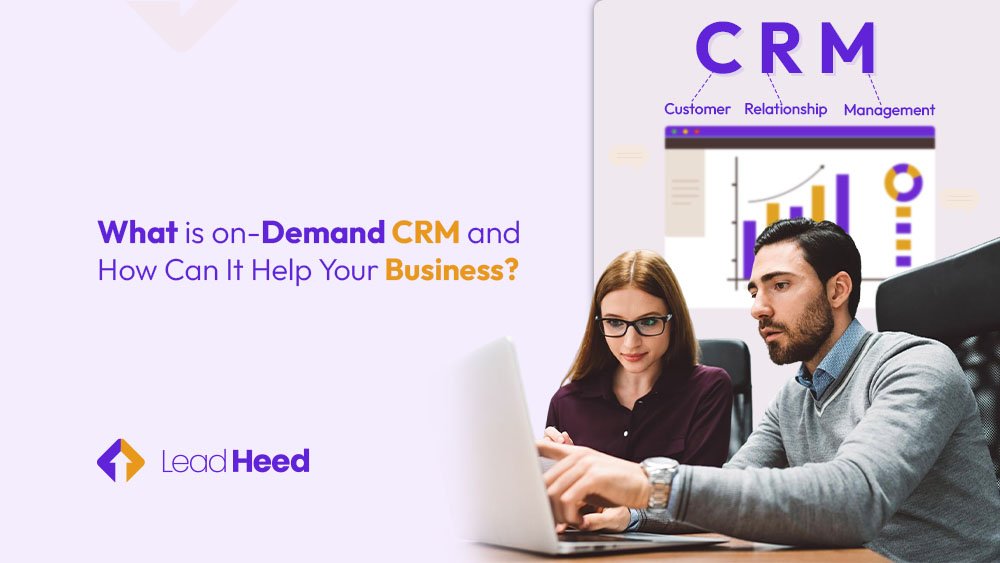
An on-demand CRM is a cloud-based tool that helps businesses manage customer relationships from anywhere, without the hassle of installation or maintenance. Since it’s hosted by the provider, teams can simply log in through a browser or mobile app and start working right away. It’s easy to set up, automatically updated, and works on a simple subscription model.
Compared to on-premise CRMs, which need complex installations, high upfront costs, and ongoing IT support, on-demand CRMs offer more flexibility and convenience. They’re perfect for businesses that want a cost-effective, ready-to-use solution to manage sales, marketing, and customer service.
Popular on-demand CRMs include LeadHeed, HubSpot, Pipedrive, and Zoho CRM.
Benefits of On-Demand CRM for Businesses
The benefits of an on-demand CRM include lower upfront costs, faster implementation, easy updates, flexibility for growth, better teamwork, and deeper customer insights. All of which make it a smart choice for modern businesses.
Let’s see them briefly:
1. Lower Upfront Costs
With an on-demand CRM, you don’t need to buy expensive servers or hire a large IT team. Everything runs online, so you only pay a small monthly or yearly subscription fee. This means you can start using it without a big financial investment.
You save money on hardware, maintenance, and upgrades. It’s a cost-effective way for you to manage customer relationships and grow your business without worrying about high setup costs.
2. Faster Implementation & Easier Updates
You can get started with an on-demand CRM almost instantly since there’s no complex installation process. The software is already set up and ready to use online. Updates and new features are handled automatically by the provider, so you always have the latest version without any extra effort.
This saves you time and keeps your system running smoothly. It also means you can focus on your business while the CRM takes care of the technical side.
3. Flexibility & Scalability for Growing Businesses
As your business grows, your CRM can grow with you. You can easily add more users, features, or storage whenever needed. There’s no need to buy new equipment or go through complicated upgrades.
This flexibility allows you to adapt quickly to new opportunities or changes in your business. Whether you’re managing a small team or expanding to multiple locations, the system adjusts to your needs seamlessly.
4. Improved Team Collaboration & Remote Work Support
Because an on-demand CRM is cloud-based, your team can access it anytime, from anywhere. Everyone sees the same real-time information, which helps avoid confusion and miscommunication. You can assign tasks, share updates, and monitor progress even if your staff works remotely.
This makes teamwork smoother and more organized. It’s especially helpful if you have employees working across different locations or time zones.
5. Better Customer Insights Through Analytics
An on-demand CRM collects and organizes customer data automatically, giving you powerful insights into buying habits and preferences. You can track sales trends, measure campaign success, and understand what your customers really want.
These insights help you make smarter decisions and create personalized offers. By knowing your customers better, you can improve satisfaction, increase loyalty, and boost your overall sales performance.
On-Demand CRM vs. On-Premise CRM: Which One Fits Your Business Needs?
When choosing the right CRM, it’s important to understand the difference between on-demand (cloud-based) and on-premise systems. Each offers unique benefits depending on your budget, resources, and business goals.
Let’s see them:
| Category | On-Demand CRM (Cloud-Based) | On-Premise CRM (Self-Hosted) |
| Deployment | Hosted online by the vendor. | Installed and managed on your own servers. |
| Cost | Subscription-based (monthly/yearly); lower upfront cost. | Higher initial cost for hardware, licenses, and setup. |
| Setup Time | Quick setup; ready to use after sign-up. | Requires installation and configuration time. |
| Maintenance
|
Handled by the vendor (updates, backups, support). | Requires an in-house IT team for updates and maintenance. |
| Scalability | Easily scalable — add users/features instantly. | Scaling requires extra hardware and technical resources. |
| Accessibility | Accessible from anywhere via the internet. | Limited to your internal network unless configured for remote access. |
| Customization
|
Moderate; limited to vendor’s options. | Highly customizable to business-specific needs. |
| Ideal For | Small or medium businesses, startups. | Large enterprises, government, or data-sensitive sectors. |
| Example Vendors
|
LeadHeed, Salesforce, HubSpot, Zoho CRM. | Microsoft Dynamics (on-premise), SAP CRM, Oracle CRM. |
Who Should Use On-Demand CRM?
An on-demand CRM is perfect for businesses that want an easy, flexible, and affordable way to manage customers. It’s ideal for small businesses or startups, large companies with remote teams, and fast-growing businesses expanding into new markets.
Let’s see them:
- Small businesses/startups with limited IT resources: An on-demand CRM helps small businesses stay organized and grow without IT hassles. It runs online, requires no technical setup, and is affordable. You can manage customers, sales, and marketing easily while scaling as your business grows.
- Enterprises need flexibility and remote access: For companies with multiple teams or locations, an on-demand CRM provides flexibility and real-time collaboration. Teams can access data from anywhere, track sales, and support customers efficiently, while the provider handles updates and maintenance.
- Industries with field sales teams: On-demand CRMs keep field teams connected and responsive. They can access customer info, track leads, and update interactions on the go, improving follow-ups, service, and sales. This keeps everyone connected and informed, even outside the office, improving your chances of closing more deals.
- Fast-growing or global businesses: For businesses expanding quickly, an on-demand CRM scales effortlessly. You can add users or features anytime, maintain consistent data across teams, and manage customers worldwide easily and efficiently. This makes it easier for you to manage customers worldwide with consistent data and processes.
Challenges and Limitations of On-Demand CRM
On-demand CRMs offer flexibility, automation, and AI-powered features, but they come with certain limitations. Businesses may face issues like reliance on stable internet, rising subscription costs, data security concerns, and limited customization options.
Understanding these challenges helps you plan better and choose the right CRM for your needs.
1. Dependence on Internet Connectivity
An on-demand CRM needs a stable internet connection to work properly. If your internet goes down or slows, you might not be able to access customer data or update records in real time. This can delay tasks and affect customer service, especially during busy hours.
You need to ensure that you have a reliable connection to avoid disruptions. For businesses in areas with poor connectivity, this can be a serious limitation.
2. Subscription Costs are Adding Up Over Time
While you don’t have to pay large upfront costs, subscription fees can add up over the years. As you add more users or need advanced features, your monthly costs might increase. You might end up paying more in the long run compared to a one-time purchase system.
Therefore, it’s crucial for you to review pricing plans and choose one that fits your long-term budget. Keeping track of renewals and upgrades helps you avoid unexpected expenses.
3. Data Security Concerns
Because your CRM data is stored online, you’re relying on the vendor to keep it secure. Although most providers use encryption and strong security measures, there’s always a small risk of breaches or unauthorized access. You might also be concerned about who owns your data or where it’s stored.
To stay safe, choose a trusted CRM vendor with clear data policies and compliance certifications. It’s also wise to use strong passwords and enable multi-factor authentication.
4. Limited Customization
On-demand CRMs are designed to be easy to use, but they may not offer as much flexibility for customization. You might not be able to modify every feature or integrate it deeply with internal systems. If your business has unique workflows or needs special tools, this could be restrictive.
However, for most small and medium businesses, on-demand options still provide enough flexibility to meet everyday needs.
Future of On-Demand CRM
The future of on-demand CRM is shaped by AI, automation, predictive analytics, cloud integrations, and industry-specific solutions. These trends will help businesses personalize experiences, make smarter decisions, and streamline operations efficiently.
Let’s see them briefly:
1. AI-powered personalization
In the future of on-demand CRM, artificial intelligence will enable you to deliver highly personalized experiences to your customers. AI can analyze customer behavior, preferences, and purchase history to recommend products or predict needs even before they arise. You’ll be able to engage customers through targeted messaging, dynamic content, and real-time responses.
This not only builds stronger relationships but also boosts customer satisfaction and loyalty. Essentially, AI will act as your intelligent assistant, helping you understand and serve each customer on a personal level.
As technology advances, AI-powered on-demand CRMs will only get smarter and more efficient. To explore what’s ahead, check out our guide on the Future of CRM and Its Impact on Business Growth and see how CRM trends are reshaping customer relationships.
2. Predictive Analytics & Automation
Predictive analytics will allow you to forecast customer trends, sales opportunities, and potential issues before they happen. By analyzing historical data, your CRM can automatically prioritize leads, recommend next actions, or alert you when a client might be at risk of leaving.
Automation will further simplify repetitive tasks such as data entry, email follow-ups, and report generation. This means you can focus more on strategy and customer engagement rather than administrative work. Ultimately, predictive tools will empower you to make smarter, data-backed decisions faster.
3. Deeper Integrations with Other Cloud Platforms
Future on-demand CRMs will seamlessly connect with various cloud-based tools like marketing automation, accounting, and project management systems. This integration will give you a unified view of your business operations without constantly switching between platforms.
You’ll be able to synchronize data across departments, reducing errors and improving collaboration. With deeper integrations, you can easily automate cross-platform workflows, ensuring smoother communication and efficiency.
4. Rise of Industry-specific On-Demand CRMs
As businesses become more specialized, you’ll see the emergence of CRMs tailored for specific industries such as healthcare, real estate, finance, or education. These platforms will come with pre-built features, workflows, and compliance tools designed to address your sector’s unique challenges.
Instead of customizing a generic CRM, you’ll be able to use one that understands your business language and needs right out of the box. This saves you time, improves adoption, and increases overall efficiency. Ultimately, industry-specific CRMs will make it easier for you to deliver more focused and compliant customer experiences.
Conclusion
In conclusion, an on-demand CRM is shaping the future of customer relationship management by offering flexibility, scalability, and cost-effectiveness. It helps businesses manage customer interactions smarter, collaborate seamlessly, and make data-driven decisions without complex setups or heavy IT costs.
To achieve these benefits effortlessly, LeadHeed provides a powerful, cloud-based CRM platform that centralizes customer data, automates workflows, and enables personalized experiences that drive growth.
Experience the difference—try LeadHeed today and take your customer relationships and business efficiency to the next level!
FAQs
What are on-demand CRM systems?
An on-demand CRM system is a cloud-based customer management tool that businesses access online to store and manage customer information without installing software or maintaining servers.
What is an advantage of on-demand CRM?
An advantage of an on-demand CRM is that it’s affordable and easy to set up since there’s no need for special hardware or IT maintenance. It can be accessed anytime, anywhere through the internet, making it convenient for teams to manage customer relationships on the go.
How does on-demand CRM differ from on-premise CRM?
On-demand CRM is hosted online by a service provider and accessed through the internet, while on-premise CRM is installed and managed on a company’s own servers. On-demand CRM requires less setup and lower upfront costs, whereas on-premise CRM offers more control and customization but involves higher maintenance and IT costs.
Is on-demand CRM secure for sensitive customer data?
Yes, on-demand CRM systems are generally secure because they use data encryption, regular backups, and advanced security protocols managed by the provider. However, the level of security depends on the vendor, so businesses should choose a reputable provider and review their data protection policies carefully.