
Many small businesses attract visitors but lack visibility into who shows interest. Without clear lead capture methods, websites fail to record intent, leaving teams unaware of potential customers.
Such gaps slow sales cycles and lead to missed follow-ups. Teams lack contact details, intent signals, and a clear way to engage interested visitors. Over time, this lack of structure limits decision-making and revenue planning.
Using the best methods for lead capture on the website brings order to the sales pipeline. These methods to capture leads help small businesses collect visitor details at the right time, track interest, and follow up with a purpose.
Highlights
- Lead capture focuses on collecting interest, while lead management focuses on turning that interest into real sales opportunities.
- Using the right lead capture methods helps you connect with visitors at the right time and improve conversion chances.
- Common mistakes include asking for too much information, offering weak value, and failing to follow up quickly.
- A clear lead capture strategy keeps your sales pipeline active, improves lead quality, and supports steady business growth.
Why Lead Capturing Is Essential for Small Businesses?
Small businesses rely on lead capturing to record visitor interest, collect contact details, and guide follow-ups at the right time. It creates a reliable sales pipeline and helps teams use their time and effort more efficiently.
- Identifies Interested Visitors Early: Effective lead capture methods record visitor interest as soon as users interact with key pages. It ensures potential customers do not leave the website without leaving any trace.
- Enables Timely and Relevant Follow-ups: Clear methods to capture leads, collect contact details, and intent signals, such as page visits or form selections. Sales teams use this information to follow up at the right time with messages that match visitor needs.
- Reduces Sales Delays: Captured leads give teams a clear starting point. This shortens response time and helps move prospects forward without unnecessary waiting.
- Improves Sales Focus and Priority: Structured lead capturing methods show which leads engage most with the website. This allows better use of time and effort on prospects most likely to convert.
- Supports Better Business Decisions: Leads capture CRM system stores data on visitor behavior, preferences, and demand patterns. Businesses use this data to plan outreach, adjust offers, and forecast revenue with more accuracy.
- Builds a Consistent Sales Pipeline: Leads capture method records interest, stores lead data, and enables ongoing engagement across the buying journey. It helps small businesses grow in a controlled and predictable way.
What are the Best Lead Capture Methods for Small Businesses?
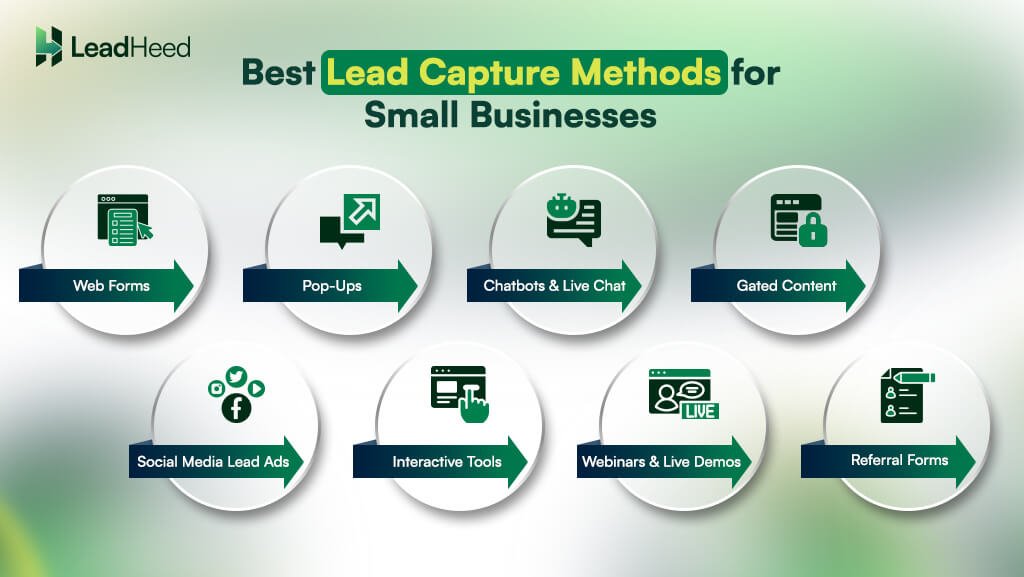
The best lead capture methods for small businesses are using tools like web forms, pop-ups, chatbots, gated content, and interactive experiences. These methods help you capture leads from your website and collect quality prospects at the right time.
Here are the most effective lead capture tools that help small businesses convert website visitors into qualified leads.
1. Web Forms
Web forms are a simple and direct way to capture leads. They are placed on key pages such as contact pages, pricing pages, and service pages where visitor intent is higher. They collect basic details like name, email, or phone number.
Forms work best when they stay short and focused. Fewer fields reduce effort and increase submission rates. Once a visitor submits the form, the lead information is stored in the system, allowing sales teams to follow up, nurture interest, and convert guests into potential customers.
2. Pop-Ups
Pop-ups appear on a website based on visitor behavior, such as time spent on a page, scroll depth, or exit intent. They capture attention at key moments and present a clear offer, such as a discount or free resource, in exchange for contact details.
When pop-ups are timed correctly and remain relevant, brief, and easy to close, they help collect quality leads while maintaining a positive browsing experience.
3. Chatbots and Live Chat
Chatbots in CRM provide a conversational way to capture leads. They engage visitors in real time, answer common questions, and request contact details to continue the conversation later.
Chatbots can run automatically at any time, while live chat allows a real person to respond. They work as a 24/7 virtual assistant for your business. This lead capture service feels more personal and gives quick answers to visitors who want quick answers before committing.
4. Gated Content
Gated content includes resources such as ebooks, templates, webinars, reports, or guides that require form submission before access. Visitors provide their email or other contact details to unlock the content.
After submission, the content is delivered, and the visitor becomes a captured lead. This approach attracts users with a strong interest, making gated content one of the best methods for lead capture for building high-intent lead lists.
5. Social Media Lead Ads
Social media lead ads are built directly into platforms like Facebook, Instagram, and LinkedIn. They allow users to submit their contact information without leaving the app. When someone clicks on a promoted post or ad, the form opens with their name and email already filled in from their profile.
After submission, the business receives the lead instantly. The method performs well because it makes the process quick and easy for mobile users.
6. Interactive Tools
Interactive tools capture leads by letting people participate instead of just filling out a standard form. Common examples include calculators, quizzes, assessments, or short surveys. These tools show part of the result first, then request an email address to view the full outcome.
They give immediate, personalized feedback, which keeps visitors engaged longer and makes the exchange feel fair. For small businesses, interactive tools attract higher-intent leads who have invested time answering questions.
7. Webinars and Live Demos
Webinars and live demos are online events where you present your product, service, or expertise to an audience in real time. To join, people sign up in advance by providing their name and email, which gives you their contact information before the event even starts.
During the session, you can show how the system or service works, answer questions, or teach something useful. This helps build trust, especially for higher-priced offers or services that need explanation.
8. Referral Forms
Referral forms help small businesses get new leads through existing customers. Instead of relying on word of mouth alone, customers can quickly share a friend’s name or email, or send a referral link in just a few clicks.
Because these introductions come through personal connections, trust is established early, which often leads to quicker decisions. This approach typically brings in higher-quality inquiries, as people tend to suggest businesses to others with similar needs.
How to Create a Lead Capture Strategy?
To create an effective lead capture strategy, focus on attracting visitors and turning them into leads through clear goals, valuable offers, simple forms, smart placement, and continuous improvement.
1. Set a Clear Goal
Decide what type of leads the business needs, such as demo requests, inquiries, or email subscribers. When your goal is defined from the start, you prevent unfocused data collection, and your lead-capturing strategy becomes more effective.
2. Choose the Right Lead Capture Methods
The right methods to capture leads depend on visitor intent and buying stage. Forms work well for direct inquiries, chat tools suit real-time engagement, and gated content supports long-term nurturing.
3. Create a Simple Capture Form or Pop-Ups
Forms, pop-ups, and chat prompts should request only essential information. Use a clear headline that tells visitors what they’ll get, and add a strong call to action that guides them on what to do next. It should feel clean, welcoming, and easy to understand at a glance.
4. Place Forms Where Users Engage
Place your lead capture forms near pricing details, service page, or high-value content sections. Placing forms where visitors pause or scroll increases visibility and improves completion rates.
5. Offer Something Valuable
Most visitors won’t share their details unless they get something useful in return. That’s why your lead capture strategy needs a clear and valuable offer. It could be a free trial, helpful guide, checklist, or exclusive content that solves a real problem for your audience.
6. Use Timing and Behavior-Based Trigger
Apply timing and behavior-based triggers to display pop-ups or chat prompts when visitors scroll, pause, or prepare to leave. Proper timing helps in capturing leads at moments when users are most likely to respond.
7. Connect Lead Capture with CRM System
Implement CRM connection to centralize every submitted lead in one place and route them to the sales team without delay. When lead data flows directly into the CRM, teams can track interest, assign ownership, and schedule follow-ups automatically.
8. Track Results & Improve
Regularly track submission rates, drop-offs, and lead quality. With these insights, you can refine your forms, messaging, or placement to improve performance and keep the strategy aligned with business goals.
Common Lead Capture Mistakes to Avoid
Businesses should avoid long forms, unclear benefits, hidden CTAs, and mobile issues when capturing leads. Similarly, skipping follow-ups, misusing pop-ups, ignoring privacy, and targeting the wrong audience weaken conversion outcomes.
- Asking for Too Much Information: Requiring too many details scares visitors away. Thus, only ask for essentials like name and email, keep phone numbers optional.
- Having a Confusing Value Proposition: If your value proposition is weak or unclear, visitors won’t immediately understand the benefit of your offer, and they’ll hesitate to share their information. You should clearly state the benefit of signing up in one sentence.
- Poor Placement of Forms and CTAs: Forms hidden at the bottom of pages or placed without context often get ignored. Lead-capturing elements should appear where visitors pause, read, or evaluate information.
- Ignoring Mobile Experience: Forms and pop-ups that do not work well on mobile devices cause drop-offs. Mobile-friendly design is essential for effective lead capture methods.
- Making Misleading Promises: Tricking visitors with false claims or hidden fees destroys trust. Always be honest and deliver exactly what you promise.
- Ignoring Privacy Concerns: Not showing a privacy policy makes visitors hesitant. Therefore, display a clear privacy policy and reassure users that their data is safe.
- Overusing Pop-Ups: Pop-ups can help, but too many annoy visitors. Use only one well-timed pop-up with an easy-to-close option.
- Targeting the Wrong Audience: Reaching the wrong people leads to low-quality leads. The solution lies in knowing your audience and creating offers that match their needs.
- Having No Follow-Up Strategy: Capturing a lead without follow-up loses potential customers. Set up timely emails or notifications to engage leads immediately.
- Ignoring Feedback: Not listening to visitor feedback prevents improvement. Therefore, you should collect and act on feedback to enhance the user experience.
Conclusion
Capturing leads is all about creating meaningful connections with your visitors and turning their interest into action. For small businesses, the key is to offer real value, keep forms simple, personalize experiences, leverage social proof, and follow up quickly. Using tools like web forms, pop-ups, chatbots, gated content, and live demos can make lead capture easier and more effective.
LeadHeed offers an all-in-one CRM system to collect, store, organize, and follow up with leads effortlessly. With features like lead tracking, pipeline visibility, activity logging, and automated reminders, LeadHeed ensures no lead gets missed after capture. Start using LeadHeed today and turn your website traffic into loyal customers!
FAQs
What is lead capture?
Lead capture is the process of collecting valuable contact information from potential leads, such as names, email addresses, and phone numbers. This often happens through website forms, pop-ups, chatbots, or gated content, sometimes paired with incentives like discounts, free trials, or helpful resources.
What is a lead capture page?
A lead capture page is a special webpage designed to collect contact information from visitors, usually in exchange for something valuable like a free guide, discount, or trial. Its main goal is to turn casual visitors into potential customers by making it easy and appealing for them to share their details.
Which lead capture method works best for small businesses?
Small businesses often see the best results from simple forms, chat tools, and gated content because they are easy to manage and support quick follow-ups.
How to capture form submissions as leads in the pipeline?
To capture form submissions as leads, connect your website forms directly to your CRM. When a visitor fills out a form, their details, like name, email, and phone number, automatically flow into your CRM as a new lead. You can then assign these leads to your sales pipeline, track their progress, and follow up quickly, turning every submission into a potential customer.