
Many businesses struggle to clearly explain what makes them worth choosing. They may have a great product or service, but customers still feel unsure about what sets them apart. When your value proposition is unclear, even the right audience can lose interest.
This confusion creates real problems. Potential customers move on, your marketing feels weak, and your brand fails to make a lasting impression.
A strong value proposition solves this by explaining what you offer, why it matters, and why customers should choose you over others. With a simple, honest message that reflects your values, you attract the right people, strengthen your marketing, and build trust from the start.
In this article, we will break down what a value proposition is and how to create one that truly fits your business.
What is a Value Proposition?
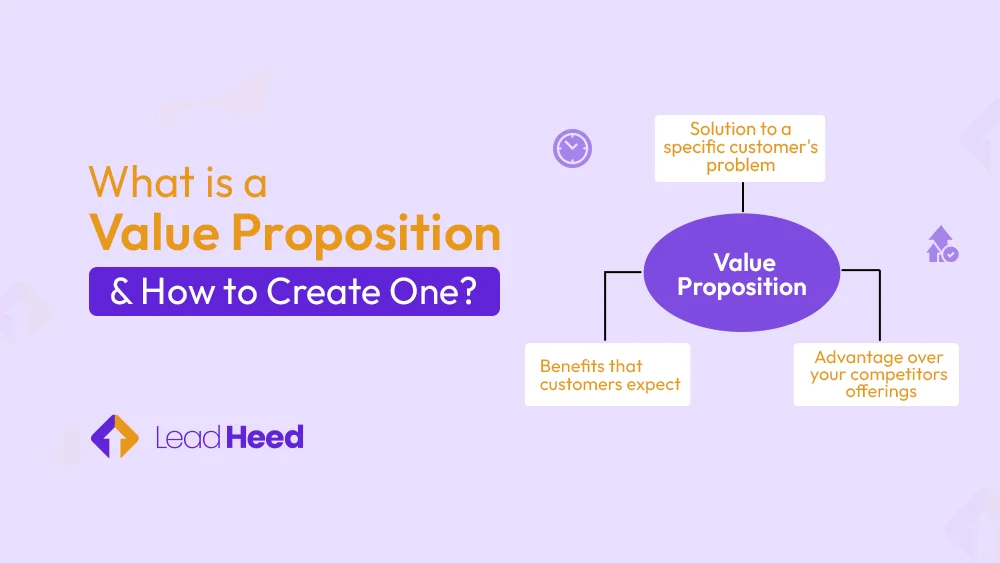
A value proposition is a clear and concise statement that explains the unique benefits your product or service delivers, the problem it solves, and why customers should choose you instead of your competitors.
A value proposition is not a slogan, tagline, or mission statement; it explains the real benefit customers get. This helps your business stand out and makes it easier for customers to understand what you bring to the table.
It guides your messaging, shapes your product decisions, and strengthens your overall positioning. Most importantly, it helps you attract the right audience and convert interest into action.
Comparison of Value Proposition, Mission Statement, Slogan, & Tagline
Here’s a quick comparison between value proposition, mission statement, slogan, and tagline on what they are and their purpose.
| Category | What It is | Purpose | Example |
| Value Proposition | A clear statement that explains the unique benefits you offer and why customers should choose you. | Communicates the problem you solve and the value customers get. | LeadHeed: “All-In-One CRM Software to Grow Faster & Sell Smarter” |
| Mission Statement | A broad statement describing your company’s purpose and long-term goals. | Guides your organization and shows the impact you aim to make. | LeadHeed: “To provide businesses of all sizes with tools that simplify customer management and improve efficiency.” |
| Slogan | A short marketing phrase used in campaigns to create emotional appeal. | Grabs attention and supports advertising messages. | Nike: “Just do it.” |
| Tagline | A short, memorable phrase that represents the brand’s identity. | Reinforces the brand personality and stays consistent over time. | Apple: “Think different.” |
What Makes a Good Value Proposition?
A good value proposition clearly explains what you offer, how it solves a customer’s problem, and why your solution is better than the alternatives. The goal is to make your value instantly recognizable and memorable.
-
Simple and Clear Language
Clarity holds the most weight because customers decide within seconds whether your message makes sense or not. Use simple wording to help them instantly understand what you offer without confusion or effort.
-
Well-Defined Structure
A clear structure matters because it helps readers move easily from the problem to the solution and finally to the benefit. When your message follows a natural flow, people stay engaged long enough to understand what you offer and why it matters to them.
-
Unique Differentiators
Differentiation carries equal weight to clarity because customers want to know why they should choose you instead of a competitor. Highlighting what sets you apart makes your value proposition stronger and more convincing.
-
Strong Ability to Deliver Quality Results
Your ability to deliver results supports the claims you make. Even though it carries slightly less weight, it reinforces trust and assures customers that your value is not just a statement but something you can confidently provide. Offering customer loyalty programs can highlight your commitment to long-term satisfaction and keep clients coming back.
How to Create a Value Proposition That Stands Out and Converts?
To create a value proposition that stands out, you need to understand your customers, their problems, and how your solution helps them better than others. Keep the message simple, focus on real benefits, and clearly explain what makes you different so people quickly see why you are the right choice.
Identify Your Customer’s Main Problem
First, define the specific issue your customers struggle with. A clear problem makes your value proposition more direct and relatable. For example, if customers waste time switching between tools, the problem becomes “too much complexity.”
Understand Your Target Audience
Dig into who your customers are, what they value, and what influences their decisions. When you know their goals and frustrations, you can write a value proposition that speaks to them instead of sounding generic.
Analyze Your Competitors
Study how others in your market position themselves. Look at what they promise, what they lack, and how customers react. This helps you avoid similarities and find gaps you can confidently own.
List the Key Benefits You Provide
Highlight the results your audience gets from using your product or service. Focus on benefits, not just features. For instance, “automated workflows” becomes “saves hours of manual work each week.”
Clearly Differentiate Your Solution
Explain what makes your offer different or better. It could be speed, ease of use, pricing, or a unique feature. One clear differentiator often matters more than listing many small ones.
Use a Simple Template to Shape Your Message
A basic structure makes your value proposition easy to understand. A helpful format is: “We help [target audience] achieve [desired outcome] through [your unique solution].” Keep the wording simple and avoid anything that sounds complicated. The clearer your message is, the faster customers will understand the value you offer.
4 Proven Methods to Create a Strong Value Proposition
Creating a good value proposition becomes easier when you use structured methods like the Steve Blank Method, Geoff Moore Method, Harvard Business School Method, and the Slow Storytelling Method. Each approach helps you understand your customer, define their problem, clarify your unique benefit, and express your promise in a simple way that resonates quickly.
1. Steve Blank Method
Steve Blank’s approach is built around talking to real people before you make much. The idea is to turn assumptions into testable hypotheses, validate them with customers, and only then shape your value proposition from proven insights.
What to do
- Identify your customer segment.
- Talk to real customers to learn their problems.
- Define the problem in their words.
- Match your product’s features to their biggest pain.
- Rewrite your value proposition as you learn more.
Example
You interview 20 freelancers, and all say invoicing takes too long. Your value proposition becomes: “A tool that helps freelancers send invoices in minutes so they can get paid faster.”
2. Geoff Moore Method
Geoff Moore’s template from Crossing the Chasm gives you a precise sentence structure that forces clarity on customer, category, benefit, and differentiation.
What to do
Create a sentence that goes along like this: For [target customer] who [problem], our [product] is a [category] that [main benefit]. Unlike [competitor], it [key difference]. Then you can fill it up accordingly.
Example
“For busy parents who need quick meal solutions, our MealBox is a weekly food kit that offers fast, healthy recipes. Unlike frozen meals, it stays fresh for a full week.”
3. Harvard Business School Method
HBS (Harvard Business School) guidance emphasizes rigorous customer understanding, a competitive frame of reference, and proof points. The method turns research into a short, evidence-backed statement you can use across marketing and investor pitches.
What to do
- Identify the job your customer wants done.
- Understand the emotional and practical reasons for that job.
- Describe how your product completes this job better than alternatives.
- Add proof or results that validate your claim.
Example
Job: “Help me stay energized at work.”
Value proposition: “EnergyBite keeps you focused for hours without a caffeine crash, proven through clinical testing.”
4. Slow Storytelling Method
Slow Storytelling uses a more extended form of narrative to connect customers emotionally to the value you deliver, often by linking product value to social, cultural, or sustainability stories. It was developed from research into how narratives build substantial perceived value, especially for products with social or craft roots.
What to do
- Describe the customer’s everyday situation.
- Point out the issue that keeps getting in their way.
- Introduce your product as the moment things begin to change.
- Show how their situation improves after they start using it.
Example
A new insurance agent kept losing track of follow-ups until they switched to LeadHeed. With LeadHeed’s centralized database, all their client info was finally in one place, making follow-ups smoother and helping them close more deals.
Try LeadHeed CRM to streamline your workflow and connect with clients effectively.
Conclusion
A clear value proposition does more than explain what you sell. It gives your business a sense of direction and helps customers quickly understand why your solution fits their needs. When you take the time to refine it, everything from your messaging to your marketing becomes easier because you’re speaking to people with confidence and clarity.
When done right, it becomes a tool you can rely on every day to connect with the people who matter most. In the long run, a well-crafted value proposition becomes one of the most reliable tools for driving meaningful growth.
FAQs
What is a value proposition?
A value proposition is a short statement that explains the core benefit your product or service provides, who it is meant for, and why it’s a better choice compared to other options in the market. It helps customers quickly understand the value you deliver.
Can a value proposition change over time?
Yes, and it often should. As your business grows, customer expectations evolve, or your offerings expand. To stay relevant, your value proposition needs to adapt to reflect updated offerings, improved solutions, or a refined target audience. However, while the messaging can change, your core values and the main problem you solve should remain consistent.
What is the main purpose of a value proposition?
Its primary purpose is to communicate why customers should choose your business clearly. It highlights the key benefit you offer and helps you stand out from competitors by focusing on what truly matters to your audience.
How do I define my value proposition?
You can define it by identifying your target audience, understanding the main problem you solve, outlining the results customers can expect, and pinpointing what makes your solution unique. These elements come together to form a clear and compelling message.
What is an employee value proposition?
An employee value proposition describes what people gain by being part of your company, from the work environment to growth opportunities and overall support. It helps potential hires understand why your workplace is a good fit and what they can expect as part of your team.