
Winning new customers is exciting, but keeping them is what truly drives long-term business growth. When customers stop buying from you, cancel their subscriptions, or move to a competitor, that is known as customer churn. And while it may seem like a normal part of doing business, high churn can seriously affect your revenue, reputation, and overall growth.
Understanding and calculating customer churn rate helps businesses spot problems early and take action before more customers leave. By tracking churn consistently, businesses can uncover weak points in the customer experience, improve retention strategies, and protect long-term profitability.
Highlights
- Customer churn is the number of customers who stop using a product or service after a specific time.
- Customer churn rate is the percentage of customers who stop using a product or service.
- A lower customer churn rate is considered better than a higher customer churn rate.
- Customer churn is caused by poor customer experience, unmet value expectations, better competitor offers, and ineffective onboarding of a product or a service.
- Customer churn rate is calculated by dividing lost customers by the total customers at the start of the period and multiplying by 100.
- You can reduce churn by setting clear expectations, improving onboarding, communicating well, spotting at-risk customers early, and improving customer experience.
What is Customer Churn?
Customer churn is the number of customers who stop using products and services after a specific period of time. Customer churn mainly occurs when customers feel undervalued by the business whose products and services are being used by them. Churn refers to the failure to retain clients, which directly impacts revenue and is very crucial for SaaS models where maintaining a stable customer base is mandatory.
Types of Customer Churn
Customer churn is classified into two primary types: voluntary and involuntary, along with more specific actionable types. Key types of customer churn are:
1. Voluntary Churn
When a customer makes an active decision to stop using a product or service, then it is considered to be voluntary churn. They may cancel the subscription, switch brands, choose not to renew, or no longer need the product. It usually happens because of dissatisfaction with price, value, service, or product fit. You can often prevent this churn by improving quality, support, and value.
2. Involuntary Churn
Involuntary churn occurs when a customer is lost for technical or operational reasons rather than through an active choice. It is usually caused by declined cards, expired billing details, or technical issues in the payment process. Companies can prevent involuntary churn by improving billing systems, updating customer payment information, and sending timely payment failure alerts.
3. Product Fit Churn
A mismatch between customer expectations and product value often leads to Product Fit Churn. In this situation, users may initially try the product but later realize it does not support their goals, lacks important functions, or does not solve their problem effectively. Even a well-designed product can lose customers if it is not relevant to their needs.
4. Contractual Churn
Contractual Churn is the customer’s decision not to continue the service once their contract period ends. This type of churn is common in services that operate on monthly, yearly, or fixed-term agreements. When the renewal date arrives, customers may choose to leave for several reasons, such as high cost, reduced satisfaction, changing business needs, or more attractive alternatives in the market.
5. Gradual Disengagement
Gradual disengagement describes a slow decline in customer activity before the customer eventually leaves. Instead of stopping all at once, the customer becomes less involved over time, with fewer logins, lower usage, reduced purchases, or minimal interaction with the product. This form of churn can be difficult to detect because the customer may still appear active for a while, even though their commitment is weakening.
What Causes Customer Churn?
Customer churn is primarily caused by poor customer experience, unmet value expectations, better competitor offers, and ineffective onboarding. Customers may also leave when they feel ignored, experience repeated issues, or do not see enough ongoing benefit from the product or service.
Misaligned Marketing Promises
A mismatch between promotional claims and the actual customer experience is a common reason for churn. When businesses overpromise and underdeliver, customers often feel that they were misled, which weakens brand credibility and increases the likelihood of attrition.
Low Quality Goods or Services
Customers expect products and services that offer good value for money and deliver meaningful benefits. But when a product or service fails to meet the expectations of the customer due to low performance or defects, the customers instantly lose trust in the product and abandon the brand.
Poor Customer Experience and Value
When customers do not receive timely, helpful, and consistent support, they may feel neglected and undervalued. New users may leave early if they experience poor onboarding and limited assistance, while existing customers may churn if they feel the level of service does not justify the cost.
Poor Onboarding
A confusing, slow, or impersonal onboarding process can prevent users from understanding the value of the product or service quickly. As a result, customers may feel frustrated and leave before fully engaging with the brand.
Better deals from competitors
In a competitive market, customers often compare options and may switch to another provider if they get better value, lower pricing, or more attractive features. This type of churn is common when businesses fail to keep up with changing customer expectations.
Usability and Technical Issues
If a product is difficult to navigate, unreliable, or frequently experiences technical issues, customers can quickly become frustrated. These problems reduce trust in the product and make it easier for customers to switch to more user-friendly alternatives.
What is Customer Churn Rate, and How to Calculate It?
Customer churn rate is the percentage of customers lost by any company in a specific period of time. It is a key customer retention metric that helps businesses measure how well they keep their existing customers. A high customer churn rate indicates issues such as poor customer experience, lack of engagement, pricing concerns, or stronger competition in the market.
Businesses across SaaS, eCommerce, telecom, finance, and subscription-based industries closely monitor churn because losing customers can directly impact revenue and long-term growth. The more customers you keep, the more revenue you can generate.
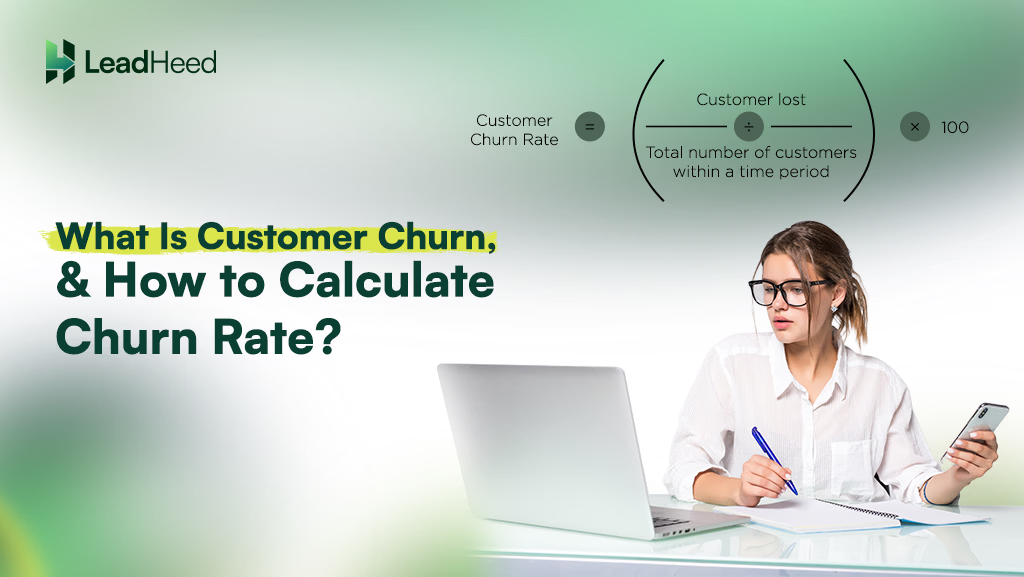
Customer churn is calculated by dividing the number of lost customers during a specific period by the total number of customers you had at the start of that period, then multiplying by 100 percent. You can use the calculation for any timeframe, such as a month, a year, or even for a day.
The standard formula for calculating churn rate is:
Customer Churn Rate = Number of Customers LostTotal Number of Customers at Start × 100%
For example:
If you started the month with 500 customers and lost 25 customers during that month:
Customer churn rate = (25 / 500) × 100 = 5%
So, your customer churn rate is 5%.
Why is it Important to Track Customer Churn Rate?
Tracking customer churn rate is important because it shows how many clients stop using your product or service over time, which directly affects revenue and growth. It also helps businesses identify problems in customer satisfaction, pricing, or service quality so they can improve loyalty and build stronger long-term relationships.
- Measures Customer Retention: Customer churn rate shows how many customers stop using a company’s product or service over time. A lower churn rate means the business is doing a better job of keeping its customers.
- Indicates Overall Business Health: Churn rate helps show whether a business is stable and meeting customer expectations. If many customers are leaving, it may be a sign of deeper problems in the product, service, or customer experience.
- Directly Impacts Revenue: When customers leave, the business loses money from future purchases or subscriptions. It also has to spend more to attract new customers, which lowers profit and can slow business growth.
- Points Out Customer Problems: A rising churn rate can signal that customers are unhappy with pricing, service, or product quality. It helps the business identify and fix the issues that improve the customer experience.
- Supports Better Decisions: Churn data helps businesses make smarter decisions about customer service, marketing, pricing, and product improvement. It gives useful insights for planning better strategies.
What is a Good Customer Churn Rate?
A good customer churn rate differs by industry and type of services, but in general, a lower churn rate is always better. As a broad industry benchmark, annual churn for SaaS-based companies is often expected to stay below 5%, while subscription-based businesses generally expect a monthly churn rate of 2% to 5%. For B2B services, below 2% churn rate is ideal, but for high-volume B2C services have a chance of facing higher rates due to lower switching.
Ultimately, there is no fixed churn rate for every business. What matters most is tracking churn consistently and reducing it over time to improve customer satisfaction, retention, and long-term revenue.
How to Reduce Customer Churn Rate?
The best way to reduce customer churn rate is to understand customer needs, solve issues fast, and create a seamless experience across every touchpoint. Companies that invest in proactive support, customer success programs, and personalized retention strategies are more likely to keep customers loyal.
I. Set Clear expectations from day one
Misaligned sales and marketing promises lead to loss of trust among customers, which is taken as a primary cause of customer churn. Be honest about the capabilities, pricing, timelines, and outcomes of the product when marketing or selling. Poor onboarding also leads to distrust in the product from day one, so onboarding should be good as expected by the customer and promised at the time of sales and marketing.
II. Adoption of the Customer-First Mindset
A customer-first mindset means making decisions based on what is best for the customer, not just the business. When customers feel valued and supported, they are more likely to stay loyal. It also helps create stronger long-term relationships.
III. Proper Communication with Customers
Many customers leave when they feel ignored or believe that a company does not care about their concerns. But if you respond to your client queries quickly, share useful updates, and listen to their concerns makes your customer feel valued. Also, clear, timely, and meaningful communication helps build trust, reinforce value, and address issues before they lead to cancellation.
IV. Identify Signs of At-Risk Customers
Some customers may show signs that they are unhappy, such as using the product less often, delaying payments, or giving negative feedback. These warning signs should be noticed early so that you can reach out in time and fix issues before the customer decides to leave.
V. Improve Customer Experience
Investing in customer experience means making every interaction smooth, simple, and positive. It can involve faster response times, a product that is easier to use, better-trained support teams, and regular customer feedback to guide improvements. When customers consistently enjoy a good experience, they feel more satisfied, become more loyal, and are more likely to continue with the business.
Conclusion
Customer churn is more than a retention metric; it is a clear signal of how well your business delivers value, support, and consistency over time. When you understand what churn is, track it regularly, calculate it correctly, and act on its causes early, you put your business in a much stronger position to protect revenue and build lasting customer relationships.
To reduce churn, businesses also need the right system to manage customer relationships and stay in touch at the right time. LeadHeed, all-in-one CRM software, helps you organize customer details, track every interaction, and automate follow-ups so no customer gets overlooked. With better visibility and timely communication, you can build stronger relationships and reduce the risk of losing customers. Sign up for Leadheed for free!!
Frequently Asked Questions (FAQs)
What is the difference between customer churn and customer retention?
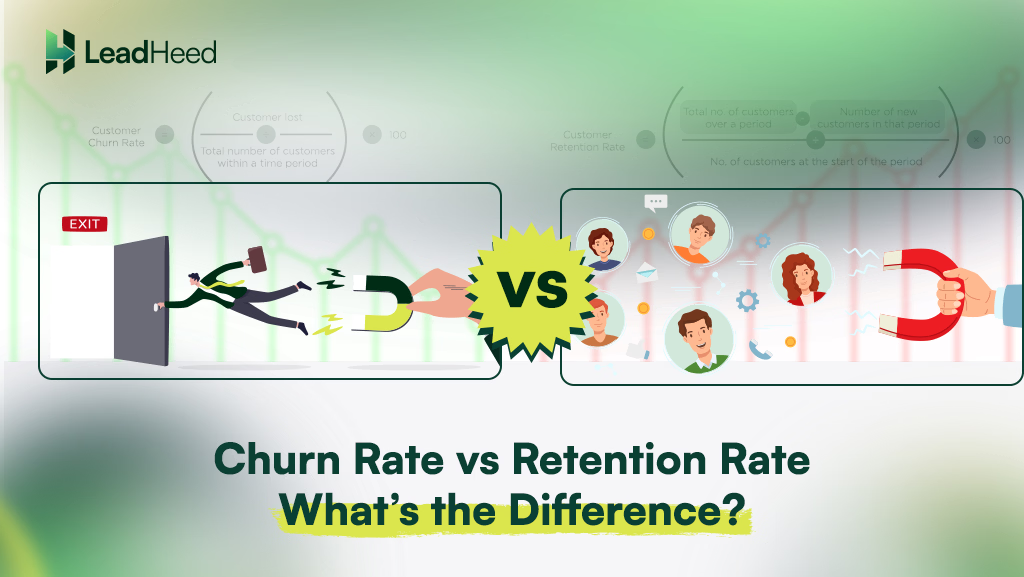
Customer churn measures how many customers leave, while customer retention measures how many customers stay and continue using the product or service.
What is churn risk?
Churn risk is the likelihood that a customer will stop buying from a business, cancel a subscription, or stop using a product or service.
How does customer churn affect revenue?
When customers leave, businesses lose recurring revenue and must invest more in marketing and sales to replace them. High churn can significantly slow business growth.
What does a high churn rate mean?
A high churn rate means a business is losing a percentage of customers or subscribers over a specific period, often faster than it can acquire new ones.
How can a CRM help reduce customer churn?
A CRM helps track customer interactions, manage follow-ups, monitor engagement, and identify at-risk customers early. With better visibility and communication, businesses can improve customer experience and reduce churn.