
A strong product alone does not guarantee a steady flow of customers. Many businesses offer real value but still struggle to attract the right audience and move leads toward a buying decision. When customer acquisition depends on occasional referrals or random campaigns, growth becomes inconsistent.
That makes planning difficult. Revenue becomes uncertain, teams cannot forecast reliably, and marketing decisions turn into guesses. You may also miss high-intent leads simply because your process fails to capture, qualify, or nurture them properly.
Customer acquisition strategies help you build a predictable path from stranger to customer. Instead of guessing where leads will come from, you create reliable ways to attract the right audience, nurture trust, and convert interest into revenue.
Highlights
- A customer acquisition strategy is a step-by-step approach to attracting, nurturing, and converting prospects into paying customers.
- Strong client acquisition improves revenue consistency, pipeline quality, brand reach, and long-term profitability.
- Businesses can acquire more customers by using a mix of strategies like SEO, content, social media, email, referrals, partnerships, and many more.
- Choosing the right customer acquisition channels depends on your audience, offer type, buying intent, budget, and sales cycle length.
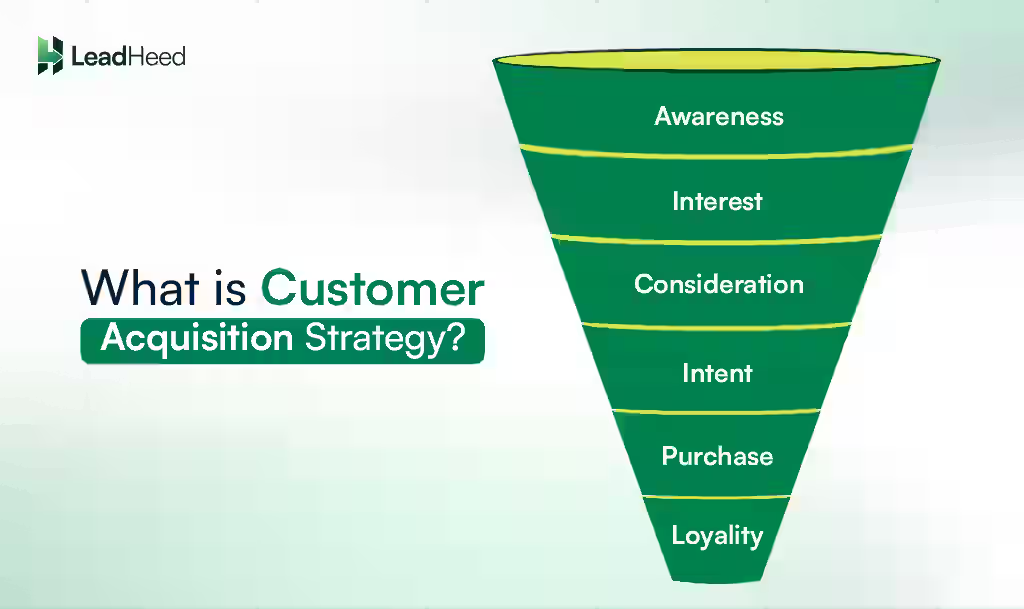
What is Customer Acquisition Strategy?
A customer acquisition strategy is a step-by-step plan a business uses to find the right people, attract their interest, and turn them into paying customers. It combines marketing and sales efforts such as content, social media, ads, email follow-ups, and outreach to reach potential buyers at different stages of their decision-making process.
A good client acquisition strategy focuses on the right audience, speaks to their needs, and shows why the business is the right choice. Its main goal is not just to bring in new customers, but to do it in a way that is sustainable, cost-effective, and valuable for long-term business growth.
Why is Customer Acquisition Strategy Important for Business Growth?
A customer acquisition strategy helps a business consistently reach and win new customers instead of relying on random or one-time sales efforts. With a strong strategy, companies can grow faster, spend marketing budgets more wisely, and build a steady path to long-term success.
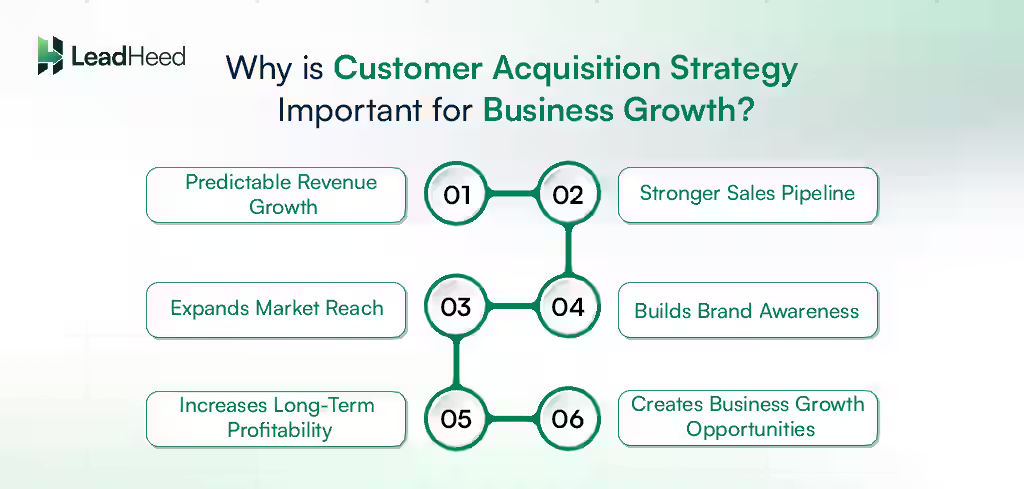
- Predictable Revenue Growth: Strong customer acquisition brings new customers regularly, so your revenue does not rely on one big sale, one season, or referrals. With a steady flow of customers, you can plan sales targets, hiring, and growth more confidently.
- Stronger Sales Pipeline: With clear targeting and a strong offer, you attract prospects who match your ideal customer profile. So, your team spends less time chasing and more time closing.
- Expands Market Reach: A customer acquisition strategy uses channels like social media, ads, referrals, and promotions to reach people who do not yet know the brand. It allows the business to find new customers in different places and grow bigger.
- Builds Brand Awareness: Acquisition campaigns repeatedly show the business name, product, and message to potential customers, making the brand more visible in the market. Even if they do not buy now, they may remember and trust the brand later, which can lead to future sales.
- Increases Long-Term Profitability: Acquired customers can become repeat buyers, subscribers, or referral sources, which means one new customer can generate value many times. This improves profitability over time instead of relying only on short-term sales.
- Creates Business Growth Opportunities: As the business acquires more customers, it gains more demand, more feedback, and more data about what people want. It helps the company improve products, introduce new services, and scale operations with less guesswork.
15 Key Customer Acquisition Strategies
Customer acquisition works best when you use a mix of strategies, like SEO, content marketing, social media, email marketing, referrals, and paid advertising, instead of depending on one source alone. Some methods help you attract attention, while others help you capture leads and convert them into paying customers.
Below are some of the most effective customer acquisition strategies businesses use to attract, convert, and retain new customers.
1. Understand Your Ideal Customer
Businesses often try to attract everyone, but broad targeting usually brings weak leads. Clear customer profiles help you focus on people who are more likely to need your product and take action.
Start by identifying common characteristics among your best customers. Look at their industry, job role, company size, goals, and challenges. When you understand these patterns, your messaging becomes more relevant, and your efforts to acquire customers become far more efficient.
2. Optimize Your Website
People often judge your brand within seconds based on how your site looks, loads, and communicates value. When pages feel cluttered, slow, or difficult to follow, visitors often leave without exploring further. A smooth website experience helps people understand your offer faster and makes your business look more credible.
Keep the structure simple and make every important page easy to scan. Use clear menus, direct product messaging, and strong calls to action that show visitors what to do next. A website that feels easy to use can support better digital customer acquisition by turning more visits into real inquiries.
3. Create Targeted Landing Pages
Generic pages rarely convert well because they speak to too many audiences at once. Targeted landing pages focus on one specific need, problem, or customer segment. When visitors see content that directly matches their situation, they are more likely to continue the conversation.
For example, businesses may create separate pages for different industries, product features, or service use cases. These pages support a stronger client acquisition marketing strategy because they connect search intent with a clear solution.
4. Use Content Marketing to Build Trust
Many buyers do not make a decision the first time they hear about a brand. They spend time researching, comparing options, and learning about the problem before they commit. Helpful content gives your business a chance to stay visible during that stage and build trust before the sales conversation begins.
Content works best when it’s designed like a journey. A user might discover you through a helpful blog post, binge a few related articles, watch a tutorial video, and then subscribe to your email list. From there, you can guide them toward high-intent actions like a free trial, consultation call, or demo request. Because you can measure these steps, content marketing becomes a predictable growth system, not guesswork.
5. Invest in Search Engine Optimization (SEO)
When someone searches on Google, they often have a clear goal, whether it is learning about a problem, comparing options, or getting ready to buy. If your pages rank for those searches, your business can show up at the right moment in the buyer journey, increasing the chance of attracting high-intent prospects.
Effective SEO combines helpful content with good website performance. You need to focus on keywords your customers search for, write pages that answer their questions, and optimize basics like page titles and headings. At the same time, you should improve site speed and mobile experience, and earn trusted links from other websites. It makes SEO a reliable source of qualified traffic and reduces reliance on paid advertising.
6. Run Search Engine Marketing (SEM)
SEM is paid search advertising that helps your website appear at the top of Google when people search for products or services like yours. You select the keywords you want to target (for example, “buy running shoes” or “best accountant near me”), and you pay only when someone clicks your ad. Since users are already searching with a purpose, SEM can bring leads or sales faster than many other channels.
But it’s not just “run ads and win”, you have to pick smart keywords, write simple ads that promise something clear, and make sure the landing page answers the search quickly. Then track conversions and keep improving by removing wasted clicks, adjusting spend, and testing small changes to get steady leads or sales.
7. Leverage Social Media Marketing
Social media advertising is the paid posts you see while scrolling on apps like Facebook, Instagram, TikTok, or LinkedIn. These platforms show your ads to specific groups of people based on things like age, location, interests, or job role. Since people are usually just scrolling and not planning to buy right away, your ad needs to be clear, useful, and attention-grabbing to build interest.
High-performing paid social campaigns are built through constant testing and ongoing optimization. You run a few ad ideas, see which one gets clicks or leads, and then put more budget behind the winner. Then, you can retarget people who clicked or watched your ad with stronger offers to convert them into leads or sales.
8. Run Organic Social Media Marketing
Organic social media attracts customers through your regular posts, comments, and conversations on social platforms, without spending money on ads. Instead of running paid ads, it creates a trust-first funnel, where strangers see your post, become followers, visit your profile, and then take action when they’re ready. Over time, your brand becomes familiar, and familiar brands get chosen more often.
The key is to create content that matches each stage of the buyer journey: awareness (educational tips), consideration (comparisons, FAQs), and decision (testimonials, demos, results). Keep your profile clear with a simple bio, a strong offer, and an easy link to click. Also, stay active every day by replying to comments and DMs, because real conversations often turn into customers.
9. Follow-up with Email and CRM Nurturing
Most people don’t buy the first time they see you. Some of them may share their contact details, sign up for your emails, or show interest in what you offer. A CRM helps you collect and organize that information so you can follow up in a structured way. You can then use email to stay in touch, explain your offer, answer common questions, and show why your solution is worth choosing
A strong email system usually has two parts: automation and broadcasts. Automation includes emails like welcome messages, abandoned cart reminders, or trial follow-ups that are sent automatically. Broadcasts are one-time emails like newsletters, updates, or special offers. When you segment by interest and behavior, people receive emails that feel personal, which leads to more clicks and more customers.
10. Build Partnerships with Related Businesses
You do not always have to find every new customer by yourself. Sometimes, other businesses or professionals already know the kind of people you want to reach. If they trust your business, they can recommend you to their audience when someone needs what you offer.
For example, if you run a marketing agency, a web designer, or a branding consultant may know clients who also need marketing help. Instead of competing, both of you can support each other by sharing referrals. This makes customer acquisition easier because the introduction already comes with some trust.
11. Run Referral Program
Your existing customers can be one of your best sources of new business. When people have a good experience with you, they are often willing to recommend you to others. You can create a referral program that encourages them to share your business with friends, coworkers, or other people they know.
You can offer something like a discount, bonus, free trial, store credit, or another simple reward when they refer someone successfully. Because people tend to trust personal recommendations more than ads, referral leads often convert more easily. It is a smart and cost-effective way to grow your business while also rewarding loyal customers.
12. Offer Lead Magnets
Sometimes people are interested in what you offer, but they are not ready to buy or contact you right away. In that case, giving them something useful for free gives them a reason to engage with your business without feeling too much pressure.
A lead magnet can be something like a checklist, guide, template, quiz, calculator, or short email course. A free tool gives people instant value while also showing how your business can help. When someone uses your free resource and finds it genuinely helpful, they start to trust your brand more.
13. Host Webinar and Live Sessions
Some people still have questions, doubts, or simply want to understand things better before taking the next step. Webinars and live sessions give you the chance to speak to them directly, explain your ideas clearly, answer common questions, and build trust in real time.
Live sessions open the door to real interaction. People can join, listen, ask questions, and feel like they are part of a conversation rather than being sold to. That experience makes your brand feel more real and more memorable. Over time, it can help you attract better leads and build stronger customer relationships.
14. Use Customer Reviews and Social Proof
People usually want proof before they commit to a business. Even if your product or service sounds great, they still want to know whether real customers had a good experience. Reviews and testimonials help remove that uncertainty. They show that other people have already trusted you, which makes your business feel more proven and less risky, especially for someone who is still deciding.
The best social proof feels specific and believable. Instead of using generic praise, highlight comments that explain what changed for the customer or why they chose you in the first place. Place those reviews where people are likely to hesitate, such as landing pages, service pages, and checkout areas.
15. Engage in Outbound Prospecting
Waiting for customers to find you can slow down growth, especially in competitive markets. Sometimes it is more effective to reach out first and introduce your business to people who are already likely to need your product or service. You can contact them through email, LinkedIn, phone calls, or other direct channels and introduce your offer in a more intentional way.
A good outreach message should feel personal and relevant, not pushy. People are more likely to reply when your message is clear, simple, and focused on a real problem they may have. Keep it short, explain why you are reaching out, and make the next step easy.
How to Choose the Best Customer Acquisition Channels?
To choose the best customer acquisition channel, first define your ideal customer profile and match channels to their buying intent, offer type, and sales cycle length. Then start with 1–2 channels, test with clear metrics like lead quality and conversion rate, and expand only after you see consistent results.
- Define Your Ideal Customer Profile (ICP): Define who you want to reach by industry, location, company size, budget, and common problems. Channel selection becomes easier when you know exactly who you want to attract and what they care about.
- Match Channels to Buying Intent: Use high-intent channels (like search/SEO and Google Ads) when people actively look for solutions. Use discovery channels (like social media, creators, and partnerships) when you need to build awareness and demand.
- Choose Channels Based on Your Offer Type: Higher-priced or complex offers often convert better through webinars, demos, outbound, and nurturing. Lower-priced or simple offers often perform well with ads, landing pages, and direct checkout flows.
- Consider Your Sales Cycle Length: Short sales cycles work well with direct response channels like paid ads and search. Longer sales cycles need content, email sequences, retargeting, and consistent follow-up to keep leads warm.
- Check Where Your Audience Already Spends Time: Use data from existing customers, where they found you, which platforms they use, and what content they trust. Put effort into channels that already align with their behavior.
- Calculate Effort vs Return: Some channels need time but deliver long-term benefits (SEO, content, community). Others deliver speed but require a budget (paid ads). Balance both based on your goals and timeline.
- Start Narrow, Then Expand: Focus on 1–2 channels first and build a repeatable process. Add more channels only after you create consistent results, so growth stays manageable.
- Test Small Before Committing: Run small experiments with clear metrics: cost per lead, conversion rate, and lead quality. Keep what works, remove what does not, and improve performance over time.
Conclusion
Getting new customers is not just about getting more attention. It is about reaching the right people, building trust, and helping them take the next step. When your strategy includes clear messaging, helpful content, timely follow-up, and proper tracking, growth becomes more steady and easier to manage. A simple and focused approach often works better than doing too many things without a clear plan.
If you are looking for a better way to turn interest into action, LeadHeed can support every stage of customer acquisition. You can keep your leads, messages, emails, and follow-up tasks together, making it easier to respond quickly and move deals forward. Start with LeadHeed for free!
Frequently Asked Questions
What metrics should sales leaders track to measure customer acquisition success?
To measure customer acquisition effectively, sales leaders should track CAC, conversion rates, pipeline velocity, lead source quality, and customer lifetime value. These metrics show how well your team turns interest into revenue and which channels bring the strongest results.
What is the most effective customer acquisition channel for B2B companies?
The most effective customer acquisition channel for B2B companies is often organic search supported by high-value content. It brings in high-intent leads and helps build trust before the sales conversation starts.
What is the difference between customer acquisition and customer retention?
Customer acquisition is the process of gaining new customers for your business, while customer retention is the process of keeping existing customers engaged, satisfied, and buying from you over time.
How do you measure customer acquisition performance?
You can measure customer acquisition performance by tracking how many leads turn into customers, how much it costs to acquire each customer, and which channels drive the most conversions. Compare those numbers with customer lifetime value (CLV) and churn rate to see if your acquisition efforts are profitable over time.