


Email open rates show how often recipients open your emails after delivery. They help you understand if your subject line, sender name, and targeting attract attention in the inbox. When open rates improve, more people see your message and more campaigns have a chance to perform.
A “good” open rate for emails depends on your audience and mail type. A small, engaged list can outperform a large list with weak interest. Your industry, sending frequency, and inbox trust also influence results, so the average email open rate works best as a reference point, not a final target.
A good email open rate is judged alongside email click-through rate (email CTR) and click-to-open rate (CTOR). They help you measure real interest, not just email opens.
What is an email open rate?
An email open rate is the percentage of delivered emails that recipients open. It helps you understand how many people noticed your email and chose to view it.
How do you calculate an email open rate?
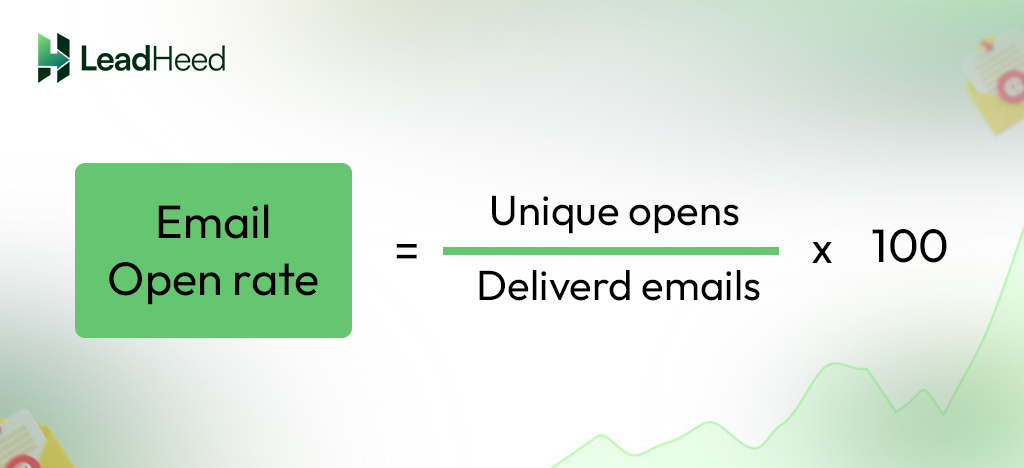
You calculate email open rate by dividing the number of unique opens by the number of delivered emails, then multiplying by 100.
Open rate = (unique opens ÷ delivered emails) × 100
“Delivered” means the emails that reached inboxes successfully. You count the delivered emails, removing the bounced emails.
For example,
Sent: 1,000 emails
Bounced: 50 emails
Delivered: 950 emails
Unique opens: 285
Open rate = (285 ÷ 950) × 100 = 30%
The email open rate would be 30%.
Note: Many platforms track an open when the email loads a small tracking image, so open rate shows inbox interest, not guaranteed reading time.
How do we know if the recipient has opened the email?
There are many CRM and email tracking tools, including Mailtrack, HubSpot and LeadHeed, that help you monitor email opens, link clicks, and engagement of your emails.
The tools track an “open” by placing a tiny invisible image (often called a tracking pixel) inside the email. When the recipient opens the email, the image is loaded, and the system records that as an open.
Note: Email platforms track an open when the email loads the small tracking image, so open rate shows inbox interest, not guaranteed reading time.
What is a good open rate for email?
According to Mailerlite, the average email open rate across industries is around 43.46% (as of 2025). Businesses use a simple range to judge what is a good open rate for email:
- Solid: above 30%
- Strong: 45% to 50%
- Exceptional: 50% or higher
Average email open rate by industries
Industry benchmarks for email open rates show big differences in how audiences engage with email. The highest open rate for email is in religion at 55.71%, followed by hobbies at 53.25% and non-profit at 52.38%. Travel and transportation ranked lowest at 30.10%, with e-commerce at 32.67% and publishing at 34.24%.
|
Industry |
Average open rate |
| Religion | 55.71% |
| Hobbies | 53.25% |
| Non-profit | 52.38% |
| Health and fitness | 47.81% |
| Consulting | 45.96% |
| Publishing | 34.24% |
| E-commerce | 32.67% |
| Travel and transportation | 30.10% |
Average email open rate by region
Looking at the email open rate benchmarks by religion, we have found the highest open rate to be in Australia at 47.69%, and LATAM records the lowest at 31.97%.
| Region | Average open rate |
| Australia | 47.69% |
| Europe | 45.08% |
| US and Canada | 44.49% |
| Africa | 36.53% |
| Poland | 36.05% |
| Asia | 32.54% |
| Latin America (LATAM) | 31.97% |
Average open rate by email type
Email type changes open rates because people react differently based on intent. According to GetResponse, the higher open rate for automated emails, especially welcome emails, is 83.63%, while newsletters’ average is 40.08%.
| Email type | Average open rate |
| Welcome email | 83.63% |
| RSS | 56.75% |
| Autoresponder | 51.05% |
| Triggered email | 45.38% |
| Newsletter | 40.08% |
How is Email Open Rate Different From CTR and CTOR?
Besides open rate, businesses also track CTR (click-through rate) and CTOR (click-to-open rate) for emails. Open rate shows who opened the email, CTR shows who clicked a link, and CTOR shows how many openers clicked the link.
Email CTR (click-through rate)
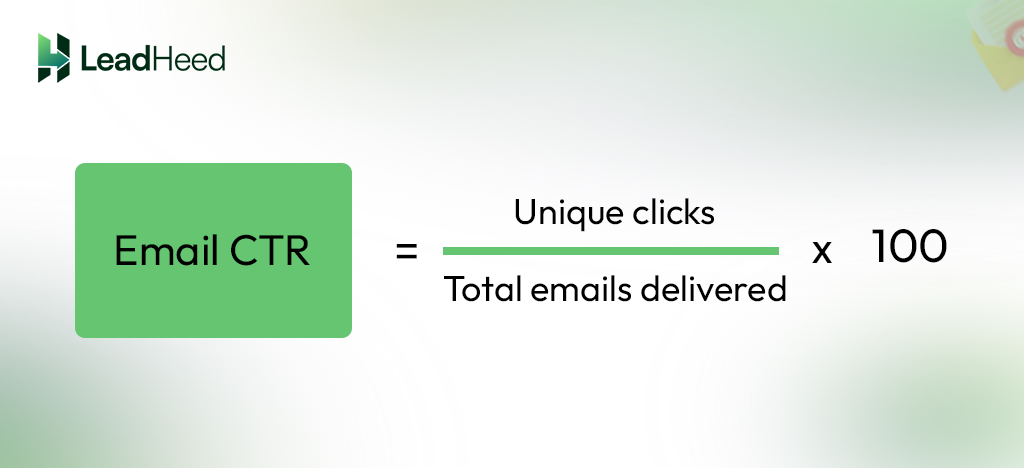
Email CTR shows the percentage of delivered emails where someone clicked a link inside the email. It helps you understand how many recipients took action after receiving the message. The average CTR for emails across industries is 2.09% (as of 2025).
Here’s the formula to calculate the click rate of your emails.
Email CTR = (unique clicks ÷ total emails delivered) × 100
Email CTOR (click-to-open rate)
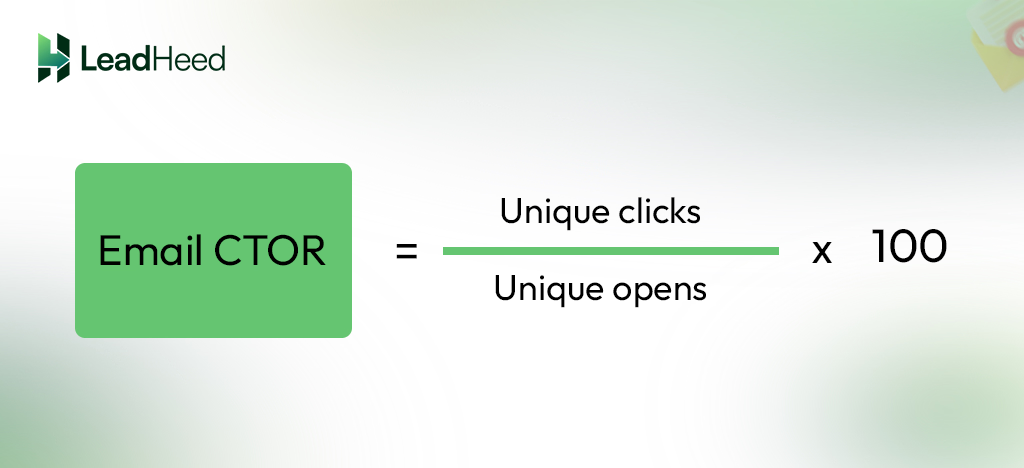
Email CTOR shows the percentage of openers who clicked a link. It focuses on what happens after the open, so it helps you judge how well the email content and call to action worked. The average CTOR for emails is 6.81% (as of 2025).
Here’s the formula to calculate the click-to-open rate of your emails.
Email CTOR = (unique clicks ÷ unique opens) × 100
How to improve your email open rate?
Making your email open rate good starts with reaching the inbox and earning attention once you get there. Write the sender’s name and subject line properly so recipients recognize you and see a clear reason to open.
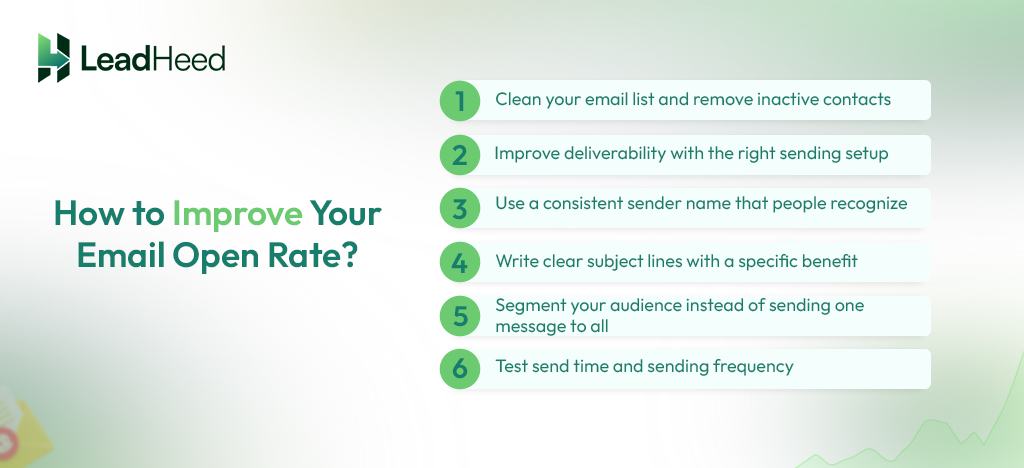
Clean your email list and remove inactive contacts
A clean list improves open rate because you send to people who still care. Remove hard bounces and obvious bad addresses. You must find subscribers who have not opened or clicked in the last 60 to 90 days. Run a short re-engagement email, and remove those who still do not respond.
Improve deliverability with the right sending setup
Open rates drop when emails go to spam or promotions. Set up domain authentication like SPF, DKIM, and DMARC to prove your emails come from a trusted sender. Strong deliverability keeps messages in the inbox, so more recipients actually see them.
Use a consistent sender name that people recognize
People open emails from names they trust. Use a sender name that stays consistent, such as your brand name or a real person plus brand. It should be a professional email address on your domain. Avoid changing sender names often, because it lowers recognition.
Write clear subject lines with a specific benefit
A subject line should tell the reader why the email matters in a few words.
- Focus on clarity and relevance, not clever jokes.
- Mention a clear benefit, update, or topic that matches the reader’s interest.
- Keep it short so it fits on mobile.
- Avoid spammy words and excessive punctuation.
- Test different styles, then keep what produces steady results for your audience.
Segment your audience instead of sending one message to all
Segmentation improves open rates because each email feels more relevant. Split your list by customer type, interest, location, or activity. For example, send different messages to new subscribers and long-time customers. When recipients receive emails that match their needs, they open them more often.
Test send time and sending frequency
Try sending the same type of email at different times and compare open rates over several campaigns. You should also review frequency. Too many emails can cause fatigue, while too few can reduce familiarity. Small timing and frequency changes can improve opens without changing your content.
Conclusion
A good open rate for email depends on your audience, industry, and email type, but the goal stays the same: get more of your messages seen by the right people. When you improve list quality, use a trusted sender name, write clear subject lines, and send relevant emails to the right segments, your open rates become more stable and easier to grow over time.
If you want to track email engagement in one place and keep follow-ups organized, LeadHeed lets you manage contacts, log interactions, and maintain clean lead lists so your email outreach stays consistent and targeted. Sign up for free!!
FAQs
Is 40% open rate good for emails?
Yes, 40% is a good open rate for emails for many industries. Benchmarks often place the overall average email open rate around the low 40s, so 40% sits close to or above average depending on your niche and email type.
What is a good open rate for email?
Many teams use a simple range to judge a good email open rate: above 30% is solid, 45% to 50% is strong, and above 50% is excellent. Use these email benchmarks as a reference, then compare against your own past campaigns.
What is a good click-through rate for email?
A “good” email CTR often falls around 2% to 5%, depending on your industry and email type. MailerLite reports an average click rate of 2.09% in 2025.
Why did my email open rate suddenly drop?
Email open rates often drop due to poor deliverability, list fatigue, sending too often, weaker subject lines, or a rise in inactive subscribers.
How often should I email to keep open rates healthy?
To keep your email open rate healthy, send often enough to stay familiar, but not so often that people ignore you. A consistent schedule and good segmentation usually protect open rates better than high volume.