


Sales gets messy when every rep sells in a different way. One person asks great questions, another jumps straight to pricing, and deals move forward based on luck instead of a clear approach. That inconsistency makes it harder to qualify leads, coach the team, and predict results.
A sales methodology gives your team a structured way to run sales conversations. It helps them uncover needs, handle objections, and move buyers toward a decision.
Businesses use sales methodologies to create a consistent way for their teams to qualify prospects, run sales conversations, and move deals forward. It reduces guesswork, improves coaching, and helps teams close more deals.
What Is a Sales Methodology?
A sales methodology is a structured approach that guides how a salesperson sells. It defines how reps ask questions, qualify prospects, handle objections, and help buyers make a decision.
Sales methodologies usually include:
- Qualification rules (what makes a deal worth pursuing)
- Core questions (what reps must learn before pitching)
- Buying signals and red flags (what to move forward or pause)
- Clear next-step habits (what to do after every call)
Note: It does not replace your pipeline stages. Instead, it tells your team how to sell effectively inside each stage.
Sales Methodology vs Sales Process
People often confuse sales process and sales methodology because both are used to “improve sales” and they show up together in the same conversations, training, and CRM stages.
Since reps follow steps in a pipeline while also using frameworks to qualify and ask questions, it can look like they’re the same thing, but sales methodology and sales process solve different problems and play different roles.
A sales process is the set of stages a deal moves through: New Lead → Qualified → Demo → Proposal → Negotiation → Won/Lost. It shows where the buyer is in the journey and what steps your team follows to move the deal forward.
A sales methodology is the approach you use inside those stages. It defines how your team runs conversations: what questions to ask, how to qualify, how to handle objections, and how to earn commitment to the next step.
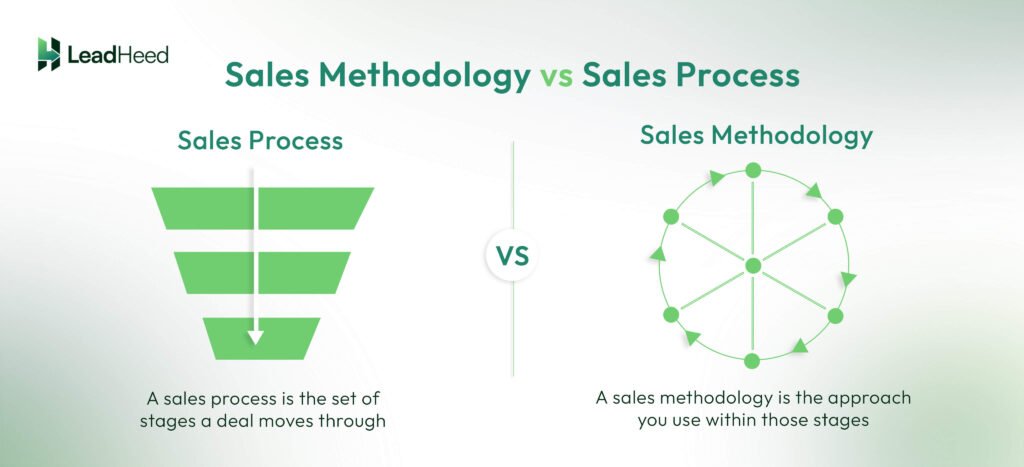
In simple terms, the sales process is the roadmap, and the sales methodology is how you drive the car.
For example, your process might include a “Discovery” stage. Your methodology (like BANT, SPIN, or MEDDICC) tells the rep what to uncover during discovery (like needs, urgency, decision-makers, risks).
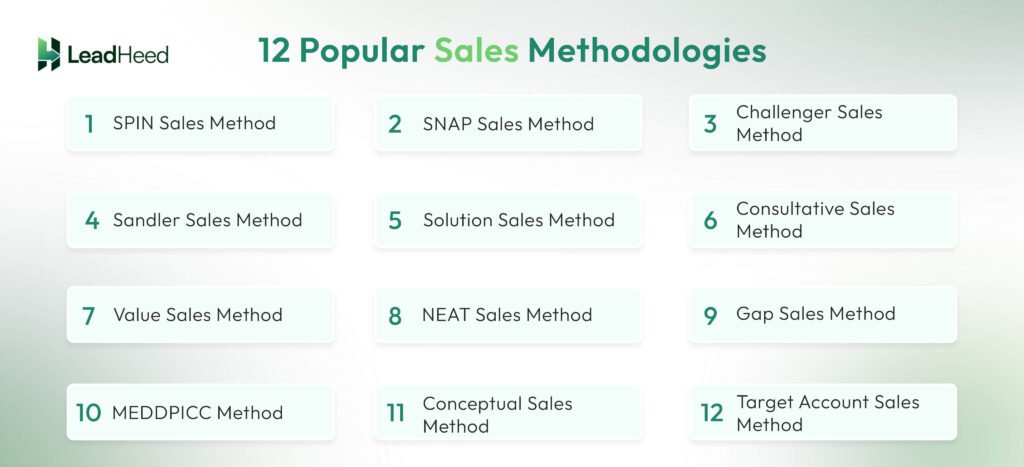
12 Popular Sales Methodologies (With Simple Explanations)
Different teams use different sales methodologies depending on what they sell, how complex the deal is, and how buyers make decisions. The goal is the same across all of them: create a clear, repeatable way to qualify opportunities and move deals forward with a clear sales process.
- SPIN Sales Method
- SNAP Sales Method
- Challenger Sales Method
- MEDDPICC Method
- Sandler Sales Method
- Solution Sales Method
- Consultative Sales Method
- Conceptual Sales Method
- Value Sales Method
- NEAT Sales Method
- Gap Sales Method
- Target Account Sales Method
1. SPIN Sales Methodology
The SPIN sales methodology – situation, problem, implication, and need-payoff – helps you understand a buyer’s situation before you pitch anything. It focuses on guiding the conversation from basic needs to the real business impact, so the buyer clearly sees why change matters.
Instead of selling features, you use a structured flow of questions to uncover problems, create urgency, and connect your solution to outcomes the buyer cares about.
How Does SPIN Selling Work?
The SPIN selling method works by asking four types of questions in a logical order. Each step moves the buyer closer to a decision by building clarity and urgency.
- Situation: Understand how they handle things today and what tools or processes they use.
- Problem: Identify what’s not working, what causes delays, and what frustrates the team.
- Implication: Explore what the problem is costing them (time, revenue, missed opportunities, or customer experience).
- Need-Payoff: Help the buyer describe the value of solving the problem, which makes the next step feel logical.
2. SNAP Sales Methodology
The SNAP sales methodology – Simple, iNvaluable, Align, and Priorities – is designed for busy buyers who have limited time and attention, and are flooded with choices. It helps you keep your message clear, relevant, and easy to act on. It lets prospects not feel overwhelmed or confused.
Instead of long discovery and heavy explanations, SNAP selling focuses on reducing friction in the conversation and making the next step simple.
How Does SNAP Selling Work?
SNAP selling works through four principles that keep conversations short and focused. The idea is to respect the buyer’s limited time and guide them toward a small next step that keeps the deal moving.
- Simple: Keep the message short and clear. Focus on one problem and one next step.
- iNvaluable: Avoid generic talk and bring valuable insights, clarity, or a useful recommendation.
- Align: Align your message with the buyer’s goals, priorities, and current situation. Make it about them, not your product.
- Priorities: Respect their time and focus on what matters now. Guide them to a small decision that moves the deal forward.
3. Challenger Sales Methodology
In the Challenger sales methodology, the salesperson leads the buyer with insight. Instead of only asking questions and reacting, you teach the prospect something new about their problem, challenge their current thinking, and guide them toward a better approach.
The challenger selling method shapes how the buyer sees the situation, so your solution feels like the logical next step.
How Does the Challenger Sales Method Work?
The Challenger sales method changes the buyer’s perspective early, then keeps the conversation focused on business impact. You bring insight, make it relevant to their situation, and lead the process confidently so the deal doesn’t drift.
- Teach: Share an insight that reframes the problem and highlights what the buyer may be missing.
- Tailor: Connect the message to their industry, role, goals, and current situation so it feels specific.
- Take Control: Guide next steps clearly, handle pushback calmly, and keep the decision moving forward.
4. MEDDPICC / MEDDIC Methodology
The MEDDPICC, also known as MEDDIC, is a sales qualification methodology used to qualify complex deals with high accuracy. It helps you confirm whether a deal is real, how the buyer will decide, and what must happen for the deal to close.
Instead of relying on “good feelings” in the pipeline, MEDDPICC forces clarity around value, stakeholders, approval steps, and risks.
How Does MEDDPICC Work?
MEDDPICC sales methodology helps you collect specific qualification details across eight areas. Each area reduces uncertainty and helps you spot gaps, such as missing decision-makers, unclear value, or no real approval path, early.
- M — Metrics: Identify measurable outcomes the buyer cares about (time saved, revenue gained, costs reduced).
- E — Economic Buyer: Confirm who controls the budget and can approve the purchase.
- D — Decision Criteria: Understand what they will evaluate (price, features, security, support, ease of use).
- D — Decision Process: Learn the exact steps to get approval (reviews, demos, legal, procurement).
- P — Paper Process: Clarify contract steps, paperwork, procurement, and timeline to signature.
- I — Implicate Pain: Confirm the real pain and business impact if the problem continues.
- C — Champion: Identify an internal person who supports you and wants the change to happen.
- C — Competition: Understand what alternatives they’re considering and why.
5. Sandler Sales Methodology
The Sandler sales methodology helps you qualify early and avoid chasing deals that won’t close. It focuses on finding real pain, confirming the budget and decision-making, and building agreement on the next step before you invest too much time.
The Sandler selling creates a balanced conversation where both sides qualify each other.
How Does the Sandler Sales Method Work?
The Sandler approach works by controlling the process through clear upfront agreements and structured discovery. You guide the conversation to uncover pain and fit, confirm practical requirements, and agree on next steps—so the deal doesn’t drift or turn into endless follow-ups.
- Up-Front Contract: Agree on the purpose of the call, timing, and what happens next.
- Pain: Uncover the real problems and why they matter enough to change.
- Budget: Confirm financial fit early so you don’t waste time on misaligned deals.
- Decision: Clarify who decides, how approval works, and the timeline.
- Fulfillment: Present the solution only after pain, budget, and decision are clear.
- Post-Sell: Reduce second thoughts by confirming the plan and expectations after commitment.
6. Solution Sales Methodology
The solution sales methodology focuses on diagnosing the buyer’s problem first, then positioning your offering as the best solution to that specific need. Instead of starting with features, you start with the buyer’s situation, identify gaps, and build a clear “problem → solution → impact” connection. This keeps the conversation practical and makes your recommendation feel tailored.
How Does the Solution Sales Method Work?
Solution selling follows a simple flow: understand the buyer’s current state, define the desired future state, and show how your solution closes the gap. You keep the conversation centered on needs and outcomes, so the buyer sees beyond product details, the value.
- Discover the problem: Learn the buyer’s goals, challenges, and what’s failing today.
- Define the desired outcome: Clarify what “success” looks like and what must improve.
- Match capabilities to needs: Show only the features that solve their specific gaps.
- Prove impact: Explain expected results with clear, measurable value where possible.
- Agree on next steps: Confirm timeline, stakeholders, and what happens next to move forward.
7. Consultative Sales Methodology
In the consultative sales methodology, you sell by advising, not pushing. You focus on understanding the buyer’s goals and constraints, then recommend the best path forward, even if it means saying “not a fit.” This builds trust and makes the buyer feel supported, which improves conversion in high-consideration purchases.
How Does the Consultative Sales Method Work?
Consultative selling treats the sales conversation like a problem-solving session. You ask strong questions, listen closely, and guide the buyer toward the right decision with clear reasoning and next steps.
- Ask diagnostic questions: Understand goals, challenges, and what’s driving the decision.
- Clarify constraints: Confirm budget comfort, timeline, and team capacity.
- Recommend, don’t pitch: Offer a solution based on what fits their situation best.
- Educate with clarity: Explain trade-offs and help the buyer evaluate options confidently.
- Agree on next steps: Set a clear action plan with owners and dates.
8) Conceptual Sales Methodology
The conceptual sales method focuses on how the buyer thinks about the solution, not just what the solution does. It helps you understand the buyer’s concept of success, including what they believe will work, why it matters, and how they define value.
Conceptual selling is useful when multiple options look similar, and the buyer’s priorities and perception drive the decision.
How Does the Conceptual Sales Method Work?
Conceptual selling uncovers the buyer’s goals, beliefs, and decision logic. You learn what they are trying to accomplish, how they evaluate solutions, and what concerns could block the purchase. You then position your offer in a way that matches their concept of the best choice.
- Clarify the buyer’s concept of success: Understand what outcome they want and why it matters.
- Explore how they evaluate options: Learn what criteria they care about most and what they ignore.
- Identify key stakeholders: Confirm who influences the decision and what each person wants.
- Uncover concerns early: Surface risks, doubts, and deal-breakers before proposing a solution.
- Align the solution to their concept: Present your offer as the best fit based on their priorities and decision logic.
9. Value Sales Methodology
The value sales methodology focuses on business impact instead of product features. You connect your solution to measurable value (revenue growth, cost reduction, time saved, or risk avoided), so the buyer can justify the decision internally. The method works well when buyers need a clear reason to invest, and stakeholders want proof of ROI.
How Does the Value Sales Method Work?
Value selling ties the buyer’s problem to a financial or operational outcome. You quantify what the problem is costing them, define what improvement looks like, and present your solution as an investment with a clear return.
- Identify value drivers: Find what matters most—revenue, cost, time, efficiency, or risk.
- Quantify the current cost: Estimate the impact of the problem using real numbers where possible.
- Define measurable outcomes: Agree on what success looks like and how it will be tracked.
- Link features to impact: Explain only what supports the value case, not everything the product can do.
- Build a simple ROI story: Help the buyer justify the purchase with clear business reasoning.
10. NEAT Sales Methodology
The NEAT sales method is a qualification methodology that helps you focus on what truly drives a deal forward. Instead of relying only on budget and timeline, it pushes you to uncover the buyer’s core need, the real economic impact, who has authority, and what the purchase decision looks like. This creates clearer qualification and reduces time spent on low-intent opportunities.
How Does the NEAT Sales Method Work?
NEAT helps you qualify deals through four areas that explain both the problem and the path to a decision. You uncover why the buyer cares, what it costs them to wait, who can approve the change, and how the decision will be made.
- N — Need: Identify the real problem and the outcome the buyer wants.
- E — Economic Impact: Understand the financial impact of solving (or not solving) the problem.
- A — Access to Authority: Confirm you can reach the people who can approve the purchase.
- T — Timeline: Clarify when they want results and what steps must happen before buying.
11. Gap Sales Methodology
The Gap sales methodology focuses on the gap between where the buyer is today and where they want to be. Instead of leading with your product, you lead with the buyer’s current problems and the cost of staying the same. The bigger and clearer the gap, the easier it becomes for the buyer to justify change.
How Does the Gap Sales Method Work?
Gap selling defines two states: the current state and the desired future state. You uncover what is happening today, what “better” looks like, and what is stopping them from getting there. You can then position your solution as the bridge.
- Understand the current state: Learn how they work today and what problems exist.
- Define the future state: Clarify the outcome they want and what success looks like.
- Identify the gap: Pinpoint what is preventing the future state from happening.
- Quantify the impact: Show what the gap costs in time, money, risk, or missed growth.
- Position the bridge: Present your solution as the practical path from current to future.
12. Target Account Sales Methodology
The target account sales method is a focused approach where you pick a shortlist of high-value accounts and tailor your sales efforts to win them. Instead of chasing volume, you prioritize quality. You research the account deeply, personalize outreach, and build multi-threaded relationships across stakeholders. This sales methodology is common in B2B sales where a few accounts can drive significant revenue.
How Does the Target Account Sales Method Work?
Target account selling works by treating each selected account like its own mini-market. You choose the right accounts, map the people involved, build a tailored value message, and run coordinated outreach until the deal is won.
- Select target accounts: Choose accounts that match your ideal customer profile and revenue potential.
- Research the account: Understand goals, challenges, org structure, and current tools.
- Map stakeholders: Identify decision-makers, influencers, and champions across teams.
- Personalize your value message: Tailor outreach based on account-specific priorities.
- Run coordinated outreach: Use email, calls, and social touchpoints with consistent messaging.
- Drive a focused next step: Push toward a meeting, discovery call, or account review with clear intent.
How Do You Implement a New Sales Methodology in Your Business?
You should choose one sales methodology that fits your sales motion, then translate it into a simple set of daily actions: the questions reps must ask, the information they must capture, and the rules for when a deal can move to the next stage.
1. Choose one methodology and keep it consistent
Pick one approach that matches your deal type and sales cycle, then standardize it across the team. Consistency matters because it makes discovery calls predictable, deal reviews clearer, and coaching easier. If different reps use different frameworks, your pipeline becomes hard to trust.
2. Turn it into a simple playbook
Convert the methodology into a one-page playbook that reps can actually use. Include the key discovery questions, qualification criteria, and what must be true before moving a deal forward (for example: decision-maker identified, timeline confirmed, clear problem stated).
3. Train with real calls and roleplays
Run roleplays using your real leads, common objections, and typical deal stages. Practice how to ask questions naturally, how to summarize what you heard, and how to set next steps without sounding scripted. The goal is to build reps’ confidence so the methodology shows up in live conversations.
4. Build it into your CRM and pipeline
Update your CRM fields and pipeline stages to match what the methodology requires your team to capture. For example, add fields for pain points, success criteria, stakeholders, and next steps, and make them part of your deal review routine. It ensures the sales methodology becomes part of your process, not something reps “try to remember.”
Conclusion
A sales methodology gives your team a consistent way to qualify prospects, run better conversations, and move deals forward with clear next steps. When you choose the right methodology and implement it properly, sales becomes less guesswork and more repeatable execution. It helps you reduce stalled deals, improve coaching, and build a pipeline you can trust.
LeadHeed helps your team capture all your sales details in one place, keep deals organized in a clear pipeline, and assign follow-ups so nothing gets missed. With a simple, easy-to-use CRM setup and a structured workflow, it becomes easier to apply your chosen sales methodology across the team and track progress from first call to closed deal. Sign up for free!!
FAQs
What is the best sales methodology?
The best sales methodology depends on your deal complexity, sales cycle length, and buyer type. For example, SPIN works well for strong discovery, while MEDDPICC fits complex B2B deals that need deeper qualification.
What are the most common sales methodologies?
Common sales methodologies include SPIN, Challenger, Sandler, MEDDPICC, Solution Selling, Consultative Selling, Gap Selling, NEAT, SNAP, and BANT.
Is a sales methodology the same as a sales process?
No. A sales process is the stages a deal moves through, while a sales methodology is the approach and framework your team uses within those stages.
How do you implement a sales methodology successfully?
Choose one methodology, turn it into a simple playbook, train with real scenarios, build it into your CRM fields and pipeline, and coach it weekly until it becomes a habit.
How do you know if a sales methodology is working?
You’ll see clearer discovery notes, better qualification, fewer stuck deals, and stronger stage conversion. Over time, you should also see shorter sales cycles and higher win rates.