


Sales calls fail for one simple reason: reps start pitching before they truly understand the buyer. When you skip discovery, you guess the customer’s needs, budget, and timeline, resulting in a lost deal.
When you know the right sales discovery questions, you stop guessing and start selling with clarity. Instead of jumping into a pitch, you uncover the buyer’s real problem, confirm what they actually need, and understand how they make decisions.
The right discovery questions help you spend time on leads that can convert. You learn their urgency, budget comfort, success goals, and possible blockers early.
What Are Sales Discovery Questions?
Sales discovery questions are the questions you ask to understand a prospect before you pitch. They help you learn what the buyer is trying to achieve, what problem they want to solve, what they’ve tried before, and what might stop them from moving forward.
These questions also help you qualify the lead. You find out if the prospect is a good fit, how urgent the need is, who will be involved in the decision, and what success should look like.
Importance of Discovery Questions for Sales
Discovery questions set the direction of the entire sales process. When sales discovery is done right, you understand the buyer (their goals, current process, and pain points) before you present a solution.
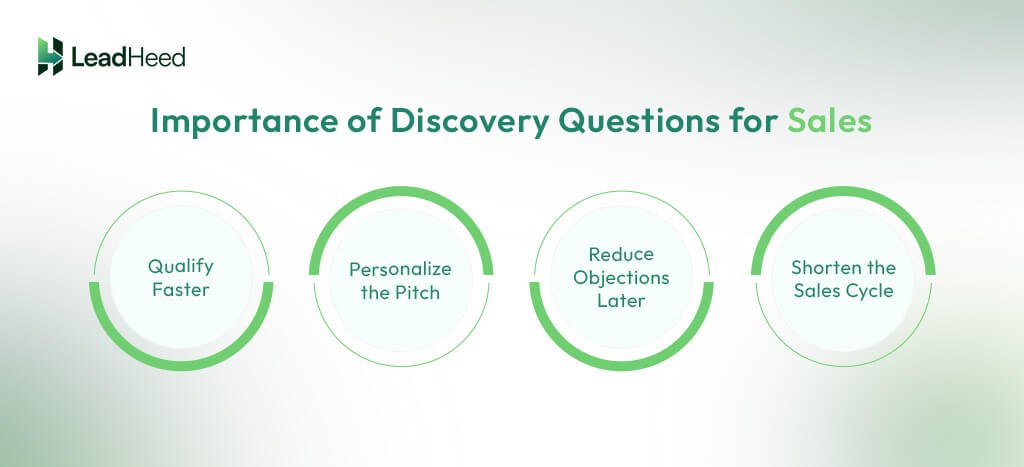
Qualify Faster
The right questions help you quickly identify whether a prospect is a good fit. You learn if they have a real need, the authority to decide, and the urgency to act. It helps you focus on leads that can actually move forward.
Personalize the Pitch
Discovery answers give you context. Instead of using a generic pitch, you can connect your solution directly to the buyer’s goals, challenges, and priorities. It makes your message more relevant and easier to trust.
Reduce Objections Later
Most objections come from gaps in understanding. When you ask clear discovery questions early, you uncover concerns around budget, timing, or expectations before they become blockers. This keeps deals from stalling at the end.
Shorten the Sales Cycle
Clear discovery removes guesswork. With the right information upfront, you avoid unnecessary calls, misaligned demos, and repeated explanations, helping deals move faster and close with fewer delays.
How to Ask Better Sales Discovery Questions?
Good discovery doesn’t feel like an interview. It feels like a focused business conversation where the buyer does most of the talking, and you guide them with the right questions.
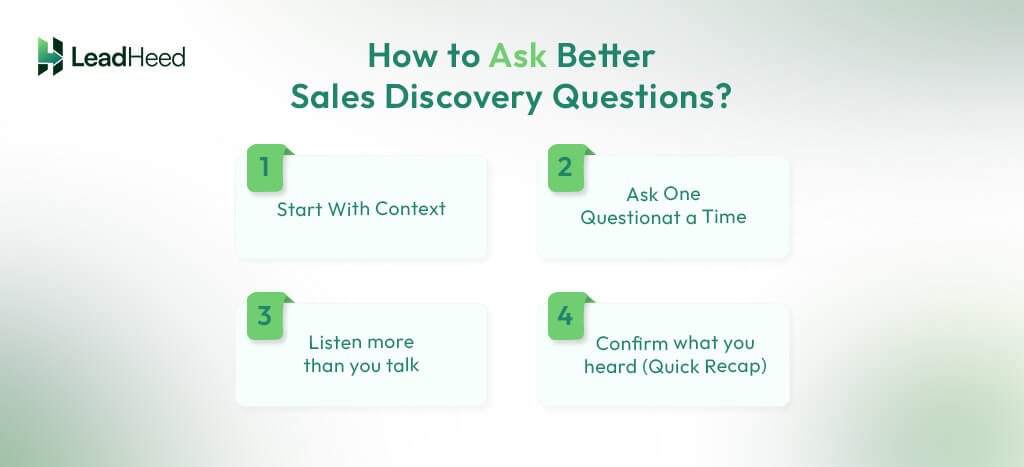
Start With Context
Make sure your discovery questions don’t feel like an interrogation. Open with a short setup that shows you understand why they’re talking to you. For example: confirm what triggered the call, what they’re hoping to solve, or what they’re evaluating. This makes your questions feel natural and keeps the buyer engaged.
Ask One Question at a Time
Stacking questions confuses people and leads to half-answers. Keep your sales discovery question simple—one question, one clear answer. If you need more detail, ask a follow-up based on what they just said.
Listen More Than You Talk
Discovery works best when the buyer explains their world. Let them speak, pause, and avoid jumping in too early. The more they talk, the more you learn. It would also be easier for you to position your solution.
Confirm What You Heard (Quick Recap)
After a few answers, summarize in one or two sentences: their goal, their challenge, and what matters most. This prevents misunderstandings and shows you’re listening. It also helps you transition smoothly into the next step.
20+ Sales Discovery Questions You Can Ask on the First Call
When the first call is strong, the rest of the deal becomes easier. These sales discovery questions help you uncover the buyer’s goals, current challenges, decision process, and urgency—so you can qualify clearly and keep the conversation focused on real outcomes.
1. What prompted you to take this call today?
Why It Works: Clarifies the trigger
This discovery question uncovers what changed and why the conversation is happening now. It helps you anchor the call around the real reason they are considering a solution.
2. What are you hoping to improve or fix?
Why It Works: Defines the core need
The question helps you identify the problem in the buyer’s own words. It also keeps you from pitching features that don’t connect to what they actually care about.
3. What does success look like for you in the next 30–90 days?
Why It Works: Sets measurable outcomes
This reveals the short-term outcome they expect after taking action. It also gives you a clear target to align your recommendation and timeline.
4. What is your target or desired outcome from a new solution?
Why It Works: Defines outcome expectations
Its answer gives you a clear picture of what “better” means for the buyers: speed, clarity, fewer errors, more revenue, or something else. You can then speak directly to that outcome instead of listing capabilities.
5. How would your team define success after implementing a solution like this?
Why It Works: Frames solution impact
This invites the buyer to describe what the “after” state should look like for the team. It also helps you understand what results will make internal stakeholders support the purchase.
6. What’s your current process for handling this today?
Why It Works: Establishes the baseline
This shows how work gets done right now and where the process breaks. Once you know the baseline, you can explain improvement in a way that feels practical and believable.
7. What’s the biggest challenge with your current approach?
Why It Works: Surfaces the main pain point
This pinpoints what is causing the most friction today. It also helps you prioritize which problem to solve first, instead of trying to fix everything at once.
8. What have you tried so far to solve this?
Why It Works: Reveals past attempts
The answer to this sales discovery call tells you what they already tested and why it didn’t work. It helps you avoid repeating failed approaches and positions your solution as a smarter next step.
9. What happens if nothing changes in the next few months?
Why It Works: Exposes the cost of inaction
This helps the buyer think through the impact of staying with the current situation. It often surfaces hidden costs like lost time, missed revenue, or poor customer experience.
10. How urgent is this compared to your other priorities?
Why It Works: Confirms priority level
This helps you understand whether this is a “now” project or a “later” idea. It also guides how you plan follow-ups, demos, and timelines.
11. Is there a deadline or event driving the timing?
Why It Works: Clarifies timeline drivers
Deadlines usually reveal real urgency—like a launch, renewal, reporting cycle, or hiring plan. Knowing the driver helps you recommend a realistic rollout and next steps.
12. Who will use this day-to-day?
Why It Works: Identifies end users
This tells you who needs the tool to be simple and usable for adoption to happen. It also helps you tailor your demo and onboarding discussion to real workflows.
13. Who else will be involved in the decision?
Why It Works: Maps stakeholders
When you ask this question on your sales discovery call, it will help you identify decision-makers, influencers, and approvers of the company. It also prevents late-stage surprises like “we need to bring finance in.”
14. How do decisions like this usually get approved in your company?
Why It Works: Clarifies the buying process
This explains the steps between interest and purchase—reviews, approvals, and timelines. It helps you plan the right sequence of calls and materials.
15. What criteria will you use to compare options?
Why It Works: Defines evaluation standards
This discovery question for sales will show you what matters most to the buyers, such as ease of use, support, price, or reporting. You can then focus your pitch on their criteria, not your preferred talking points.
16. Do you have a budget range in mind for solving this?
Why It Works: Confirms financial fit
The answer will help you confirm whether the opportunity is realistic before going too far. It also makes pricing conversations smoother later because expectations are already clear.
17. What would make this investment feel worthwhile?
Why It Works: Connects value to ROI
This reveals what return they expect: saving time, closing more deals, fewer mistakes, better visibility, or better customer experience. It helps you position the solution around value, not cost.
18. What tools are you using now, and what’s missing?
Why It Works: Identifies gaps and requirements
This shows what’s already in place and what is failing them. It also helps you understand whether they need a replacement, an upgrade, or a better process.
19. Are there any integrations or workflows you must keep?
Why It Works: Prevents implementation friction
The question uncovers technical needs early, before they become blockers. It also tells you how the solution should fit into their existing routine.
20. What concerns do you have about changing your current setup?
Why It Works: Uncovers hidden objections
This discovery call question brings resistance to the surface, like training effort, switching costs, or team pushback. Addressing concerns early builds trust and reduces last-minute hesitation.
21. What could slow this down internally?
Why It Works: Identifies blockers
This helps you spot risks like approvals, legal review, competing priorities, or limited resources. Once you know the blocker, you can plan around it instead of guessing.
22. If we agree this is a fit, what would you like the next step to be?
Why It Works: Secures a clear next action
This customer discovery question keeps momentum and avoids vague endings like “I’ll get back to you.” It also sets a shared plan for what happens next and who should be involved.
What’s Next?
Once discovery confirms real intent and a clear problem to solve, the focus should shift to structured follow-up. Capture the prospect as a lead, along with discovery details such as goals, urgency, and decision-makers.
You then have to organize leads, assign ownership, and schedule the agreed follow-up (a demo, proposal, or review call).
You can move the leads into a lead list and manage them inside your CRM for follow-ups. LeadHeed is a simple, easy-to-use CRM that helps you keep your discovery insights in one place, track follow-ups, and convert qualified leads into deals with a clear sales pipeline. Sign up for free!!