
Most leads do not convert, not because your offer is bad, but because the lead was never a good fit or never ready to buy. That is why lead qualification matters. It helps you quickly separate serious prospects from people who are only browsing, comparing, or asking “just to know.” When you qualify leads well, you spend less time chasing and more time closing.
Qualifying sales leads involves understanding: does the lead match your ideal customer, do they have a real problem, do they show buying intent, and can they make a decision within a reasonable timeline.
With a clear lead qualification process, your team follows the same steps for every lead, keeps follow-ups consistent, and builds a pipeline filled with opportunities that are more likely to convert.
What Is Lead Qualification?
Lead qualification is the process of checking whether a lead is a good match for your business and likely to become a customer. It helps you decide who to prioritize, who needs nurturing, and who should not enter your sales pipeline. Instead of treating every inquiry the same, you use clear criteria to focus on leads that have real potential.
A strong lead qualification process usually confirms four things:
- Fit: They match your ideal customer.
- Need: They have a real problem you solve.
- Intent: They show buying interest.
- Ability to buy: They have decision power, budget, and timing.
Why Lead Qualification Matters?
Lead qualification keeps your sales process efficient and predictable. It helps you focus on leads that match your ideal customer, respond faster to high-intent inquiries, and avoid filling your pipeline with people who will never buy.
When you qualify leads early, you improve close rates, reduce follow-up waste, and build a cleaner pipeline that is easier to manage.
Saves time and sales effort
Qualifying sales leads prevents your team from spending hours on leads that will never move forward. When you filter for fit and intent early, your reps can focus on conversations that have real potential and stop chasing dead ends.
Improves follow-up speed and consistency
High-intent leads expect fast replies. A clear qualification process helps you respond quickly, ask the right questions, and set a next step immediately, so leads do not go cold due to delays or confusion.
Increases conversion rates
Qualified leads convert better because they have a real need and a reason to act. When you prioritize the right prospects, your demos and proposals become more relevant, which increases the chances of closing.
Improves forecasting and pipeline clarity
A pipeline filled with unqualified deals makes forecasting unreliable. Qualification keeps your pipeline cleaner, so your team can predict revenue more accurately and avoid last-minute surprises.
Helps you invest in the right lead sources
When you qualify leads consistently, you can see which channels bring buyers and which bring “just browsing” traffic. It helps you shift budget toward the sources that produce better customers and higher ROI.
How to Qualify Sales Leads?
A simple way to qualify leads is to follow the same steps every time: confirm fit, confirm need, confirm intent, and confirm buying readiness. It keeps your pipeline clean and helps you focus on leads that are most likely to convert.
Step 1: Capture leads with key details
Collect basic info like name, company, role, contact details, and lead source so you can follow up correctly and track performance.
Step 2: Check fit (ideal customer match)
Confirm whether the lead matches your target customer by industry, company size, location, and the problem they need solved.
Step 3: Confirm the need (pain + outcome)
Ask what challenge they face and what result they want. Qualified leads can clearly explain what is not working and what they want to improve.
Step 4: Check intent (buying signals)
Look for actions like requesting pricing, booking a meeting, replying quickly, or asking implementation questions. Higher intent means higher priority.
Understand who decides, whether the budget is available, and when they want to act. You do not need exact details immediately, but you need direction.
Step 6: Set the next step and follow-up plan
If the lead is qualified, book the next action and move it forward in your pipeline. If not, nurture it or close it out with clear notes.
Lead Qualification Stages: A Simple Funnel
A simple lead qualification funnel helps your team track where each lead stands and what should happen next. The goal is to move leads forward only when they meet clear criteria, so your pipeline stays clean and easy to manage.
New lead → Contacted → Engaged → Qualified → Meeting booked → Proposal → Closed
1. New Lead
A lead enters your system from a form, call, social message, referral, or ad. At this stage, you only have basic details, so the priority is to respond fast and confirm interest.
2. Contacted
You have reached the lead or attempted contact and logged the interaction. The goal here is to ask a few quick questions to confirm fit and understand why they reached out.
3. Engaged
The lead responds and shares real information about their needs. You now have enough context to judge intent and start qualifying based on pain, goals, and urgency.
4. Qualified
The lead matches your ideal customer, has a clear need, shows buying intent, and has a realistic timeline. At this stage, the next step usually becomes a meeting, demo, or detailed discussion.
5. Meeting Booked
A call, demo, or consultation is scheduled. This stage confirms the lead is serious, and your job is to prepare, align stakeholders, and move the conversation toward a proposal.
6. Proposal / Quote Sent
You share pricing, scope, or a formal proposal. The focus is to handle objections, confirm the decision process, and agree on next steps toward approval.
7. Closed (Won or Lost)
The deal ends with either a win or a loss. For wins, you hand off to onboarding. For losses, you log the reason, so your team improves lead quality and messaging over time.
Popular Lead Qualification Frameworks
Lead qualification frameworks give your team a consistent way to decide whether a lead is worth pursuing. Instead of guessing, you ask structured questions to confirm fit, urgency, and buying readiness.
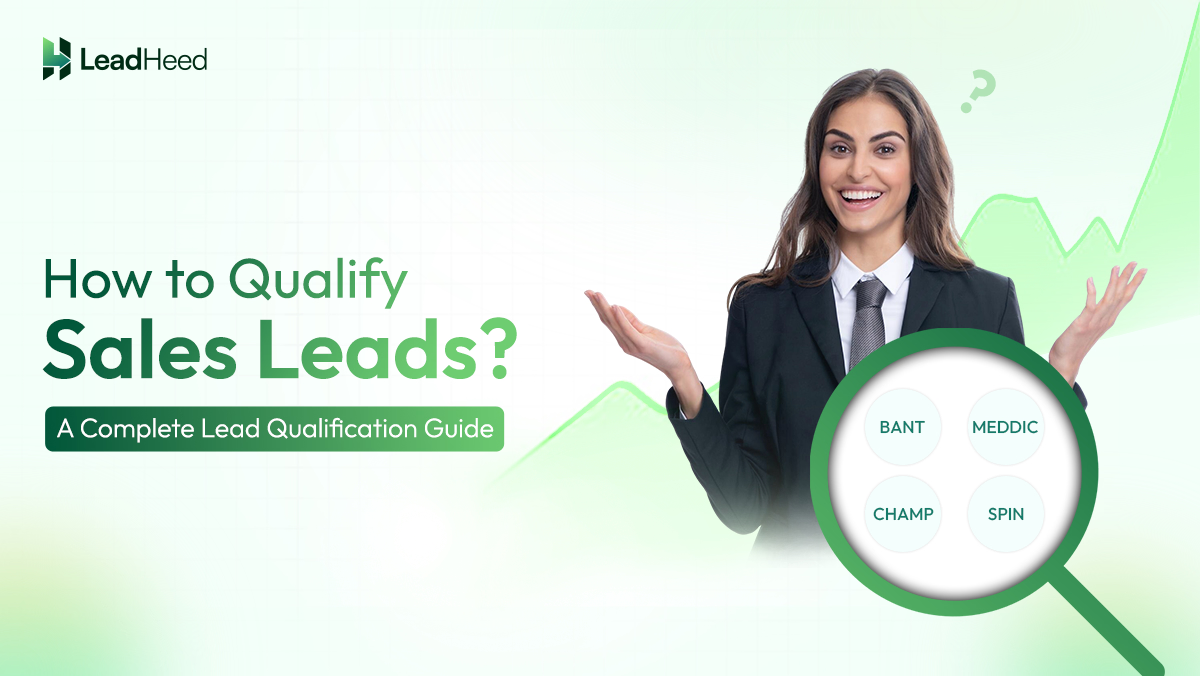
BANT, MEDDIC, CHAMP and SPIN are some popular sales frameworks used for lead qualification.
BANT
BANT stands for Budget, Authority, Need, and Timeline. It helps you check if the lead can afford the solution, who decides, what problem they need solved, and when they plan to act. BANT works well to qualify leads for businesses with shorter sales cycles and straightforward deals.
MEDDIC
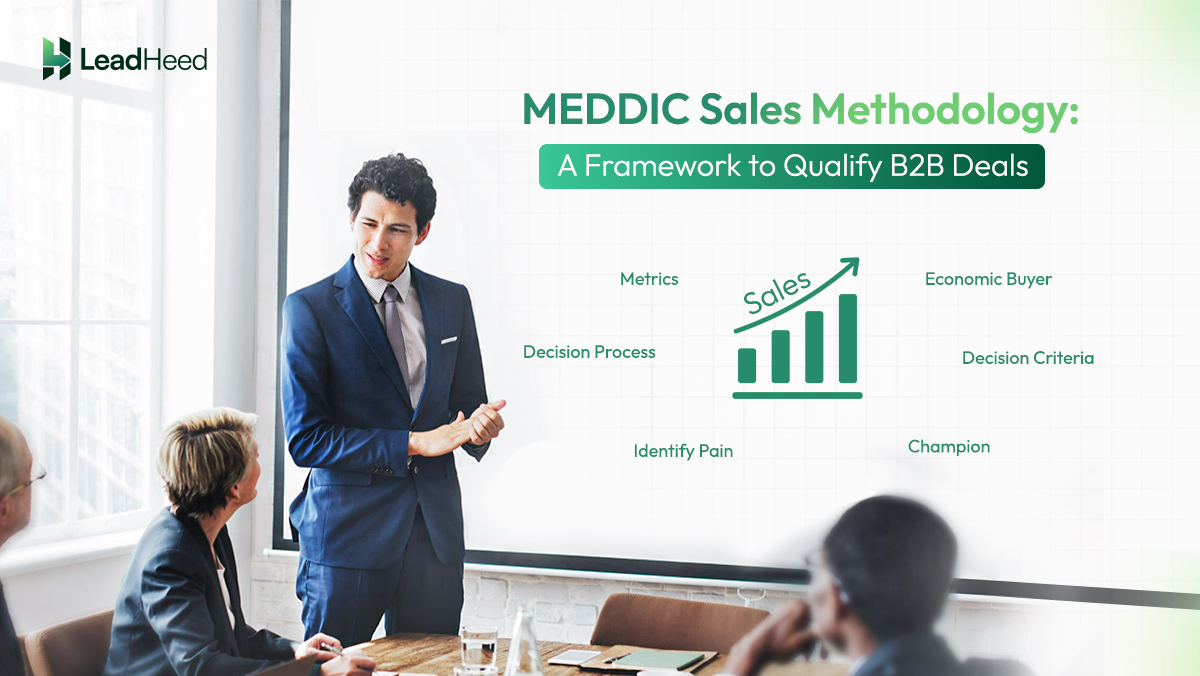
MEDDIC stands for Metrics, Economic Buyer, Decision Criteria, Decision Process, Identify Pain, and Champion. It is best for complex B2B deals with multiple stakeholders, longer timelines, and formal approval steps. MEDDIC helps you reduce late-stage surprises and qualify more accurately.
CHAMP
CHAMP stands for Challenges, Authority, Money, and Prioritization. It focuses on the buyer’s challenge first, then confirms decision readiness. CHAMP works well when you want to lead with problem discovery instead of starting with budget questions.
SPIN
SPIN stands for Situation, Problem, Implication, and Need-Payoff. It’s a discovery structure that helps you uncover pain and urgency through better questions. SPIN is useful when your product requires consultative selling and the buyer needs help defining the problem.
Lead Scoring vs Lead Qualification
Lead scoring and lead qualification both help you prioritize leads, but they work in different ways. Lead scoring is a system that assigns points based on signals like job role, company size, website activity, email clicks, form submissions, and lead source. It helps you quickly sort leads into “high,” “medium,” and “low” priority so your team knows where to focus first.
Lead qualification checks whether the lead is truly a good fit and actually ready to buy by validating need, intent, authority, and timeline. The best approach is to use both together: use scoring to rank leads fast, then use qualification questions to confirm which ones should enter your pipeline and move to a meeting or proposal.
Qualifying Sales Leads with LeadHeed CRM
Qualifying sales leads helps you stop wasting time on low-fit inquiries and focus on leads that are most likely to convert. A consistent lead qualification method makes your sales results more predictable because your team knows exactly what “qualified” means.
LeadHeed helps you capture leads, organize contact details, track every lead through a clear pipeline, and assign tasks and reminders so follow-ups never get missed. With lead source tracking and a clear sales pipeline, our simple and easy-to-use CRM keeps your team consistent from first inquiry to closed deal. Sign up for free!!!
FAQs
What is a qualified sales lead?
A qualified sales lead is a prospect who matches your ideal customer, has a real need you can solve, shows buying intent, and is ready to move forward with a decision in a reasonable timeline.
How do you determine if a lead is qualified or not?
To determine if a lead is qualified for sales, check four areas: fit (right type of customer), need (clear problem), intent (signals they want to buy), and buying readiness (authority/budget/timeline).
What is the qualification rate of leads?
Lead qualification rate is the percentage of total leads that become qualified.
Formula: (Qualified leads ÷ Total leads) × 100
Example: If you receive 200 leads and 40 qualify, your qualification rate is 20%.
What questions to ask to qualify a lead?
Good lead qualification questions cover fit (who they are), need (what problem they have), intent (why now), and buying readiness (who decides, budget comfort, timeline). To qualify leads, you must ask questions that confirm fit, need, intent, and readiness, such as:
- What problem are you trying to solve right now?
- What tool or process are you using today?
- What outcome would make this a success for you?
- Who will be involved in the decision?
- When do you want to have a solution in place?
What is the lead qualification system?
A lead qualification system is a repeatable method your team uses to sort leads into clear outcomes: qualified, needs nurturing, or not a fit. It usually includes qualification criteria, stages (New → Contacted → Qualified), a question set, and a follow-up process. Businesses often manage leads inside a CRM system like LeadHeed.
What is the difference between lead scoring and lead qualification?
Lead scoring ranks leads using points based on signals (activity, role, source), while lead qualification confirms readiness through conversation and clear criteria (need, intent, decision power, timeline).
What is the difference between MQL and SQL?
An MQL (Marketing Qualified Lead) shows interest and fits basic criteria, while an SQL (Sales Qualified Lead) is validated by sales as ready for a sales conversation, meeting, or proposal.