
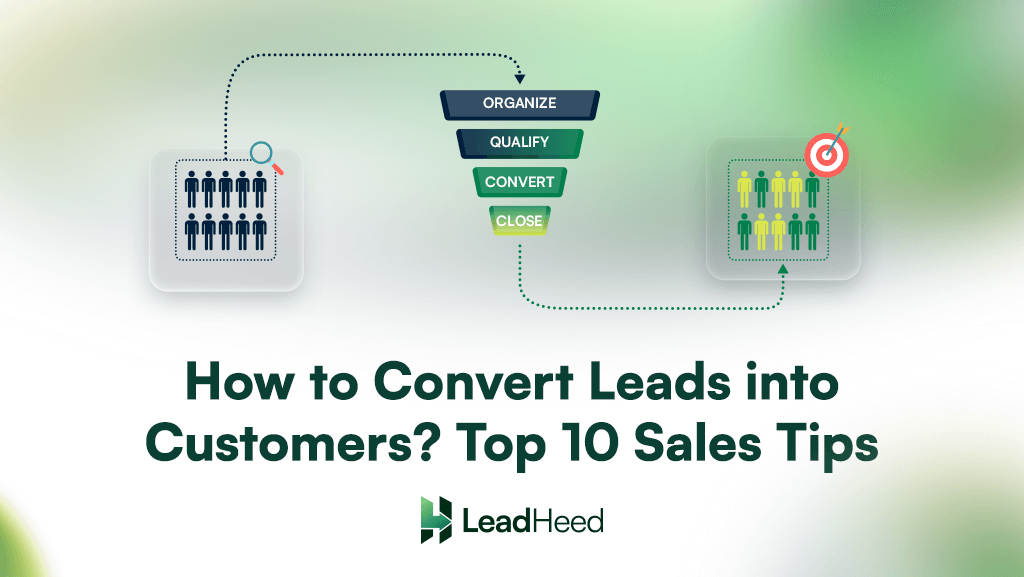
Getting leads feels exciting until they stop replying. You put in the effort, spend on marketing, and still watch interested prospects drift away. That can be frustrating and confusing. Your time and budget are wasted. The real challenge isn’t getting leads, but converting them into customers without sounding pushy or rushed.
Real conversions happen when leads feel understood, not pressured. With timely follow-ups, genuine conversations, smart lead nurturing, and a clear sales funnel supported by CRM tools, you can turn interest into trust.
Highlights
- Lead conversion is about turning interested prospects into paying customers by building trust and guiding them toward a decision.
- Successful conversions come from understanding your audience, personalizing communication, following up at the right time, clear value, consistent engagement, and using organized lead management tools like LeadHeed.
- Poor follow-ups, weak personalization, unclear value, and lack of tracking are common reasons for leads to lose interest and fail to convert.
What Is a Lead Conversion?
Lead conversion is the process of turning interested people into paying customers through guided communication and timely action. It happens when a prospect moves from showing curiosity about your product or service to actually making a purchase.
From the first interaction to the final decision, lead conversion depends on the combined effort of the marketing and sales teams. Each step guides prospects forward with relevant information, follow-ups, and support.
When done right, converting leads into customers helps businesses increase sales, build stronger relationships, and make better use of their marketing efforts.
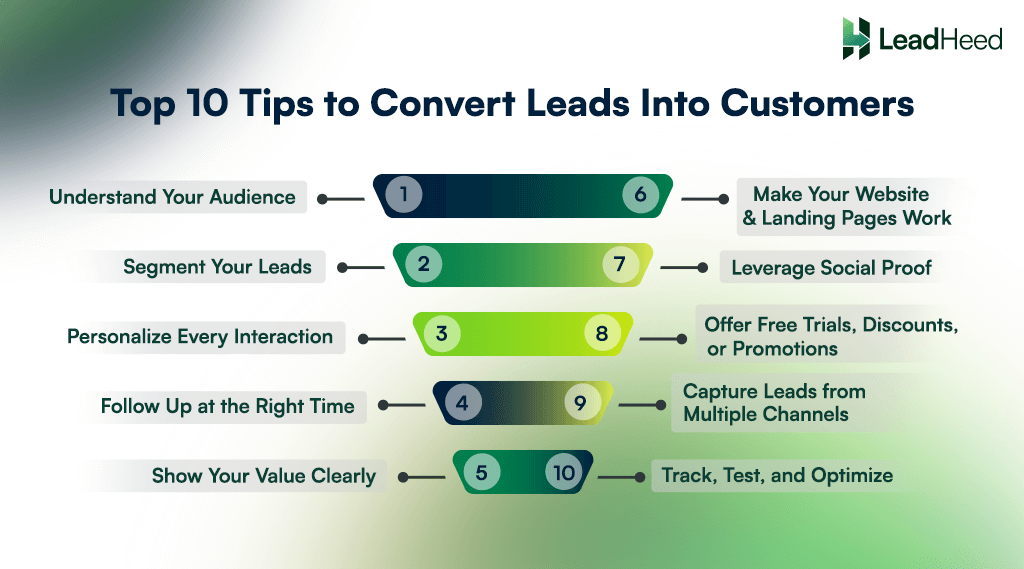
Top 10 Tips to Convert Leads Into Customers
Converting leads into customers requires timely follow-ups, clear value messaging, and trust built through consistent communication. When teams track behavior and personalize outreach, they turn leads into customers more reliably.
1. Understand Your Audience
The first step to convert leads into customers is understanding your audience. You must know your customers’ needs, motivations, and the challenges they face. When you understand their pain points, you can position your product or service as a solution that genuinely helps them.
Start by gathering insights through surveys, interviews, and direct feedback. Sales and support teams also play a key role because they speak with prospects daily and understand common questions and concerns. The more you know about your audience, the better you can create content, offers, and experiences that resonate, build trust, and encourage them to take action.
2. Segment Your Leads
Not every lead in CRM is the same; some are just discovering your business, while others are ready to buy. Treating them all the same often leads to missed opportunities and slower responses. Segmenting leads based on interest level, behavior, or source helps teams prioritize the right actions.
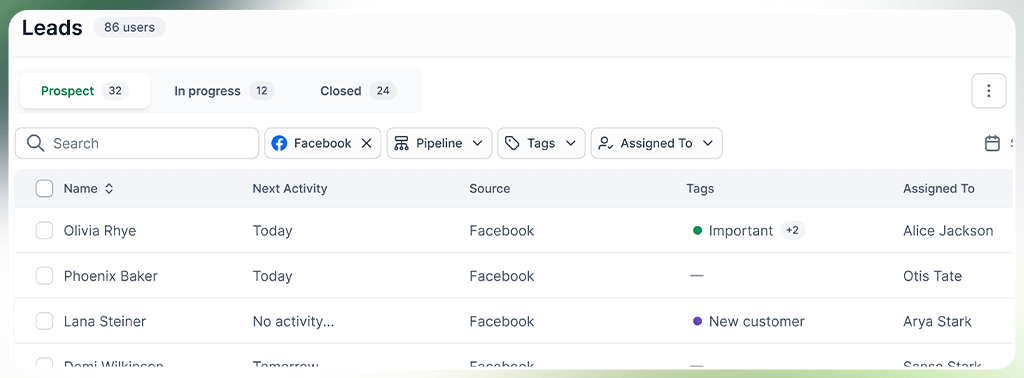
For example, new leads might get a welcome email series, while loyal customers receive special offers or product suggestions. Targeting abandoned carts or inactive users with reminders improves leads that convert.
3. Personalize Every Interaction
Personalization shows leads that attention is real, not automated. Using their name, recommending products based on past behavior, or sending a timely offer makes communication feel natural and relevant. These small actions help lead to being noticed and understood.
Quick responses, helpful answers, and shared customer experiences further build trust. Every personal touch builds trust, strengthens relationships, and aids in converting leads to sales.
4. Follow Up at the Right Time
Once you’ve got a lead, follow up while interest is still fresh, not days later. Delayed responses often cause leads to lose interest or choose another provider. Reach out to the prospects promptly, as it shows that you’re responsive, reliable, and genuinely interested in helping leads.
Whether it’s a quick thank-you email after they download a guide, a friendly call after a webinar, or a follow-up message after an inquiry, timing matters. The sooner you connect, the higher the chance they’ll convert into a customer. Even after purchase, collect feedback, offer help, or suggest something that complements their purchase.
5. Show Your Value Clearly
Your leads won’t buy just because your product is great—they need to understand how it actually helps them. Show them the value by focusing on their goals, challenges, and needs. Then, explain clearly how your product or service solves their problems and makes their life easier, boosting lead conversion.
Additionally, you can use real examples, case studies, or customer stories to make your point relatable and trustworthy. When leads feel understood and see clear results through your value proposition, trust grows naturally, and it becomes easier to turn interested prospects into paying customers.
6. Make Your Website & Landing Pages Work
Your website and landing pages should make it easy for leads to take the next step. When visitors land on your site, they should quickly understand what you offer and where to go next—without feeling confused or overwhelmed.
Landing pages work best when they stay focused. A clean design, simple language, and strong CTAs help visitors convert more leads effectively. Plus, clear navigation, readable content, and well-placed calls to action help visitors move forward with confidence.
7. Leverage Social Proof
People are more likely to trust real customers than brand messages. When leads see reviews, testimonials, or customer stories, it helps them feel more confident about choosing you. It shows them that others have tried your product or service and had a good experience.
Sharing feedback on your website, landing pages, or marketing content builds trust and helps your leads turn into customers. Simple things like customer quotes, ratings, or short success stories can ease doubts, and leads feel more comfortable taking the next step, ultimately to conversion.
8. Offer Free Trials, Discounts, or Promotions
Free trials, discounts, and promotions give hesitant leads a gentle push toward becoming customers. When people can try your product or service without risk, they feel more comfortable exploring what you offer. A free trial or freemium option lets them experience the real value firsthand, instead of relying only on promises.
Moreover, limited-time deals create urgency and encourage leads to act sooner rather than later. Even free tools or small perks can attract new leads and start a relationship without reducing long-term value.
9. Reach Leads Across Multiple Channels
Leads don’t stick to just one platform; some may respond to emails, while others are more active on social media or LinkedIn. By using multiple channels like email, social platforms, website interactions, or calls, you increase your chances of connecting with them in a way that feels natural.
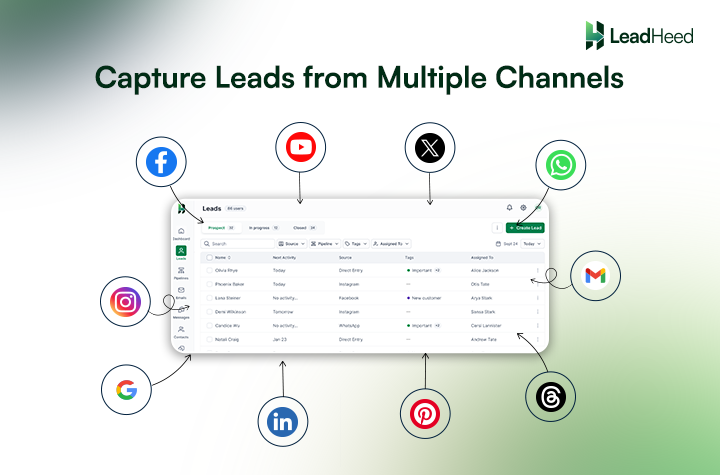
Furthermore, showing up consistently across these channels helps convert customers by increasing familiarity and trust. Sharing helpful content, replying to messages, and starting simple conversations builds trust over time. When leads see you in the places they already spend time, they’re more likely to engage and convert into customers.
10. Track, Test, and Optimize
To convert more leads, you need to know what’s working and what’s not. Tracking your data helps you see where your leads come from, how they interact with your content, and what finally convinces them to convert.
Regularly checking your results and testing different messages, follow-up timing, and outreach channels improves lead conversion process and helps convert more leads over time. Over time, a well-tracked CRM campaign helps you create a stronger, more reliable path to turn leads into customers.
Common Mistakes to Avoid When Dealing with Leads and Prospects
Late replies, poor website design, and failing to personalize outreach are key reasons you fail to convert leads into customers. These issues cause prospects to lose interest, feel misunderstood, or abandon the process altogether, reducing your lead conversion rate.
I. Responding Too Late
When teams wait too long to respond, leads feel ignored and lose momentum, eventually turning to a competitor.
II. Treating Every Lead the Same
Not all leads have the same needs or readiness. Sending the same message often feels irrelevant and fails to address their actual needs, which slows down lead conversion.
III. Poor Website Experience
Slow pages, unclear messaging, or weak calls to action can frustrate prospects and stop them from moving forward.
IV. Trying to Close the Sale Too Early
Pushing for a commitment before the lead is ready creates pressure and often drives them away. It can make your approach feel aggressive and out of touch with their buying stage.
V. Failing to Understand Customer Needs
When you don’t take time to learn what matters to the lead, you end up offering the wrong thing. This disconnect leads to lost interest and missed opportunities.
VI. Not Building Trust with Content
When your online presence lacks proof or clarity, leads are less likely to believe in what you offer. This makes it harder for them to feel confident moving forward.
VII. Failing to Track Sales Performance
Without tracking what’s happening in your sales process, you keep repeating the same mistakes. It becomes harder to know why leads aren’t converting and where things are falling apart.
Conclusion
Turning leads into customers isn’t about rushing or pushing sales—it’s about building trust and showing real value. When you understand your audience, segment your leads, personalize messages, and follow up at the right time, you create meaningful connections that lead to results.
LeadHeed is a simple CRM software that helps teams track leads, organize conversations, and manage follow-ups in one place. It ensures your team always knows where each prospect stands and what to do next.
Sign up for LeadHeed and start turning more leads into loyal customers! 14-day free trial, no credit card required!!
FAQs
What does converting leads into customers mean?
Converting leads into customers refers to the process of turning curiosity into trust, and trust into a purchase, through effective communication, follow-ups, and value delivery.
How to turn leads into customers?
You convert leads into customers by understanding their needs, communicating personally, following up at the right time, and clearly showing value while making it easy for them to take the next step.
What is the 5-minute rule for leads?
The 5-minute rule is about contacting a lead within five minutes of their inquiry to build trust, show responsiveness, and increase the chances of conversion while interest is still fresh.
How long does it usually take to convert a lead into a customer?
It usually takes anywhere from a few days to several weeks to convert a lead into a customer, depending on the lead’s intent, follow-up timing, and the complexity of the buying decision.