
Hotel teams manage daily work like arrivals, departures, room changes, guest requests, and billing. At the same time, guests expect fast and personalized service. To handle both, hotels use a Hotel PMS and a Hotel CRM. Both work with guest information, but they serve different purposes. Without clarity, hotels often use one system to cover both needs, which leads to missed follow-ups, scattered guest data, and slower response times.
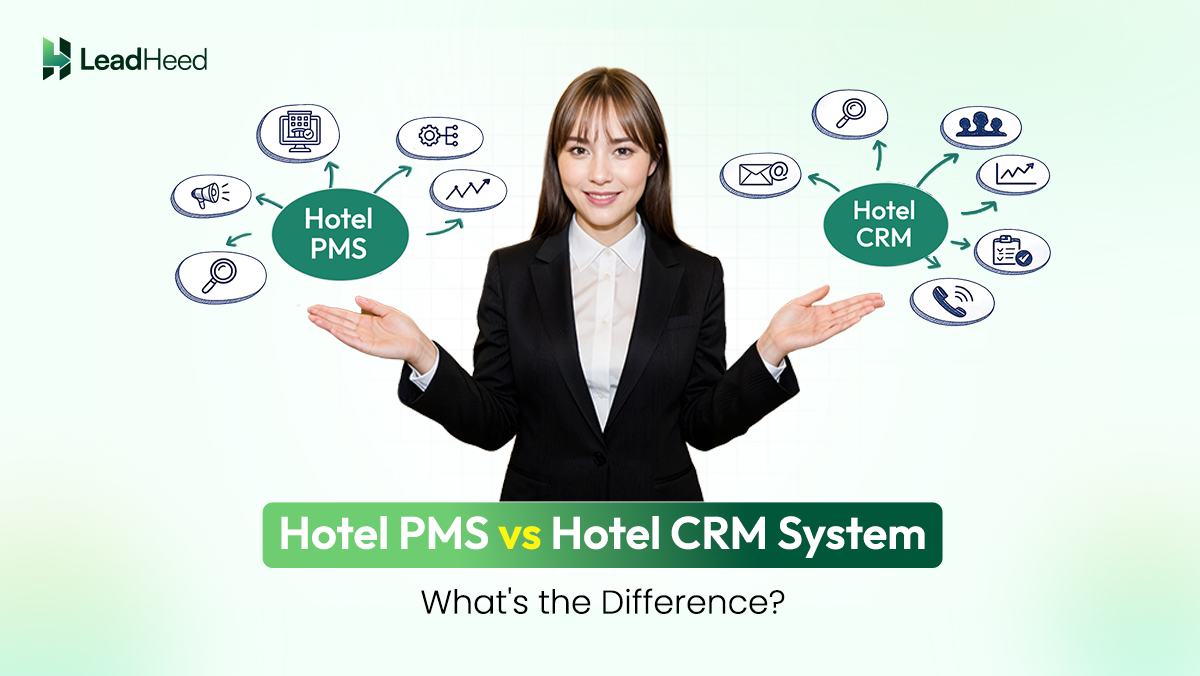
A hotel PMS manages the daily operation of guests, such as reservations, check-in/check-out, room status, housekeeping, and billing. On the other hand, a hotel CRM manages guest relationships (guest profiles, preferences, communication, loyalty, repeat bookings).
When you understand the difference between hotel PMS vs. hotel CRM, you can build a smoother workflow and deliver better guest experiences at every stage.
Highlights
- A hotel PMS manages daily hotel operations like reservations, room status, and billing, while a hotel CRM manages guest relationships by tracking guest profiles, preferences, and repeat stays.
- Integrating PMS and CRM connects operational and guest data to deliver better service, faster workflows, and smarter decisions.
- Effective integration needs clear goals, secure data sharing, clean guest profiles, and compatible systems.
Understand Hotel PMS System
Hotel PMS (Property Management System) is a tool that manages and automates the routine operations of hotels. It includes guests’ check-ins/outs, reservations, assigning rooms, and billing. Cloud-based PMS systems can also coordinate housekeeping and maintain updated rates and availability. When linked with online travel agencies (OTAs) and the hotel website, the PMS ensures the same availability shows everywhere and reduces manual updates.
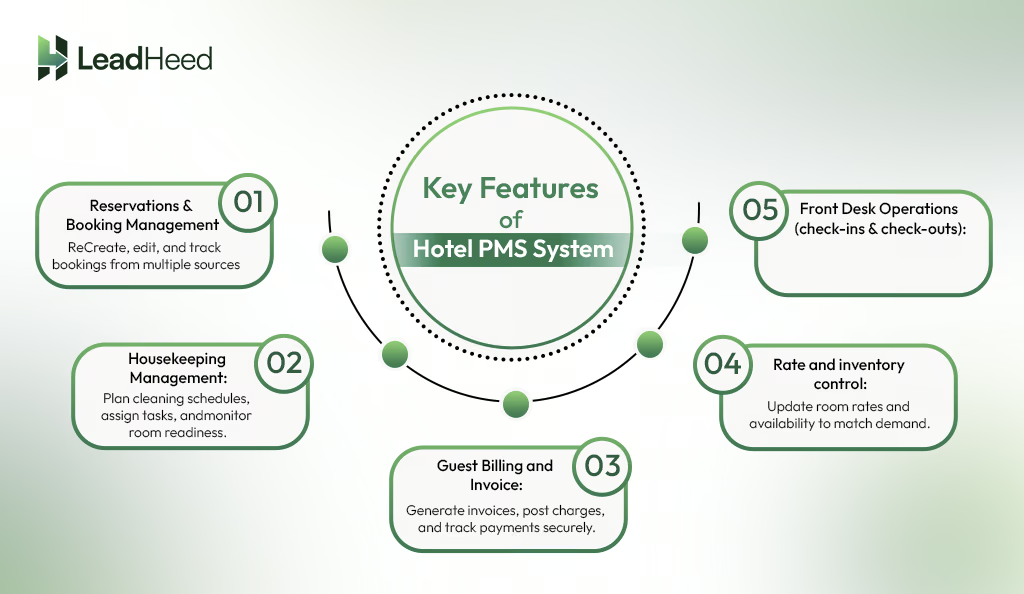
Key Features of Hotel PMS System:
- Reservations & Booking Management: Create, edit, and track bookings from multiple sources.
- Housekeeping Management: Plan cleaning schedules, assign tasks, and monitor room readiness.
- Guest Billing and Invoice: Generate invoices, post charges, and track payments securely.
- Front Desk Operations (check-ins & check-outs): Support faster arrivals and departures with accurate guest and room details.
- Rate and inventory control: Update room rates and availability to match demand.
Benefits of Hotel PMS System:
- Faster check-in/check-out with automated billing and payments
- All reservations and guest information are stored in one place, including booking sources and guest preferences
- Better control of pricing, discounts, packages, and availability to improve occupancy and revenue and reduce overbooking
- Informed decision-making with real-time data insights
- Quick reports on occupancy, revenue, and performance
Understanding a Hotel CRM System
A Hotel CRM (Customer Relationship Management) system is a software that helps hotels manage guest relationships across the full guest journey. It brings guest data, such as stay history, website activity, and feedback, into a single profile, so teams can understand preferences and booking patterns. With this information, hotels can communicate more effectively, send timely pre-arrival messages, offer relevant upgrades or packages, and support loyalty efforts that drive repeat bookings.
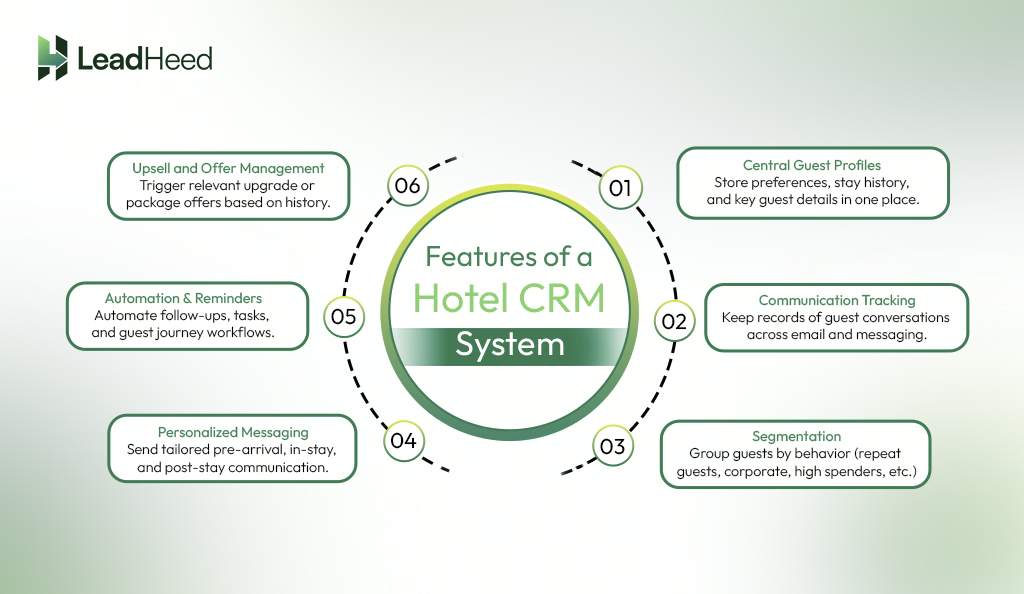
Key Features of Hotel CRM System:
- Central Guest Profiles: Store preferences, stay history, and key guest details in one place.
- Communication Tracking: Keep records of guest conversations across email and messaging.
- Segmentation: Group guests by behavior (repeat guests, corporate, high spenders, etc.).
- Personalized Messaging: Send tailored pre-arrival, in-stay, and post-stay communication.
- Automation & Reminders: Automate follow-ups, tasks, and guest journey workflows.
- Upsell and Offer Management: Trigger relevant upgrade or package offers based on history.
Benefits of Hotel CRM System:
- Stores guest profiles, preferences, and history in one place
- Personalized messages and offers to increase repeat stays
- Tracks guest satisfaction and service issues for faster resolution
- Provides detailed CRM reports on campaign and marketing performance.
- Reduces manual work and missed follow-ups through automation
Key Differences Between Hotel PMS and Hotel CRM System
Hotel PMS focuses on managing the daily operations of a hotel to keep everything running smoothly, whereas hotel CRM focuses on managing guest relationships to build long-term relationships and deliver personalized services. The major difference lies in their function and scope of management.
|
Aspects |
Hotel PMS |
Hotel CRM |
| Primary Function | Manages daily operations (reservations, billing, etc) for running a hotel | Manages the long-term relationship with guests build loyalty, and drives revenue |
| Key Users | Front desk and housekeeping teams | Sales, marketing, and customer service teams |
| Data Sources | Primarily internal hotel operations: front desk, point-of-sale | Multiple sources: PMS, surveys, website, social media, past campaigns |
| Data Type | Transactional data: Stay dates, room rates, and payments | Behavioral data: Interests, habits, and social interactions |
| Segmentation | Group bookings and guests for smooth daily operations | Groups guests based on their preferences for personalized communication and targeted marketing |
| Guest Profile | Creates a new profile for every booking, even if it’s the same guest | Tracks returning guests and uses just one profile per person |
| Integrations | Integrates with CRM, POS (Point of Sales), and payment gateways | Integrates with PMS, email, and social media platforms |
| Scope of Management | Manages rooms, rates, and availability | Manages guests’ profiles, preferences, and relationships |
| Loyalty & Retention | Tracks if a guest has a membership number | Tracks guest history and engagement to plan a warm welcome |
| Personalization | Limited personalization without integrations | Personalization is a core purpose of CRM |
Integrating Hotel PMS and Hotel CRM Systems
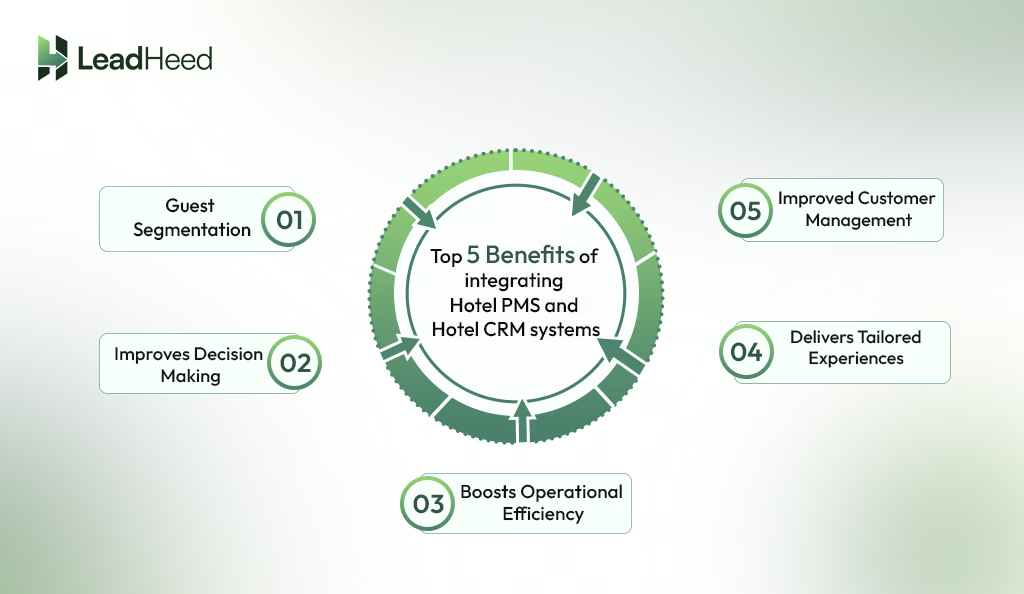
Integrating your Hotel PMS and CRM platform bridges the gap between day-to-day operations and long-term relationship building. When they work together, it delivers significant advantages, including improved customer management, tailored guest experiences, and improved decision-making.
Here are the top 5 benefits of integrating hotel PMS and hotel CRM systems:
1. Improved Customer Management
With separate PMS and CRM platforms, guest data gets fragmented, creating significant challenges in customer management, like data silos and errors. Integration combines PMS data (stay history, payments, bookings) with CRM data (preferences, communication history, feedback) into one unified guest profile. The centralized view enables you to quickly access guest information and deliver personalized experiences and services
2. Delivers Tailored Experiences
PMS-CRM integration allows you to see a detailed view of your guests. Your team can spot VIPs instantly and automatically assign rooms that match their favorite views or bed types from previous stays. All of these lead to stronger relationships and more repeat visits.
3. Boosts Operational Efficiency
When your CRM and PMS are properly integrated, guest data flows smoothly and automatically between the two systems. Your staff no longer needs to switch between platforms or perform manual data entry. It reduces administrative workload and minimizes human errors (such as duplicate profiles or inconsistent details). Your team gains valuable time to focus on building relationships and delivering great service, leading to smoother operations and boosting overall efficiency.
4. Improves Decision Making
Your hospitality CRM delivers powerful, advanced reporting tools that provide actionable insights to identify what’s working well and where improvements are needed. It helps your hospitality business to track sales performance, guests’ behavior, and measure marketing campaigns’ results. When integrated with PMS, you combine your rich CRM data with accurate, real-time PMS information (bookings, occupancy, revenue streams). It means you can predict your guests’ behavior and send the right offers at the right time.
5. Guest Segmentation
When your PMS and hotel CRM systems are integrated, you can combine the behavioral data (preferences and email interactions) from your CRM with the transactional data (actual booking history, length of stay, revenue spent) from your PMS to build a unified guest profile. Then, you can send personalized emails or offers that feel relevant. The result is more engagement, more direct bookings, and guests who feel genuinely understood.
How to Implement an Effective PMS-CRM Integration?
To implement an effective PMS-CRM integration, start by setting clear goals, prioritizing data security, and ensuring your systems are compatible.
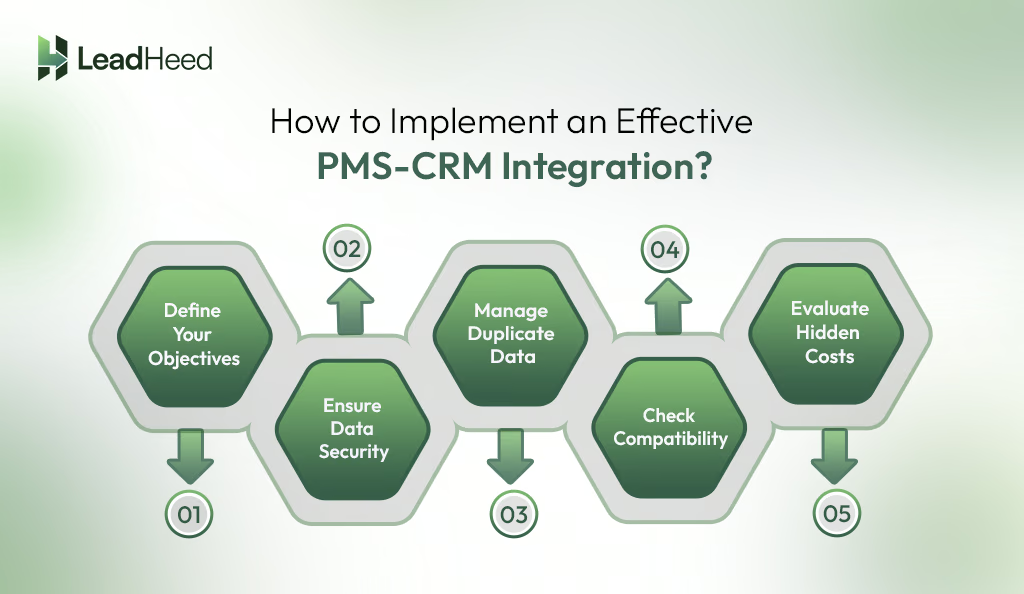
I. Define Your Objectives: Before connecting your PMS and CRM, you should know what you want to achieve from this integration. It may include increasing direct bookings, simplifying workflows, and improving revenue. With these specific goals, you can choose the right system that solves your problem.
II. Ensure Data Security: Your guests trust you with their personal details, such as contact information and payment history, so protecting that information is essential. You must ensure data security by following privacy rules like GDPR and using strong security controls. Make sure your data is encrypted and has role-based access during transfer.
III. Manage Duplicate Data: Your PMS often creates a new profile for each stay. Your CRM should be smart enough to identify and merge these into a single guest profile. A CRM uses email, contact information, and booking history to recognize the same person.
IV. Check Compatibility: Not all systems can work together, so check whether your PMS and CRM have a prebuilt integration or a reliable open/public API for connection. If not, you may need custom development, which can be costly and complex.
V. Evaluate Hidden Costs: The initial costs are not the total cost. Many providers add extra charges like setup fees, API access fees, or ongoing monthly maintenance costs. Thus, make sure to ask for the total cost of ownership to prevent unexpected expenses.
Conclusion
Understanding the difference between your PMS and CRM is the first step toward more connected hotel operations. While your PMS is essential for daily logistics, it needs a dedicated CRM to personalize service and foster loyalty across multiple visits. The integration of these two systems helps turn operational efficiency into a competitive advantage.
If you’re looking for a CRM that makes relationship management easier, LeadHeed CRM is built to help. With LeadHeed’s centralized guest profiles, you can instantly access a unified view of every visitor’s history and preferences, ensuring your team stays organized. Start your 14-day free trial, no credit card required.
FAQs
What is the difference between CRM and PMS?
A CRM focuses on providing personalized guest experiences to build a long-term relationship, whereas a PMS focuses on running routine internal operations smoothly, including room assignments and billing.
What is the difference between PMS and CRS in hotels?
A PMS manages the day-to-day operations inside the hotel (like check-ins and housekeeping), whereas a CRS (Central Reservation System) manages the external distribution of room rates across sales channels and booking websites.
What are the types of PMS in hotels?
The types of property management systems (PMS) in hotels are:
- On-premise PMS
- Cloud-based PMS
- Integrated PMS