
Manufacturers face unique challenges, including long sales cycles, bulk orders, and numerous customer touchpoints. Without the right system, it’s easy for things to slip through the cracks: missed follow-ups, delayed shipments, lost deals, and frustrated clients. The chaos slows down your growth and puts your hard-earned reputation at risk.
That’s where a CRM for manufacturing comes in. It keeps sales, customer data, and communication in one place so your team can stay organized and work smarter.
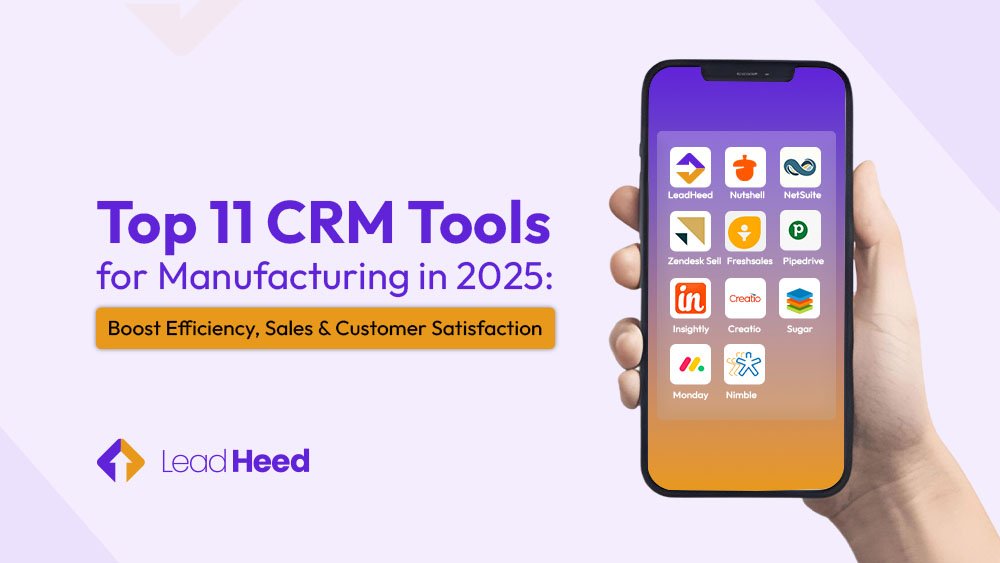
In this blog, we’ll explore the top 11 CRM tools for manufacturing in 2026 that can help you boost efficiency, strengthen relationships, and grow your business confidently.
What is CRM for Manufacturing?
A CRM for manufacturing is a system designed to help manufacturers manage their relationships with customers, distributors, and prospects more effectively. It organizes all customer interactions in one place and connects them with the way your business operates.
Unlike a regular Customer Relationship Management (CRM) that mainly focuses on sales and marketing, a manufacturing CRM also supports supply chain management, production planning, distributor coordination, and after-sales service. This means you can keep track of orders, match production with demand, manage distributors, and provide better support to your customers after a sale.
By bringing customer and operational information together, a manufacturing CRM helps your team stay organized, respond faster, and build stronger relationships. This helps in making your business more efficient, customers happier, and growth smoother.
Why Does the Manufacturing Industry Need CRM Software?
Manufacturers face complex sales cycles, multiple customers, and the challenge of coordinating production. A CRM solution for manufacturing helps by centralizing customer and sales data, prioritizing important leads, streamlining workflows, tracking production, supporting after-sales service, and providing useful insights. This keeps operations smooth and customers happy.
- Centralize customer and sales data: In manufacturing, customer and distributor information is often scattered across different systems. This leads to missed opportunities and errors. A manufacturing CRM centralizes all customer and sales data, giving your team a complete view of every interaction and making collaboration easier.
- Prioritize high-value leads: Sales teams can get stuck chasing leads that are unlikely to convert, slowing down revenue growth. The CRM for manufacturing helps qualify and prioritize high-value leads. This allows your teams to focus on prospects most likely to result in sales, saving time and increasing profits.
- Simplify sales and operations: Manual processes for quotes, order approvals, and production requests cause delays and mistakes. A CRM streamlines sales and operational workflows by automating repetitive tasks. This helps in ensuring your team works efficiently and stays aligned.
- Track supply chain and production in real-time: Manufacturers often struggle with stockouts, overproduction, or delays due to a lack of real-time data. By integrating sales, inventory, and production data, a manufacturing CRM gives real-time visibility. This allows accurate planning and faster response to changes in demand.
- Improve customer engagement and support: Long-term contracts, warranties, and maintenance schedules can be hard to manage, risking customer dissatisfaction. A CRM tracks post-sale activities and follow-ups, helping manufacturers deliver consistent service and build stronger, long-lasting customer relationships.
- Make data-driven decisions: Without accurate data, manufacturers may make risky decisions that affect production, sales, and growth. A manufacturing CRM provides actionable insights, helping businesses forecast demand, optimize resources, and make informed decisions.
Benefits of Using CRM in the Manufacturing Industry
A manufacturing CRM keeps all your sales, leads, and customer details in one place, so nothing slips through the cracks. It makes daily workflows easier, helps teams stay connected, improves production planning, and gives real-time insights. Simply put, it keeps your operations running smoothly and your customers happy.
1. Streamlined Sales and Lead Management
A CRM for manufacturing keeps your sales process organized by tracking every lead and interaction in one system. It helps sales teams follow up on time, manage deals easily, and close opportunities faster.
2. Personalized Engagement for Better Conversions
By understanding each customer’s needs and preferences, a CRM for manufacturing helps you send personalized messages and offers. This kind of engagement builds trust and turns more prospects into loyal customers.
3. Improved Customer Satisfaction and Retention
CRM tools make it easy to manage customer relationships beyond the first sale. Whether it’s tracking warranty details or scheduling maintenance, everything is handled efficiently — keeping customers satisfied and coming back.
4. Accurate Forecasting and Revenue Planning
With access to real-time reports and analytics, a CRM helps you forecast demand, plan production, and set realistic revenue goals. It turns guesswork into data-driven planning.
5. Optimized Inventory and Production Scheduling
A CRM for manufacturing integrated with inventory and production systems ensures you always know what’s in stock and what’s needed next. This balance helps avoid delays and keeps operations running smoothly.
6. Better Supply Chain Visibility and Efficiency
CRM software for the manufacturing industry provides a clear view of your suppliers, materials, and delivery timelines. This transparency improves coordination and helps maintain a consistent production flow.
7. Automated Workflows and Reduced Manual Tasks
Automation takes care of repetitive work like sending quotes, reminders, and follow-ups. It saves time and lets your team focus on what really matters. Therefore, it helps in building relationships and growing the business.
8. Efficient After-Sales Support and Service
A CRM solution for manufacturers keeps all customer data in one place, making it easier to manage service requests, spare parts, and product returns. Quick responses and proactive service lead to happier, more loyal customers.
9. Real-Time Insights for Smarter Decisions
Manufacturing CRMs collect valuable data from sales, marketing, and operations. These insights help business leaders make confident, informed decisions that drive performance and growth.
10. Enhanced Collaboration Across Teams
By connecting departments like sales, marketing, and production on a single platform, a CRM for manufacturing fosters teamwork and transparency. Everyone works toward the same goals — efficiently and effectively.
What are the Must-Have Features in CRM for Manufacturing?
A manufacturing CRM should manage contacts and leads, track sales, automate workflows, integrate with ERP, provide analytics, and support mobile access. These features keep operations smooth and customers happy.
1. Contact & Lead Management
Manufacturers deal with numerous clients, distributors, and partners daily. A CRM for the manufacturing industry keeps all this contact information, names, emails, phone numbers, and company details organized in one place.
It also helps capture and track leads from multiple sources like websites, trade shows, or emails. With this feature, your sales team can easily follow up on leads, nurture relationships, and never miss an opportunity.
2. Sales Pipeline Tracking
This feature gives you a clear view of where every deal stands from the first conversation to the final sale. You can monitor each stage of the sales process, identify bottlenecks, and understand which deals need attention. For manufacturers, this means better visibility into upcoming orders and more predictable sales performance.
3. Quote-to-Cash Automation
Generating quotes, managing approvals, and converting them into invoices can be time-consuming. A CRM software for manufacturing automates this entire quote-to-cash process, reducing manual errors and speeding up the sales cycle. This ensures that your team spends less time on paperwork and more time building customer relationships.
4. Workflow Automation
Routine tasks like sending follow-up emails, updating deal status, or assigning tasks to team members can easily be automated. Workflow automation helps manufacturers save time, reduce mistakes, and ensure that every process runs smoothly and consistently.
5. ERP & Inventory Integration
A good manufacturing CRM integrates seamlessly with ERP and inventory systems. This connection allows you to track inventory levels, production schedules, and customer orders in real time. It ensures smoother coordination between sales and operations, reducing stockouts, overproduction, and delays.
6. Sales Forecasting
Sales forecasting uses past performance and real-time data to predict future sales and demand. For manufacturers, this is invaluable — it helps plan production schedules, manage inventory efficiently, and allocate resources wisely. With accurate forecasts, you can stay ahead of market trends and customer needs.
7. Reporting & Analytics
A manufacturing CRM turns raw data into clear insights. You can track sales performance, customer behavior, and marketing results through detailed reports and dashboards. These analytics help decision-makers identify growth opportunities, optimize operations, and plan strategically for the future.
8. Mobile Access
Manufacturing teams often work on-site, in warehouses, or on the road. With mobile CRM access, they can view contacts, update deals, and log meetings anytime, anywhere. This keeps everyone informed and connected even when away from the office.
9. After-Sales Support
The customer journey doesn’t end after the sale. A CRM helps manufacturers manage warranties, service requests, and maintenance schedules. It ensures customers get timely support, which builds trust and long-term loyalty, a key advantage in the manufacturing industry.
10. Customization & Scalability
Every manufacturing business is unique. CRM platforms can be customized to match your workflow — whether you sell directly, through distributors, or globally. As your business grows, the CRM scales with you, adapting to new users, regions, or product lines without disruptions.
The Top 11 CRM for the Manufacturing Industry
Choosing the right CRM can transform how manufacturers manage sales, production, and customer relationships. The right tool keeps your team organized, improves efficiency, and strengthens customer connections. Here’s a look at the leading CRM solutions shaping the manufacturing industry.
1. LeadHeed
LeadHeed is an easy-to-use CRM made for modern manufacturers who want to manage sales, production, and customer relationships in one place. From the first inquiry to the final delivery, it helps your team stay connected, organized, and focused on what matters — building great products and keeping customers happy.
Key Features:
- Lead and Deal Management: LeadHeed keeps track of all your leads, quotes, and orders in one place. Thus, you never lose track of a potential customer again.
- Automated Workflows: You can save time by automating routine tasks like assigning production jobs, sending updates, or following up with clients.
- Inventory and Order Tracking: A CRM for manufacturing ensures you stay on top of stock levels, production timelines, and order statuses with real-time updates.
- Mobile Access: You can manage leads, check client info, and update job progress even when you’re away from your desk.
- Reports and Insights: It helps you see how your sales and production teams are performing with easy-to-understand dashboards.
- Integrations: Connect LeadHeed with your ERP, email, or accounting tools so all your data stays in sync.
Pricing:
- Free: $0
- Basic: $12 per user/month (billed annually)
- Pro: $28 per user/month (billed annually)
2. NetSuite
NetSuite CRM offers a complete suite of tools designed to manage the entire customer lifecycle from lead generation to post-sales support. It goes beyond traditional CRM tools by combining sales automation, marketing, customer service, and partner management in a single platform.
Key Features:
- Marketing Automation: This feature streamlines campaigns, tracks leads, and measures ROI to improve marketing performance.
- Customer Service Management: This helps manage customer inquiries, support tickets, and service histories for faster resolution.
- Partner Relationship Management: It simplifies collaboration with distributors and partners, improving communication and sales tracking.
- Sales Force Automation: You can track leads, opportunities, and sales forecasts in real time for better pipeline visibility.
Pricing:
- Custom pricing available
3. Nutshell
Nutshell is a smart, easy-to-use CRM designed for small and mid-sized manufacturing businesses. It helps teams stay organized, track leads, manage deals, and nurture customer relationships—all in one place.
Key Features:
- Sales Pipeline Management: This feature tracks every step of your sales process, from initial inquiry to order fulfillment.
- Lead & Contact Management: This helps you store all customer and prospect information in one place, with detailed history for quick access.
- Automation & Workflow Tools: You can automate follow-ups, approvals, and routine tasks, letting your team focus on selling.
- Reporting & Analytics: You can get clear insights into sales performance, customer engagement, and production priorities to make smarter decisions.
Pricing:
- Foundation Plan: $13/user/month
- Growth Plan: $25/user/month
- Pro Plan: $42/user/month
- Business Plan: $59/user/month
- Enterprise Plan: $79/user/month
4. Zendesk Sell
Zendesk Sell is a CRM designed to help manufacturing businesses streamline sales, track leads, and manage customer relationships effortlessly. It gives your sales team a clear view of every interaction, helping them focus on what matters.
Key Features:
- Lead Management: This allows you to capture, track, and prioritize leads so your sales team focuses on the most promising opportunities.
- Full Customer Journey View: You get a complete view of every customer interaction, from first contact to post-sale support.
- Reporting & Analytics: A manufacturing CRM provides access to insights into sales performance, pipeline progress, and customer engagement to make smarter decisions.
- Email & Communication Integration: Log calls, texts, and emails automatically to keep all customer interactions in one place.
Pricing:
- Support: $19 per user/month (billed annually)
- Suite: $55 per user/month (billed annually)
- Suite Professional Plan: $115 per user/month (billed annually)
- Suite Enterprise: $169 per user/month (billed annually)
5. Freshsales CRM
Freshsales by Freshworks is a smart, cloud-based CRM designed to make sales and customer management easier for manufacturing businesses. With real-time data and automation tools, it brings you more clarity and efficiency to everyday operations. Thus, helping your teams work smarter, not harder.
Key Features:
- Customizable workflows: You can adjust the CRM to match your manufacturing process with custom fields and pipelines.
- Pipeline management: This helps you track every deal from quote to close with organized, easy-to-use pipelines.
- AI insights: You get smart suggestions for demand forecasting and customer trends.
- Built-in communication: You can call, email, or chat with customers directly from the platform.
Pricing:
- Growth Plan: $9 per user/month (billed annually)
- Pro Plan: $39 per user/month (billed annually)
- Enterprise Plan: $59 per user/month (billed annually)
6. Pipedrive CRM
Pipedrive is a sales-focused CRM built to help manufacturing businesses manage deals, track opportunities, and boost productivity. Its visual pipeline and automation tools make it easy for your teams to stay on top of every order.
Key Features:
- Visual pipeline management: This feature lets you track deals and sales stages using a clean, drag-and-drop interface.
- AI-powered insights: It makes it easy to identify high-value leads and predict which deals are most likely to close.
- Automation tools: You can automate routine sales tasks like reminders, follow-ups, and data entry.
- Reporting and forecasting: You get detailed sales reports and forecasts to plan your next move.
Pricing:
- Lite: From $14/user/month (billed annually)
- Growth: From $39/user/month (billed annually)
- Premium: From $59/user/month (billed annually)
- Ultimate: From $79/user/month (billed annually)
7. Insightly
Insightly is a versatile CRM designed to help manufacturing businesses manage customers, projects, and production workflows in one place. It bridges the gap between sales and operations—helping teams move smoothly from quoting to delivery.
Key Features:
- Customizable pipelines: This feature allows you to tailor sales pipelines to fit complex manufacturing sales cycles, from quote requests to final delivery.
- Project and workflow management: You can coordinate production timelines, order tracking, and customer projects within the same platform.
- Automation tools: This helps to simplify repetitive tasks like order confirmations, service scheduling, and follow-ups to boost efficiency.
- Lead and opportunity tracking: You can capture, nurture, and manage leads across multiple channels with ease.
Pricing:
- Plus: $29/user/month (billed annually)
- Professional: $49/user/month (billed annually)
- Enterprise: $99/user/month (billed annually)
8. Creatio CRM
Creatio is a powerful, low-code CRM platform built for manufacturers who want flexibility, automation, and complete visibility across their operations. It combines CRM tools with business process management, allowing teams to design workflows that perfectly match their production and sales processes—without needing any coding skills.
Key Features:
- Workflow automation: Streamline quote approvals, order management, and after-sales processes with customizable, no-code automation.
- Tailored sales management: Handle complex manufacturing deals, multi-stage approvals, and product configurations effortlessly.
- Seamless integration: Connect CRM data with ERP and manufacturing execution systems (MES) for real-time visibility into production and inventory.
- Customer service and warranty tracking: Manage post-sale support, warranties, and spare parts availability to strengthen customer loyalty.
Pricing:
- Growth: $25/user/month
- Enterprise:$55/user/month
- Unlimited: $85/user/month
9. SugarCRM
SugarCRM is a flexible and customizable CRM platform designed to help manufacturers manage their entire customer journey—from lead generation to after-sales service. It brings together sales, production, and customer data in one system, giving teams a complete 360-degree view of every interaction.
Key Features:
- Customizable pipelines: This feature allows you to adapt sales stages to match manufacturing processes like quoting, contract approvals, and renewals.
- Workflow automation: You can automate tasks such as order tracking, status updates, and customer notifications to reduce manual effort.
- ERP integration: This helps you connect seamlessly with ERP systems for real-time visibility into inventory, production, and customer orders.
- After-sales management: You can manage warranties, maintenance, and support requests directly from the CRM for better customer satisfaction.
Pricing:
- Essentials: $19/user/month
- Standard: $59/user/month
- Advanced: $85/user/month
- Premier: $135/user/month
10. Monday CRM
Monday CRM for manufacturing is a flexible and easy-to-use platform that helps manufacturing companies improve their workflows, collaborate better, and automate daily tasks. It allows businesses to manage customer relationships, keep track of production schedules, and grow their business, all in one place.
Key Features:
- Customization: You can personalize the platform to fit your specific needs, such as creating custom pipelines, adjusting deal stages, and managing unlimited contacts.
- Automation: This allows you to save time by automating repetitive tasks, like assigning leads, setting reminders, and receiving notifications when a lead opens an email.
- Dashboards: You get a clear overview of key information, such as production schedules, sales, and inventory, all in one place.
- Integration: You can connect all your tools to streamline workflows and manage everything without switching between apps.
Pricing:
- Basic: From $12/user/month
- Standard: From $17/user/month
- Pro: From $28/user/month
- Enterprise: Custom pricing available
11. Nimble CRM
Nimble CRM is a powerful tool designed to help manufacturers strengthen customer relationships while keeping sales operations running smoothly. It’s the ideal solution for businesses that want to streamline their workflow and foster stronger connections with clients.
Key Features:
- Unified Contact Management: Nimble consolidates customer data from emails, social media, and calendars, giving your team a complete view of each client. This helps you tailor interactions for better relationship-building.
- Sales Pipeline Tracking: It allows you to track sales deals and opportunities, with customizable stages that align with manufacturing processes like product quotes, approvals, and order fulfillment.
- Workflow Automation: Automate routine tasks such as follow-up reminders, task assignments, and customer outreach. This helps speed up processes and ensures no opportunity is missed.
- Integrations: Nimble seamlessly integrates with ERP and inventory systems, keeping your sales data in sync with production schedules and stock availability.
- Mobile Access and Collaboration: The CRM allows your remote teams to stay connected, share updates, and collaborate in real-time, boosting field sales and service efficiency.
Pricing:
- Business plan: Starts at $24.90/user/month (billed annually)
The Future of CRM and Its Impact on the Manufacturing Industry
The future of CRM in manufacturing is exciting with smarter cloud tools, connected machines, stronger security, and better teamwork. Manufacturers will work faster, reduce downtime, and keep customers happier. It’s all about making business smoother and more connected for everyone.
- Cloud-based CRM: Cloud CRMs let manufacturers access data anytime, from the office, factory, or on the go. In the future, they’ll be even smarter, with instant updates and automation. This means your teams can work faster, small manufacturers can compete with bigger ones, and IT costs stay low.
- IoT integration: Sensors and connected machines will send real-time data to CRMs. Manufacturers can track production, spot problems early, and predict maintenance. The result is less downtime, more reliable production, and happier customers because issues are handled before they even happen.
- Enhanced cybersecurity: As CRMs collect more data, keeping it safe is key. Future CRMs will have stronger security, like AI-based threat alerts and encryption. This means manufacturers can use digital tools confidently, keep customer trust, and follow data rules without worry.
- Collaborative CRM: Future CRMs will connect sales, production, and service teams on one platform. Everyone can see the same info, share updates instantly, and make smarter decisions. This leads to better teamwork, faster problem-solving, and a smoother customer experience.
Conclusion
A manufacturing CRM is essential for keeping your operations smooth, from managing leads to tracking production and customer interactions. It streamlines workflows, reduces errors, and provides insights for smarter decisions. Features like mobile access, AI-driven insights, and IoT integration are shaping the future of manufacturing operations. This makes your CRM even more powerful.
For manufacturers seeking an all-in-one solution, LeadHeed centralizes sales, production, and customer management. Therefore, it helps your teams stay organized, automate tasks, and focus on growth.
Sign up for a free trial of LeadHeed today and see how it can optimize your manufacturing processes in just 30 days.
FAQs
What is CRM for manufacturing companies?
CRM for manufacturing is a system that helps manufacturers manage relationships with customers, distributors, and prospects. It organizes customer interactions, tracks orders, and connects sales with production and after-sales service to improve efficiency and customer satisfaction.
How is CRM different from ERP in manufacturing?
CRM focuses on managing customer relationships, sales, and marketing, while ERP manages core business operations like inventory, production, and finance. In short, CRM handles the customer side, and ERP handles the operational side.
Can small manufacturers benefit from CRM?
Yes. Even small manufacturers can use CRM to track leads, streamline sales, manage orders, and improve customer communication. It helps them stay organized, save time, and grow efficiently without complex systems.
What features should manufacturers look for in a CRM?
Key features include:
- Lead and contact management
- Sales pipeline tracking
- Quote-to-cash automation
- Workflow automation
- ERP and inventory integration
- Sales forecasting and reporting
- Mobile access
- After-sales support
Which is the best CRM for manufacturing in 2026?
There’s no one-size-fits-all, but some top choices include LeadHeed, NetSuite, Nutshell, Zendesk Sell, Freshsales, Pipedrive, Insightly, Creatio, and SugarCRM. The best one depends on your business size, workflows, and budget.