
Lead qualification becomes difficult when every deal looks “promising” in the early stage. Reps hear interest, schedule demos, and keep following up, but many leads never convert because details stay unclear. Most deals stall for the same reasons: no real need, no decision-maker involved, no clear buying process, or no urgency.
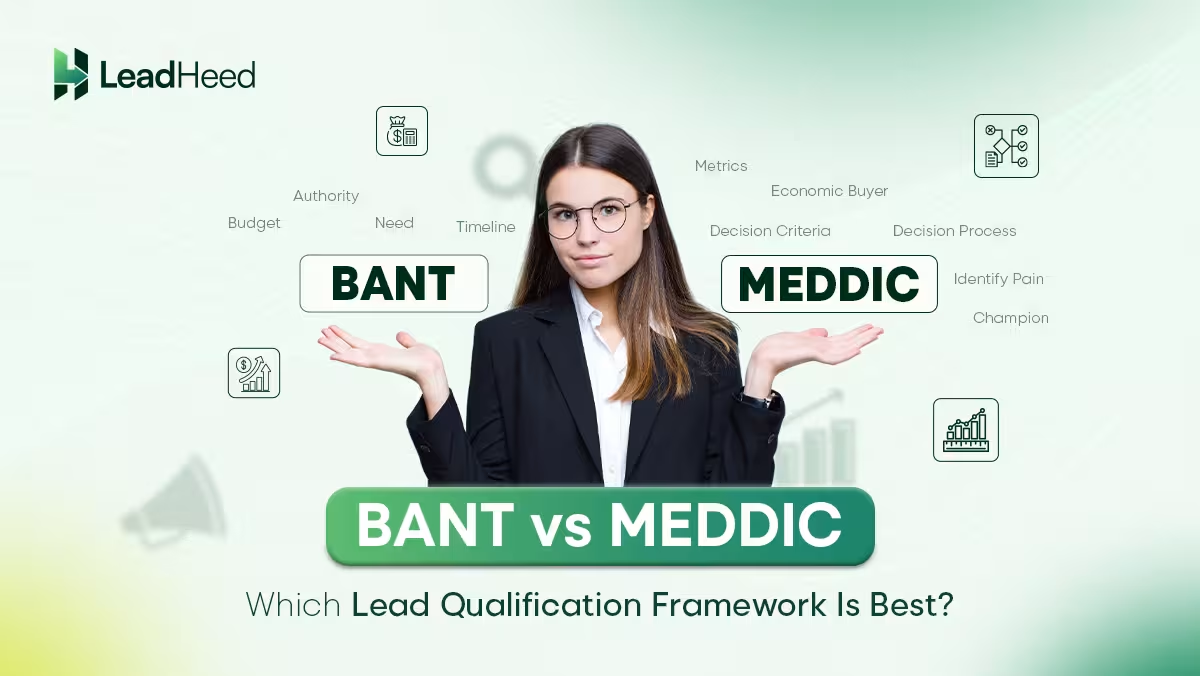
That is why sales teams use qualification frameworks like BANT and MEDDIC. While BANT keeps qualification simple by checking budget, authority, need, and timeline, MEDDIC goes deeper by adding metrics, decision process, and internal champions.
Understanding when to use BANT vs MEDDIC helps you qualify faster, reduce weak deals in the pipeline, and focus your time on opportunities that can close.
What Is BANT?
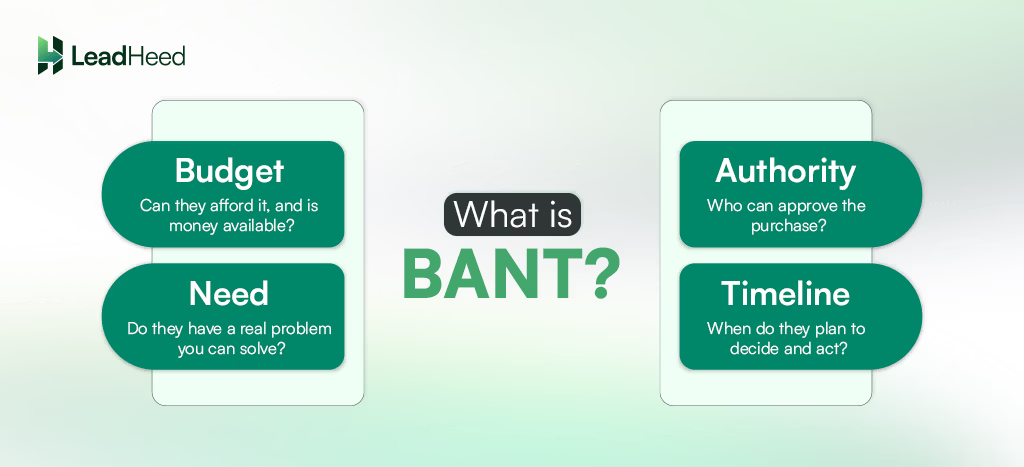
BANT is a lead qualification framework that helps sales teams decide if a prospect is worth pursuing. It focuses on four basics that usually determine whether a deal can move forward: Budget, Authority, Need, and Timeline.
BANT works best when you need quick qualification, clear prioritization, and a simple standard your whole team can follow.
BANT stands for Budget, Authority, Need, and Timeline.
- Budget: Can they afford it, and is money available?
- Authority: Who can approve the purchase?
- Need: Do they have a real problem you can solve?
- Timeline: When do they plan to decide and act?
What Is MEDDIC?
MEDDIC is a sales qualification framework designed for more complex B2B deals. It helps you qualify with higher accuracy by focusing on measurable value, the real decision-maker, how the buyer will decide, and whether you have internal support to win the deal.
MEDDIC works well when deals involve multiple stakeholders, longer sales cycles, and formal review steps like procurement, security, or legal.
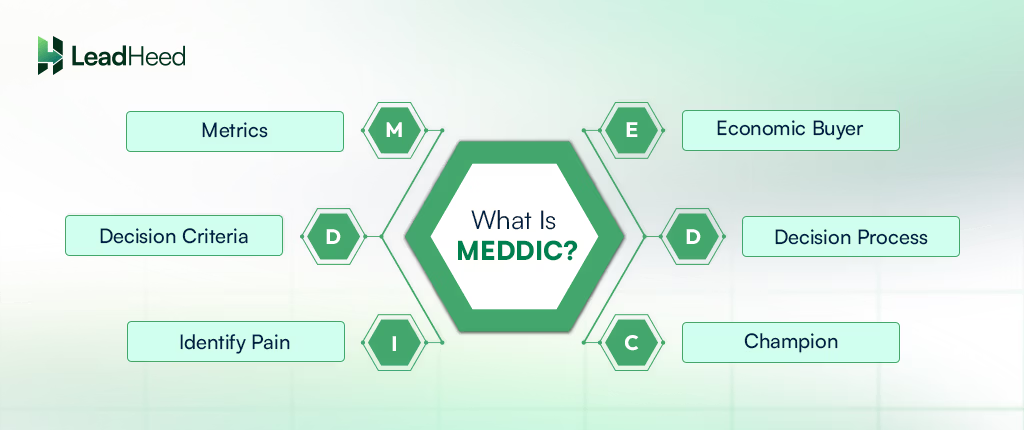
MEDDIC stands for Metrics, Economic Buyer, Decision Criteria, Decision Process, Identify Pain, and Champion.
- Metrics: What measurable results the buyer wants, like time saved or revenue gained
- Economic Buyer: The person who controls budget approval
- Decision Criteria: What the buyer will use to evaluate options
- Decision Process: The steps needed to get approval and sign
- Identify Pain: The real business problem and its impact
- Champion: An internal person who supports you and will push the deal forward
BANT vs MEDDIC: Key Differences
Both BANT and MEDDIC frameworks help with lead qualification, but they do it at different depths. BANT helps you qualify quickly using four basics (Budget, Authority, Need, and Timeline). MEDDIC helps you qualify complex deals with more certainty by covering value, buying process, and internal support.
| Category | BANT | MEDDIC |
|---|---|---|
| Main purpose | Fast, simple qualification | Deep qualification for complex deals |
| Depth of info | Basic readiness checks | Full buying and value validation |
| Best for | SMB and mid-market | B2B businesses and enterprises |
| Sales cycle | Short to medium | Medium to long |
| Stakeholders | Fewer people involved | Multiple stakeholders involved |
| Focus on value | Confirms need, may stay high level | Ties deal with measurable outcomes (metrics) |
| Decision clarity | Confirms who decides (authority) | Confirms economic buyer plus decision process |
| Process clarity | Checks timeline | Maps decision steps, reviews, and approvals |
| Internal support | Not required | Requires a champion for strong deals |
| Best stage to use | Early discovery | Discovery through proposal and close |
| Risk if used incorrectly | You qualify too early and chase weak deals | You over-qualify simple deals and slow down the pipeline |
| The output you get | “Should we pursue this lead?” | “Can we win this deal, and how?” |
When BANT Sales Methodology Works Best?
BANT sales methodology works best when you need a quick, clear way to qualify leads and keep your pipeline clean. It helps you confirm buying readiness early, so reps can prioritize the right conversations and avoid chasing leads that cannot move forward.
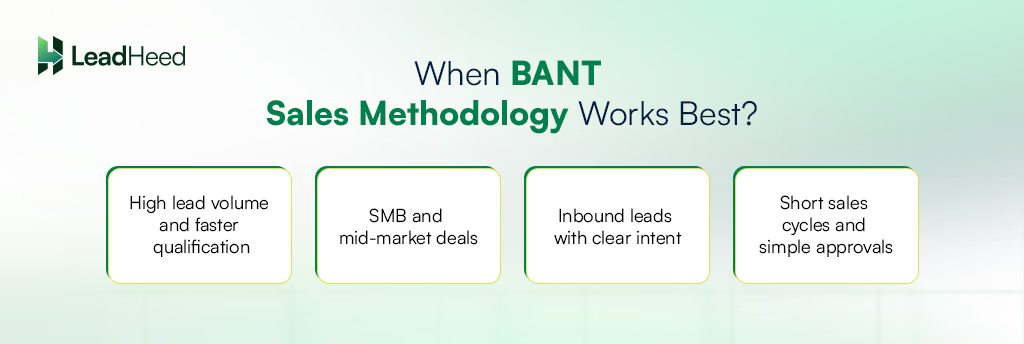
1. High lead volume and faster qualification
If your team handles many new leads every day, you need a fast framework to sort strong leads from weak ones. BANT confirms the basics, then moving forward only when the lead shows real buying potential.
2. SMB and mid-market deals
BANT fits well when deals have fewer stakeholders and simpler approval steps. In these situations, budget, decision-maker, need, and timeline usually become clear early, so BANT gives enough information to guide next steps.
3. Inbound leads with clear intent
Inbound leads often come with intent because the prospect requested a demo, pricing, or a call. BANT helps you confirm if that intent is backed by budget and authority, and it helps you set a realistic timeline instead of guessing.
4. Short sales cycles and simple approvals
When deals close in days or weeks, you need clarity fast. BANT supports short cycles by focusing on readiness signals and keeping the discovery conversation structured and efficient.
When MEDDIC Sales Methodology Works Best?
MEDDIC sales methodology works best when deals are complex and you need deeper proof before you call an opportunity “qualified.” It helps you understand how the buyer will decide, what value they expect, and what must happen internally for the deal to close.
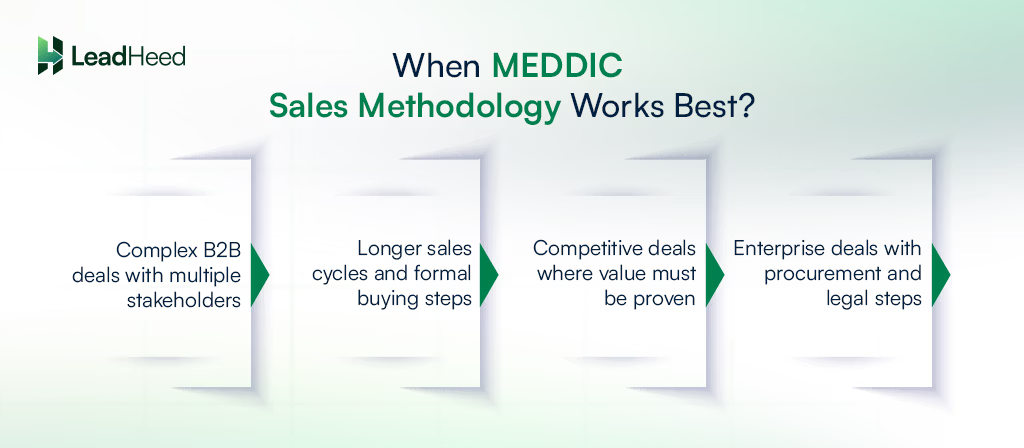
1. Complex B2B deals with multiple stakeholders
In complex deals, the first contact is rarely the final decision-maker. MEDDIC helps you map stakeholders, confirm the economic buyer, and find a champion who can push the deal forward inside the company.
2. Longer sales cycles and formal buying steps
When deals take months, timelines can shift, and deals can stall withouta clear process. MEDDIC helps you document decision steps like demos, internal reviews, procurement, legal, and security checks so you do not get stuck late-stage.
3. Competitive deals where value must be proven
When buyers compare multiple vendors, the deal often comes down to value, not features. MEDDIC focuses on metrics and pain, which helps you build a strong business case and defend pricing with measurable impact.
4. Enterprise deals with procurement and legal steps
Enterprise buyers often require paperwork, approvals, and vendor reviews. MEDDIC helps you qualify whether the deal has a real path to signature by confirming decision criteria, process, and the paper process requirements.
Conclusion
BANT and MEDDIC both help with lead qualification, but they fit different deal types. Use BANT for simpler deals and faster sales cycles. Use MEDDIC for complex B2B deals where you need deeper clarity on value, stakeholders, and buying steps.
To implement them in your CRM, create fields or checklists for each framework and make reps update them after every call. LeadHeed helps by keeping these qualification details in one lead record, assigning follow-ups, and tracking progress in a clear pipeline so your team qualifies consistently. Sign up for free!!
FAQs
What is BANT vs MEDDIC vs SPIN?
- BANT is a simple lead qualification framework based on Budget, Authority, Need, Timeline.
- MEDDIC is a deeper deal qualification framework for complex B2B sales: Metrics, Economic Buyer, Decision Criteria, Decision Process, Identify Pain, Champion.
- SPIN is a discovery questioning method (how you ask questions), not a checklist for qualification. It helps you uncover needs through structured questioning.
Is BANT still relevant today?
Yes. Teams still use BANT because it keeps qualification simple and consistent, especially for shorter sales cycles and higher lead volume. It can feel limited for complex deals where the budget and authority are unclear early.
Is MEDDIC outdated?
No. MEDDIC remains widely used for complex B2B deals because it forces clarity on measurable value, the real buyer, and the decision process.
What is BANT vs MEDDIC vs SPICED?
BANT qualifies fast using Budget, Authority, Need, Timeline, MEDDIC qualifies deeply using value, buyers, and decision mechanics, and SPICED is a qualification and discovery framework focused on Situation, Pain, Impact, Critical Event, Decision.
What is BANT and CHAMP?
Both are qualification frameworks, but they start from different angles. While BANT focuses on Budget, Authority, Need, Timeline, CHAMP focuses on Challenges, Authority, Money, Prioritization, so it puts the buyer’s problem first.
What sales methodology is similar to BANT?
If you want something close to BANT, you can use the following frameworks:
- CHAMP (Challenges, Authority, Money, Prioritization).
- MEDDIC if you need a deeper qualification than BANT for complex deals.