
Leads can look promising on the surface and still waste weeks of follow-ups. A prospect may sound interested, but they may not have a budget, they may not be the decision-maker, or they may not plan to act anytime soon. Without a clear qualification method, sales teams spend time on deals that never move.
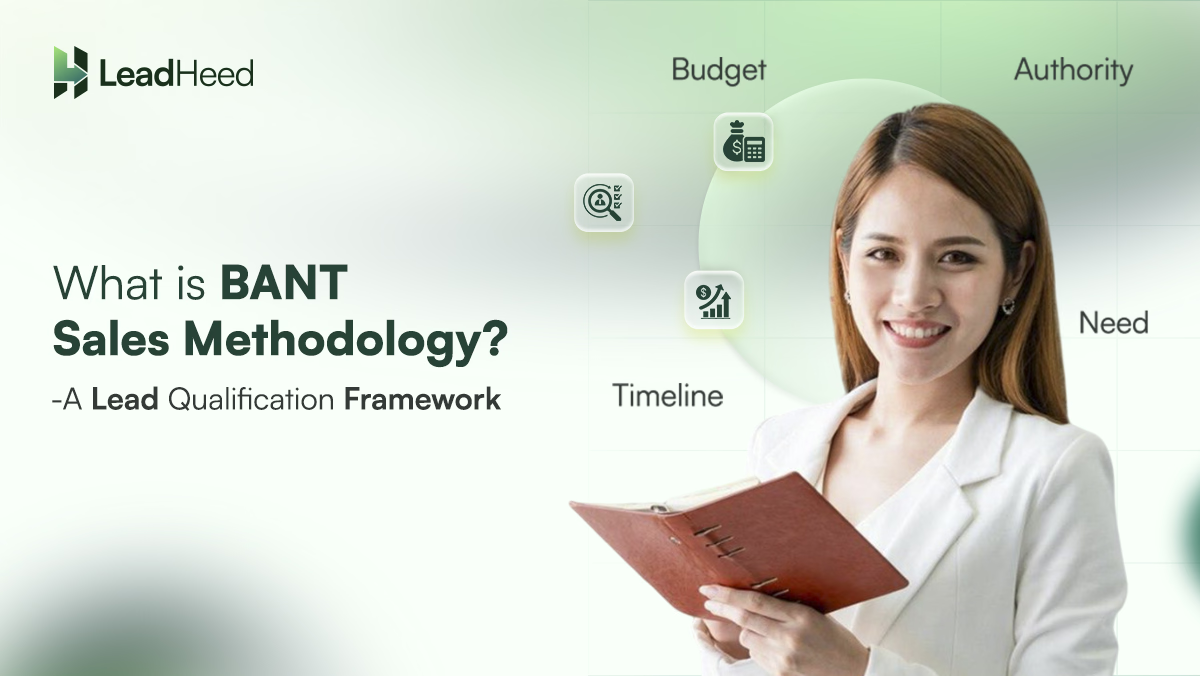
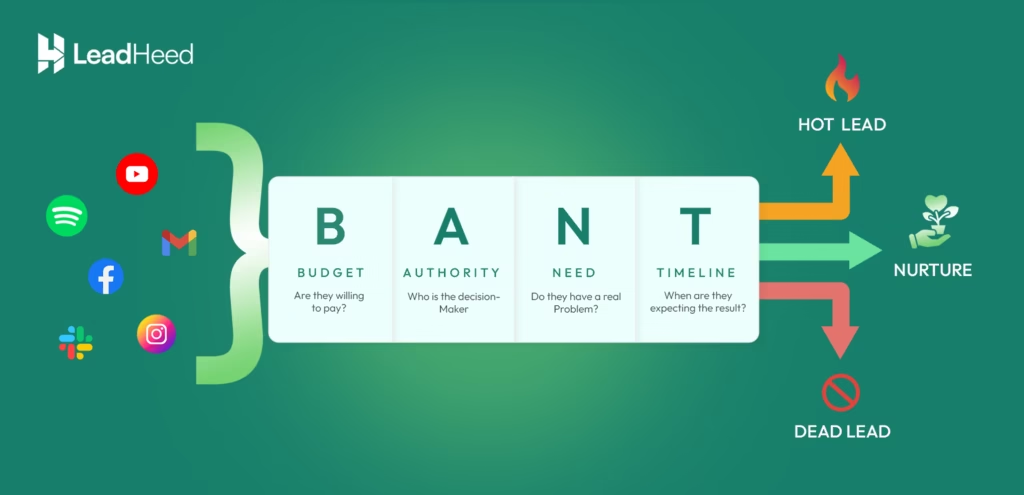
The BANT sales methodology gives a simple framework to qualify leads early. It helps you confirm four main things before you invest too much time: Budget, Authority, Need, and Timeline. The BANT sales process helps you prioritize the right opportunities and move deals forward through a clear pipeline.
What is the BANT sales methodology?
The BANT sales methodology is a lead qualification framework that helps sales teams decide whether a prospect is worth pursuing. It focuses on four key areas that affect every buying decision: Budget, Authority, Need, and Timeline. If these areas are clear, the deal is more likely to move forward. If they are missing, the deal often stalls.
Here is what BANT stands for:
- Budget: Can the prospect afford a solution like yours, and do they have money set aside for it?
- Authority: Are you speaking with the person who can approve the purchase, or do others need to decide?
- Need: Does the prospect have a real problem your product can solve, or are they only exploring?
- Timeline: When do they want to make a decision or start using a solution, and what is driving that timing?
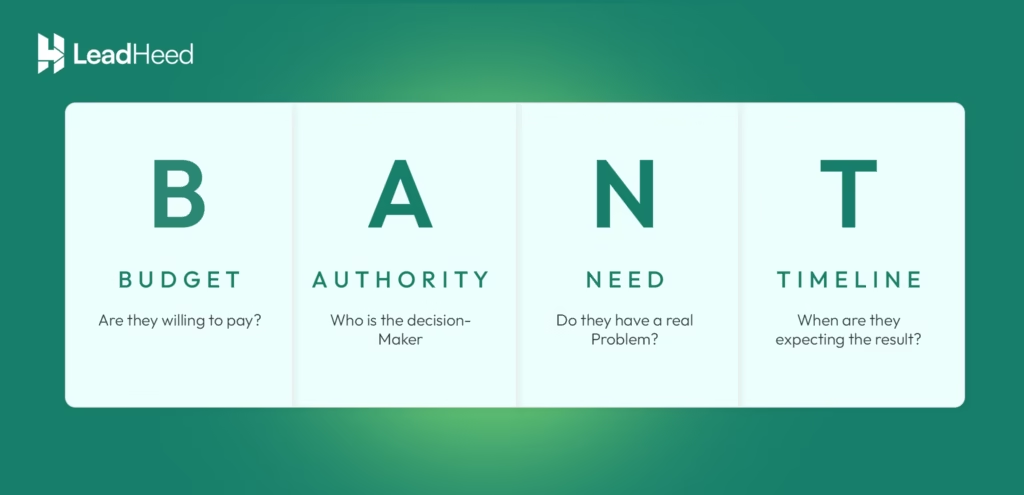
You use the BANT framework to gather answers to these questions naturally through the conversation, so you can qualify the leads with confidence.
Why BANT still works for lead qualification?
BANT focuses on the four things that decide whether a deal can move forward. Even when a prospect likes your product, the deal will not progress if they cannot pay, cannot decide, do not have a real need, or do not plan to act soon.
The BANT sales methodology brings structure to qualification. Instead of relying on guesswork, your team uses the same criteria to judge opportunities. It keeps your pipeline cleaner, makes deal reviews easier, and helps sales reps prioritize leads that have a higher chance of closing.
Most importantly, BANT saves time. It helps you spot weak leads early and put your effort into prospects who have clear intent and a realistic path to purchase. Using the BANT framework leads to better follow-ups, fewer stalled deals, and more predictable sales results.
How does the BANT framework work?
The BANT framework guides your discovery conversation around Budget, Authority, Need, and Timeline. You do not need to ask these as direct questions in a fixed order.
The BANT questions must feel like normal discovery, not an interrogation. The goal is to collect clear answers naturally, so you know whether to move forward, nurture the lead, or disqualify it.
1. Budget
Budget means understanding whether the prospect can afford a solution like yours and how they plan to pay for it. You are not only looking for a number. You also want to know if budget is already approved, if it needs approval, and what the buyer expects to spend based on the value they want.
You can ask the following questions to understand the budget of your prospects.
- Have you set aside a budget for solving this?
- How do you usually budget for tools or services like this?
- What range feels realistic for you based on the results you want?
- Is the budget already approved, or does it need sign-off?
- What matters more right now, keeping costs low or getting faster results?
2. Authority
Authority means finding out who makes the final decision and who influences it. In many deals, the person you speak with first is not the final approver. A strong BANT approach helps you identify the decision-maker early and include the right stakeholders before the deal reaches pricing or contract stages.
You can ask the following questions to understand who the authorized person is to approve the purchase.
- Who else will be involved in the decision?
- Who will approve the budget for this?
- How do purchases like this usually get approved in your company?
- If we agree this is a fit, what is the next step on your side?
3. Need
Need means confirming that the prospect has a real problem your solution can solve. You want to understand what is not working today, what outcome they want, and what happens if they do nothing. Strong “need” signals include clear pain, active evaluation, and a specific goal.
You can ask the following questions to understand the need of the prospects.
- What problem are you trying to solve right now?
- What is not working in your current process?
- What happens if you keep doing it the same way for the next few months?
- What outcome are you aiming for?
- What would make you say, “This solution is worth it”?
4. Timeline
Timeline means knowing when they want to make a decision and what is driving the timing. A real timeline usually has a reason behind it, like a business deadline, a renewal date, or a growth target. Clear timelines help you plan next steps and avoid deals that sit in the pipeline without movement.
You can ask the following questions to understand the timelines.
- When would you like to have this in place?
- Is there a deadline driving this decision?
- What needs to happen before you can move forward?
- Are you evaluating options right now, or planning for later?
- When should we schedule the next conversation to keep this moving?
When to Use BANT Sales Methodology and When Not to Use It?
BANT sales methodology works best when you need a simple way to qualify leads and keep your pipeline clean. It helps you quickly understand if a deal is real and what must happen next. But it is not perfect for every sales situation, especially when deals are complex, and decisions take longer.
When BANT works well:
- Short to mid sales cycles: Deals move faster, so budget and timeline clarity matter early.
- SMB and mid-market sales: Fewer stakeholders and simpler approval steps make BANT effective.
- Inbound leads: Prospects already show intent, so BANT helps you confirm fit quickly.
- High lead volume teams: BANT helps reps prioritize and avoid wasting time on weak leads.
When BANT may not be enough:
- Complex B2B deals: Budget and authority can be unclear early, and decisions involve many people.
- Long sales cycles: Timeline can shift, and needs evolve as more stakeholders get involved.
- New buyers: They may not have a budget approved yet, even if the need is real.
- Strategic accounts: You may need deeper qualification around the decision process, internal champions, and business impact.
Common Mistakes to Avoid with BANT
The BANT sales method is simple, but teams often use it in ways that weaken trust or lead to wrong qualification. These mistakes usually happen when reps treat BANT like a checklist instead of a guide for a real conversation.
- Asking about budget too early: If you push pricing before the buyer sees value, they may shut down or give vague answers.
- Treating BANT like an interview: Rapid-fire questions can feel robotic. Use follow-up questions and keep the flow natural.
- Stopping at the first contact: The person you speak with may not have authority. Confirm who approves and who influences the decision.
- Confusing interest with need: A lead can sound curious but still have no real problem to solve. Always confirm pain and impact.
- Accepting vague timelines: “Maybe next quarter” is not a timeline. Ask what is driving the timing and what steps must happen first.
- Not setting clear next steps: Even a qualified lead can go cold if you do not agree on the next action and date.
Track BANT with LeadHeed CRM to Qualify Leads
BANT becomes easier to use when your team records the answers in one place. Instead of keeping discovery details in personal notes and spreadsheets, track Budget, Authority, Need, and Timeline inside your CRM, so everyone works with the same information.
LeadHeed helps you keep all BANT details in one place and makes your follow-up actions clear. You can record budget notes, tag decision-makers, save the prospect’s needs and pain points, and create tasks so reps know exactly what to do next. With lead assignment, reminders, and a visual pipeline, our simple and easy-to-use CRM lets your team apply BANT consistently and focus on leads that are most likely to convert. Sign up for free!!
FAQs
What is the BANT process in sales?
The BANT process is how you qualify a lead by gathering four details during discovery: budget, authority, need, and timeline. You use these answers to decide whether to move the deal forward, nurture it, or disqualify it.
What are the criteria for BANT?
The criteria are the four pillars: Budget, Authority, Need, and Timeline. A lead becomes more qualified when each area is clear and realistic.
What are good BANT questions?
Good BANT questions explore the prospect’s budget comfort, who makes the decision, what problem they need to solve, and when they want to act. The best questions feel like normal discovery, not a checklist.
What is the BANT scoring model?
A BANT scoring model assigns points to each pillar (Budget, Authority, Need, and Timeline) to rank lead quality. For example, you can score each area 0 to 2 (not clear, somewhat clear, clear) and total the score to prioritize leads.
Is BANT still relevant?
BANT remains useful because it keeps qualification simple and consistent, especially for shorter sales cycles. For complex deals, teams often use different sales methodologies that include deeper checks like decision process and internal champions.
What is the difference between BANT and MEDDIC?
BANT is a basic qualification framework focused on readiness: budget, authority, need, and timeline. MEDDIC is deeper and fits complex B2B deals, covering metrics, economic buyer, decision criteria, decision process, pain, and champion.
How to use BANT framework?
Use BANT as a guide during discovery. Confirm the need first, identify who decides, discuss the budget after the value is clear, and confirm the timeline with a reason behind it, then set a specific next step and date.