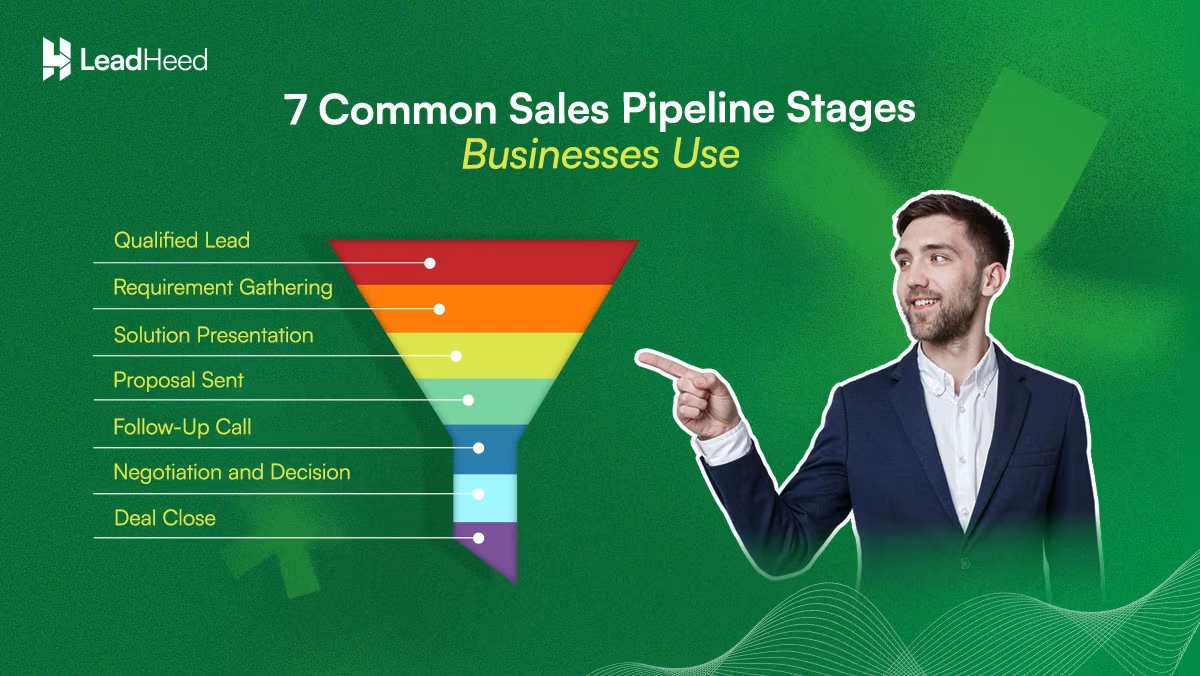


Businesses often go through ups and downs because they cannot see the upcoming revenue gaps. When future income is unclear, planning becomes difficult. Teams may overspend during slow periods or miss growth opportunities when demand rises. Over time, the uncertainty often leads to lost deals, strains cash flow, and reduced confidence from stakeholders.
Sales forecasting gives businesses a practical way to predict revenue, set realistic goals, and make informed decisions with confidence. It uses past results, current pipeline data, and market signals to estimate future sales.
Highlights
- Sales forecasting is the process of predicting future revenue using past data, market trends, and pipeline insights.
- Accurate forecasts let you set realistic targets, allocate resources wisely, and respond to market changes.
- Sales, data/BI teams, and RevOps collaborate to ensure forecasts are accurate and actionable.
- Forecasting methods can be quantitative, qualitative, or a mix, depending on your data and business needs.
- Sales forecasts often fail due to messy data, bias, or poor teamwork, but clean data, collaboration, and real-time insights fix these issues.
What is Sales Forecasting?
Sales forecasting is the process of estimating the revenue your company is likely to generate over a specific period. Teams analyze past sales results, current deals in the pipeline, conversion rates, and market trends to predict future sales outcomes.
Unlike static sales targets, sales forecasting changes as deals move forward, stall, or drop out. It reflects real-time sales activity, not assumptions. When calculated right, sales forecasting turns uncertainty into clarity, helping your business understand sales patterns and making informed decisions.
Why is Sales Forecasting Important?
Sales pipeline forecasting allows businesses to set realistic goals, plan resources better, stay aligned, identify problems early, and keep up with customer and market changes.
- Set Realistic Sales Targets: With sales forecasting, you set targets that are both realistic and challenging, based on past data. It keeps your sales team motivated while driving consistent results and prevents your team from underutilizing their potential.
- Plan Resources Efficiently: By predicting future sales, you can plan hiring, adjust team workloads, and invest in marketing where it will have the most impact. With this insight, companies can work efficiently and stay profitable.
- Align Teams Across Departments: Sales forecasting, giving everyone a shared view of expected demand, revenue, and priorities. When marketing, sales, finance, and operations work from the same forecast, they can plan campaigns, budgets, inventory, and staffing more effectively.
- Identify Problems Early: While forecasting the sales, you can quickly see which deals are slowing down or where your pipeline is getting weak. It gives you time to fix things early, leading to better decisions and a chance to protect your revenue.
- Track Market and Customer Trends: Forecasting involves analyzing past sales data to identify patterns in buying behavior, seasonal demand, and product preferences. It allows businesses to spot changes, such as rising interest in certain products or declining demand in others. It helps teams improve products and adjust marketing.
Who is Responsible for Sales Forecasting?
Sales forecasting is a team effort that involves multiple departments. Sales teams provide insights from deals and customer behavior, data and BI teams turn numbers into visual insights, and revenue operations (RevOps) manage the system, so forecasts run smoothly and accurately.
1. Sales Teams
Sales teams are the frontline teams responsible for sales forecasts. They are closer to deals, understand their behavior, and know which leads are likely to convert. These insights help lay the foundation for forecasts.
2. Data and BI teams
Data and BI teams turn raw numbers into clear, visual insights with predictive models and dashboards. This makes it easy for anyone in the company to spot trends, problems, and make informed decisions.
3. Revenue operations (RevOps)
The revenue operations (RevOps) team acts as the backbone of the forecasting system. They define the pipeline stages, maintain clean CRM data, and set the business logic that allows the forecast to run smoothly and automatically.
Sales Forecasting Methods: Which One Fits Your Team Best?
Sales forecasting methods use two main approaches: quantitative and qualitative. Here’s a brief overview of each and their common methods:
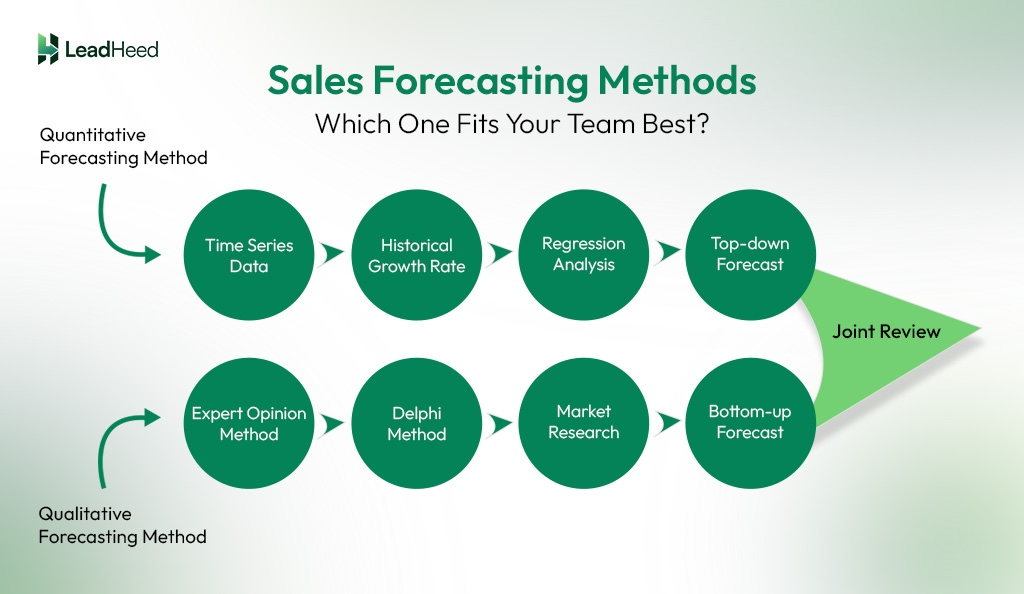
Quantitative Forecasting Method
Quantitative sales forecasting methods use historical sales data and statistics to predict future revenue. By analyzing past trends, growth rates, and deal probabilities, you create accurate, data-driven forecasts.
Here are the main types of quantitative forecasting methods businesses use to make accurate predictions.
I. Time Series Data
Time series data looks at trends and patterns in your past sales data, including seasonal ups and downs. For example, a retail store might notice a spike in sales every December. By recognizing these patterns, you can plan ahead for high-demand periods and slow months.
II. Historical Growth Rate
Historical growth rate forecasting predicts future sales by analyzing how fast your revenue has grown in the past. It uses data such as monthly or quarterly sales figures to calculate an average growth percentage.
For instance, if your revenue has grown by an average of 15% every quarter for the last two years, you apply that same logic to the future. It’s ideal for established businesses with consistent momentum.
III. Regression Analysis
Regression analysis shows how different factors impact sales, such as marketing, pricing, and hiring. It is for companies that want to understand “what-if” scenarios. For instance, how does hiring more sales reps or offering discounts affect revenue?
IV. Pipeline Stage Forecasting
Here, each deal in your sales pipeline is assigned a probability of closing based on its stage. A deal in early discussions might have a 20% chance, while a negotiation-stage deal could be 80%. Those scores help you create weighted sales predictions that reflect reality.
Qualitative Forecasting Method
Qualitative sales forecasting method depends on human judgment, experience, and intuition rather than historical numbers. They are especially useful when data is limited, markets are new or unpredictable, or you’re launching new products.
These are the commonly used qualitative forecasting methods businesses rely on.
I. Expert Opinion Method
In the expert opinion method, experienced sales leaders or industry experts estimate future sales based on their knowledge and market understanding. It is ideal for startups, new products, or markets with less historical data.
II. Delphi Method
In the Delphi method, a group of experts shares their sales predictions anonymously over several rounds. They refine their ideas each time until they reach an agreement. Thus, this approach reduces bias and creates more reliable forecasts.
III. Market Research
Market research uses surveys, focus groups, and customer interviews to understand customer demand and estimate future sales. This method is especially useful when launching new products or entering markets with no past data.
How to Forecast Sales? Step-by-step Guide for Accurate Sales Predictions
To forecast sales, you analyze past sales data, consider market and business changes, choose the right forecasting method, and regularly review your results. This structured approach helps you predict future revenue more accurately and make smarter business decisions.
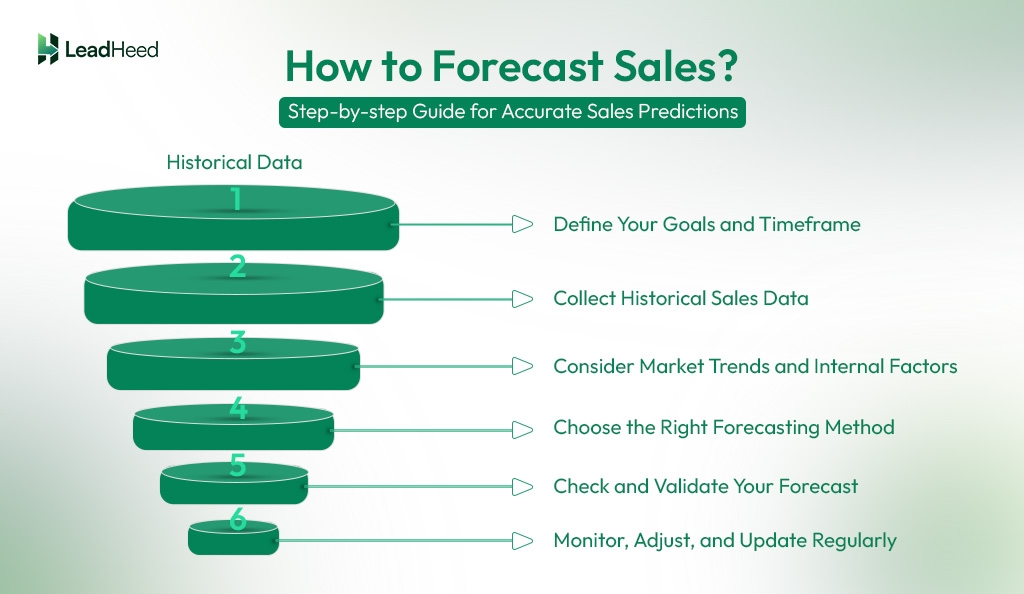
Step 1: Define Your Goals and Timeframe
The first step in sales forecasting is defining what you are forecasting, and for how long. These forecasts can be short-term (weekly or monthly) and long-term (quarterly or yearly) as well. Plus, clear goals make it easier to choose the right data and forecasting method.
Step 2: Collect Historical Sales Data
The next step is gathering past sales data like total revenue, deals closed, average deal size, and sales by product, region, or rep. Then you use this data to identify patterns and trends, such as busy seasons, steady growth, or sudden drops. Data shows you what’s been working, when sales are usually high or low, and which areas perform best.
Step 3: Consider Market Trends and Internal Factors
In this step, you adjust your forecast using seasonality, market trends, competitive changes, and key internal updates, like new pricing, product launches, or team growth. You can also create best-case, worst-case, and most-likely scenarios to prepare for the uncertainty. This helps your prediction stay realistic, reduces risks, and enables you to respond faster to changes.
Step 4: Choose the Right Forecasting Method
Select a sales forecasting method that fits your data and business situation:
- Quantitative methods: Use historical numbers and statistics, like time series analysis, regression, or pipeline stage forecasting. This is ideal for stable markets with plenty of data.
- Qualitative methods: Rely on expert opinion, the Delphi method, or market research when data is limited or launching new products.
Many businesses combine both methods for the most accurate results.
Step 5: Check and Validate Your Forecast
The step is about checking your sales forecast with different teams, like sales, finance, marketing, and RevOps. They can spot gaps, question unrealistic targets, and add insights from their side of the business. Thus, it helps make your prediction more realistic, aligned, and trusted, rather than a sales guess.
Step 6: Monitor, Adjust, and Update Regularly
Market changes, moving deals, and new data quickly make your sales forecast outdated, so it’s important to keep it updated. In this step, you regularly compare your forecast to actual sales results. You see what’s working, what’s not, and make quick updates to your assumptions. This keeps your predictions accurate and catches issues early.
Common Challenges in Sales Forecasting & How To Overcome Them
Sales forecasting is hard because data isn’t always accurate, teams work in silos, and external factors keep changing. Common issues like messy CRM data, relying on gut feeling, ignoring market trends, or focusing on the wrong deals can make forecasts unreliable.
You can fix these challenges with clean data, collaboration, and real-time insights, while keeping your forecasts accurate.
Messy or Missing Data
When your CRM data is scattered across tools, records are incomplete, and deal stages are not updated, this leads to inaccurate sales forecasting.
Solution: Ensure your CRM data is up-to-date and error-free.
Relying on Gut Feeling
Sales forecasts suffer when they rely heavily on gut feeling. Some reps may be too optimistic, while others may underplay deals to hit targets, distorting the true state of the sales pipeline.
Solution: Use objective data, clear deal scoring, and standardized methods.
Focusing on Quantity Over Quality of Deals
When teams focus on the number of deals instead of deal quality and their engagement, forecasts become misleading. This often leads to stuck leads in the pipeline and unqualified leads that don’t convert.
Solution: Track deal progress, buyer engagement, and deal quality, not just numbers.
Ignoring Market or Competitor Changes
Relying only on past data and ignoring external factors like market trends, changing customer behavior, and competitors leads to unreliable predictions.
Solution: Use flexible forecasting methods, work with real-time data, and keep up with market changes.
Poor Teamwork Across Departments
When sales, marketing, and finance teams work separately, forecasts miss key insights, creating incomplete or biased sales predictions.
Solution: Collaborate across teams and share data to get the full data and insights of sales opportunities.
Conclusion
Sales forecasting is the roadmap that helps your business plan smarter, spot challenges early, and make informed decisions. By combining quantitative data with qualitative insights, you can set realistic targets, align your teams, and respond quickly to market changes.
With LeadHeed, all-in-one CRM software, forecasting becomes simpler and more reliable. Our system centralizes your sales data and generates a clear performance report displayed in an analytical dashboard. It gives your team valuable insights on closed and active deal helping you forecast sales more accurately.
Get started with LeadHeed today to transform raw sales data into clear, reliable forecasts your team can trust.
FAQs
How do you forecast sales?
You forecast sales by analyzing historical sales data, market trends, and pipeline information to predict future revenue.
How to use virtual assistants for sales forecasting?
Virtual assistants help sales forecasting by cleaning and organizing data, spotting trends, scoring leads, and providing real-time pipeline insights. They automate follow-ups and improve forecast accuracy.
What is the difference between a sales forecast and a sales budget?
A sales forecast helps you to predict future sales based on historical data to anticipate market trends, drive performance, and allocate resources. Whereas the sales budget sets financial targets for your sales team and outlines what you want to happen.
How do I forecast sales for a new product or business?
To forecast sales for a new product or business, use expert opinions, market research, competitor analysis, and scenario planning to estimate potential demand and sales.