
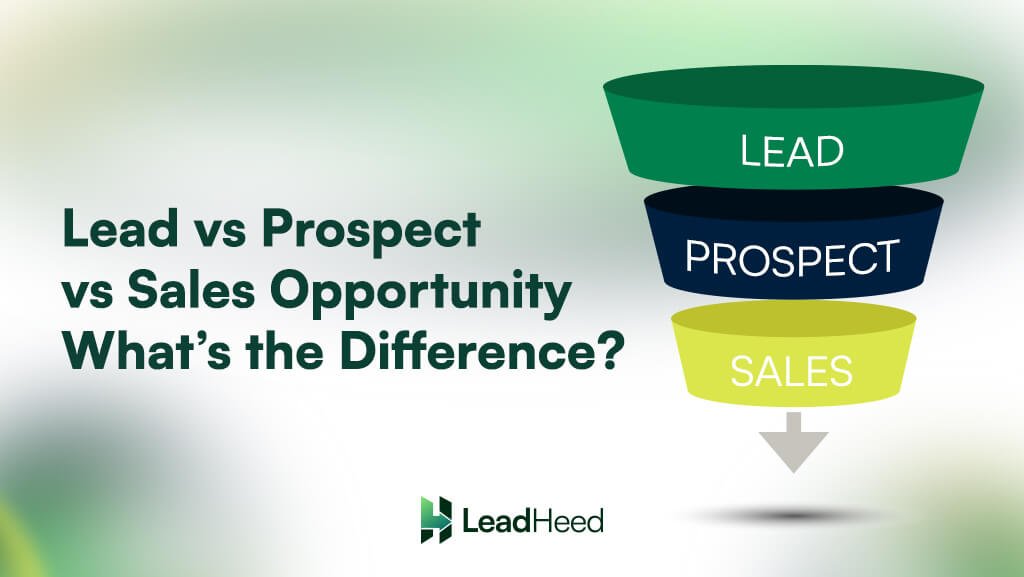
More leads do not always lead to more sales. What truly matters is understanding which contacts need nurturing and which are ready for a sales conversation. When every contact is treated the same, teams waste time, miss follow-ups, and struggle to manage their pipeline.
A lead shows early interest, a prospect is a qualified contact with a clear fit, and a sales opportunity signals real intent to buy. Each stage represents a different level of readiness and requires a different sales approach.
Understanding lead vs prospect vs opportunity helps sales and marketing teams stay aligned. It brings clarity to follow-ups, improves pipeline management, and highlights where real revenue potential exists.
Highlights
- A lead shows initial interest, a prospect is qualified for fit and need, and a sales opportunity has confirmed buying intent with an active deal.
- A lead becomes a prospect after organization, opportunity, and stakeholder-level qualification confirm relevance and sales potential.
- A prospect turns into an opportunity once buying intent, decision authority, and purchase timeline are clearly established.
- Sales teams should focus most on opportunities for closing deals while nurturing leads and actively evaluating prospects.
Understanding Lead
A lead is a person or business that has shown initial interest in a product or service but has not been evaluated yet. The interest usually comes from a simple action, such as filling out a form, downloading a resource, signing up for a trial, or clicking an ad. The goal here is not to sell, but to observe behavior, gather information, and decide whether the contact is worth deeper engagement.
Characteristics of Lead
- Shows initial interest through a single action
- Shares limited information, usually name and contact details
- Has no confirmed need or buying timeline
- Requires qualification before sales involvement
Understanding Prospect
A prospect is a contact that has been reviewed and confirmed as a possible fit for the product or service. Unlike a lead, a prospect meets basic qualification criteria, and there is some level of interaction, such as replying to an email, asking questions, or booking a call. The contact may not be ready to buy yet, but the chances of a meaningful sales conversation are much higher.
Characteristics of Prospect
- Matches the ideal customer profile
- Shows consistent engagement, not one-time activity
- Has a clear reason for interest
- Allows two-way communication with sales
Understanding Sales Opportunity
A sales opportunity represents a qualified prospect with confirmed needs, budget, authority, and deal timeline. At this stage, the conversation shifts from discovery to decision-making. There is an active sales negotiation, like requesting a demo, asking for a proposal, or involving decision-makers.
Characteristics of Sales Opportunity
- Confirms a real business need and buying intent
- Involves sales discussions such as pricing or solution fit
- Includes decision-makers or influencers
- Has a defined timeline and deal value
Key Difference Between Lead vs Prospect vs Opportunity
A lead shows initial, unverified interest, whereas a prospect is a qualified contact that fits the target profile, and an opportunity has confirmed buying intent with an active deal in progress. In the sales pipeline, leads sit at the top, prospects move through evaluation, and opportunities represent forecastable revenue close to purchase.
| Factor | Lead | Prospect | Sales Opportunity |
| Definition | A contact that has shown initial interest but is not yet evaluated | A qualified lead that fits the target customer profile | A prospect with confirmed buying intent and an active deal |
| Level of Interest | Initial and unverified | Confirmed and evaluated | Strong and purchase-focused |
| Qualification Status | Not qualified | Qualified for fit and need | Qualified for buying intent |
| Sales Involvement | Minimal or none | Active engagement | Direct deal handling |
| Customer Intent | Curious or exploring | Evaluating options | Ready to move forward |
| Pipeline Stage | Top of funnel | Middle of funnel | Deal stage |
| Revenue Impact | Potential only | Possible | Forecastable |
| Typical Actions | Nurturing, data collection | Discovery calls, tailored follow-ups | Demos, proposals, negotiations |
How to Turn a Lead Into a Prospect?
Turning a lead into a prospect involves three qualification stages: organization, opportunity, and stakeholder levels. The process moves contacts from general interest to a qualified potential customer by confirming fit, building trust through nurturing, and engaging them with personalized outreach.
- Organization-Level Qualification: It focuses on whether the company itself fits the target market. Sales teams review factors such as industry, company size, location, and overall relevance.
- Opportunity-Level Qualification: At this stage, sales teams identify why the lead is searching for a solution, what challenge they want to solve, and whether the problem is important enough to justify action.
- Stakeholder-Level Qualification: Here, sales teams determine whether the contact has influence, decision-making authority, or access to key stakeholders. Once this level is validated, the lead turns into a prospect ready for meaningful sales conversations.
How to Turn a Prospect Into a Sales Opportunity?
To turn a prospect into a sales opportunity, sales teams confirm buying intent through focused conversations and buyer-driven actions such as demos or pricing requests. Once the decision authority and timeline are clear, the prospect becomes an opportunity.
- Focused Sales Conversation: It confirms whether the prospect is serious about buying. Sales teams ask clear questions about goals, challenges, and needs to see if the prospect wants a solution now or is only researching options.
- Intent Confirmation: A prospect becomes an opportunity when they take buyer-driven actions. It may include requesting a demo, asking for pricing, discussing timelines, or comparing solutions.
- Decision Alignment: Sales teams identify who approves the purchase, how decisions are made, and when the deal can close. Once these details are clear, the prospect officially becomes a sales opportunity.
Prospect vs Lead vs Opportunity: Which Stage Should Sales Focus on the Most?
Lead, prospect, and opportunity serve different purposes and support revenue in different ways, so the level of effort should match their role in the sales pipeline. Leads need basic screening, prospects need focused evaluation, and sales opportunities need the most attention because they represent active deals with a clear chance of closing.
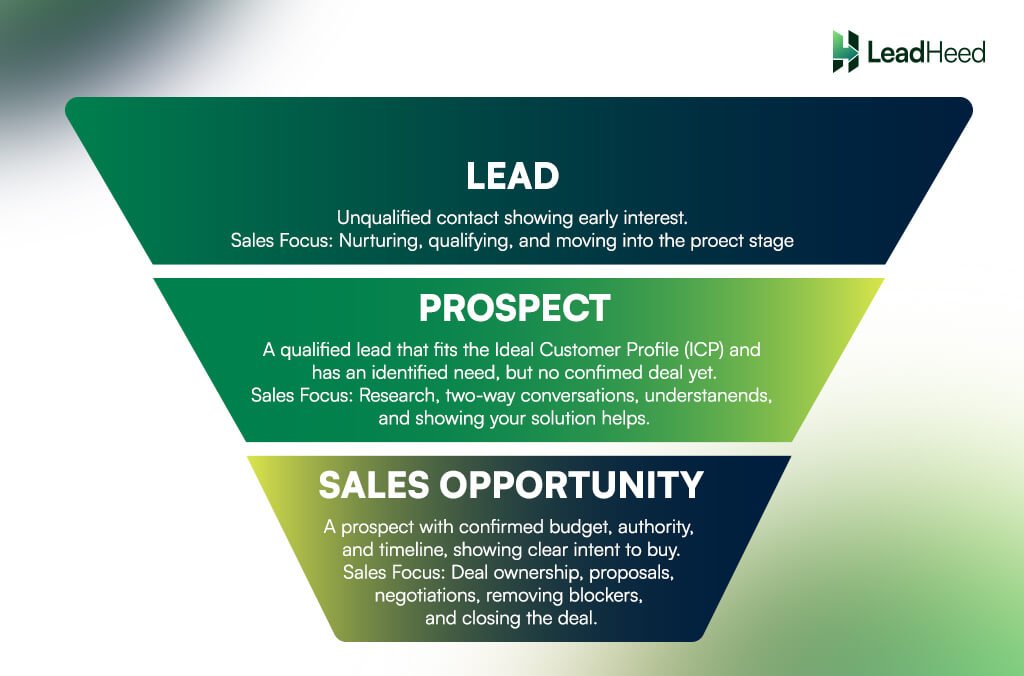
Leads require nurturing, not selling. Here, a contact is just raw data without confirmed intent, so sales involvement should be minimal. Marketing or automation handles most lead activity, such as follow-ups and filtering.
A lead becomes a prospect once you confirm they fit your ideal customer profile (ICP). This is where sales reps should invest time in personalized research and discovery calls. Strong prospecting creates a healthy pipeline and prevents weak opportunities from entering later stages.
In sales opportunities, the contact has a confirmed need and a timeline to buy, making them the most valuable assets in the pipeline. Because these are closest to the finish line, they require the highest level of focus. Sales teams must prioritize opportunities for demos, sales negotiations, and closing actions.
Manage Lead, Prospect and Sales Opportunity with LeadHeed
When sales teams clearly understand the difference between leads, prospects, and sales opportunities, the entire pipeline becomes easier to manage. Each stage plays a specific role, and handling them separately improves focus, follow-ups, and accuracy. Teams avoid unnecessary outreach and move deals forward with clear intent.
LeadHeed is a CRM built for clear and focused sales management. With features like pipeline tracking, lead qualification, activity visibility, email automation, and follow-up reminders, LeadHeed helps teams stay organized and move deals forward without confusion. Start your free trial today!
Frequently Asked Questions
Is prospect the same as opportunity?
No, a prospect is not the same as an opportunity. A prospect is a qualified contact that fits the target customer profile but has not yet confirmed buying intent, while an opportunity exists only after that prospect shows clear intent to purchase and enters an active sales discussion.
Which usually comes first, an opportunity or a lead?
A lead is the starting point in the sales process, which represents initial interest from a person or business. An opportunity comes later, only after the lead is qualified into a prospect and shows clear intent to buy.
Can a lead skip the prospect stage and become an opportunity?
In most cases, no. The prospect stage exists to confirm fit, need, and engagement before treating a lead as a real deal. Skipping this step increases the risk of weak opportunities, wasted sales effort, and inaccurate forecasts.